🌽 Earth Church | Phase 2 | Pavilion
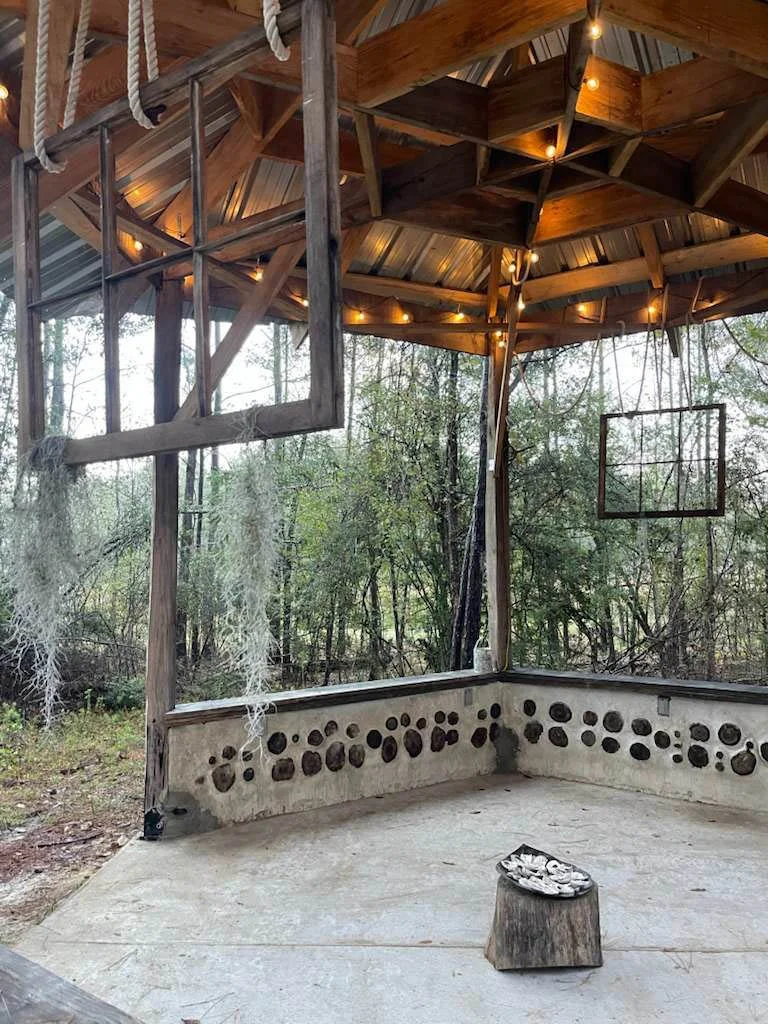
Earth Church: Hexagon Pavilion | Vinton, Louisiana | 2025
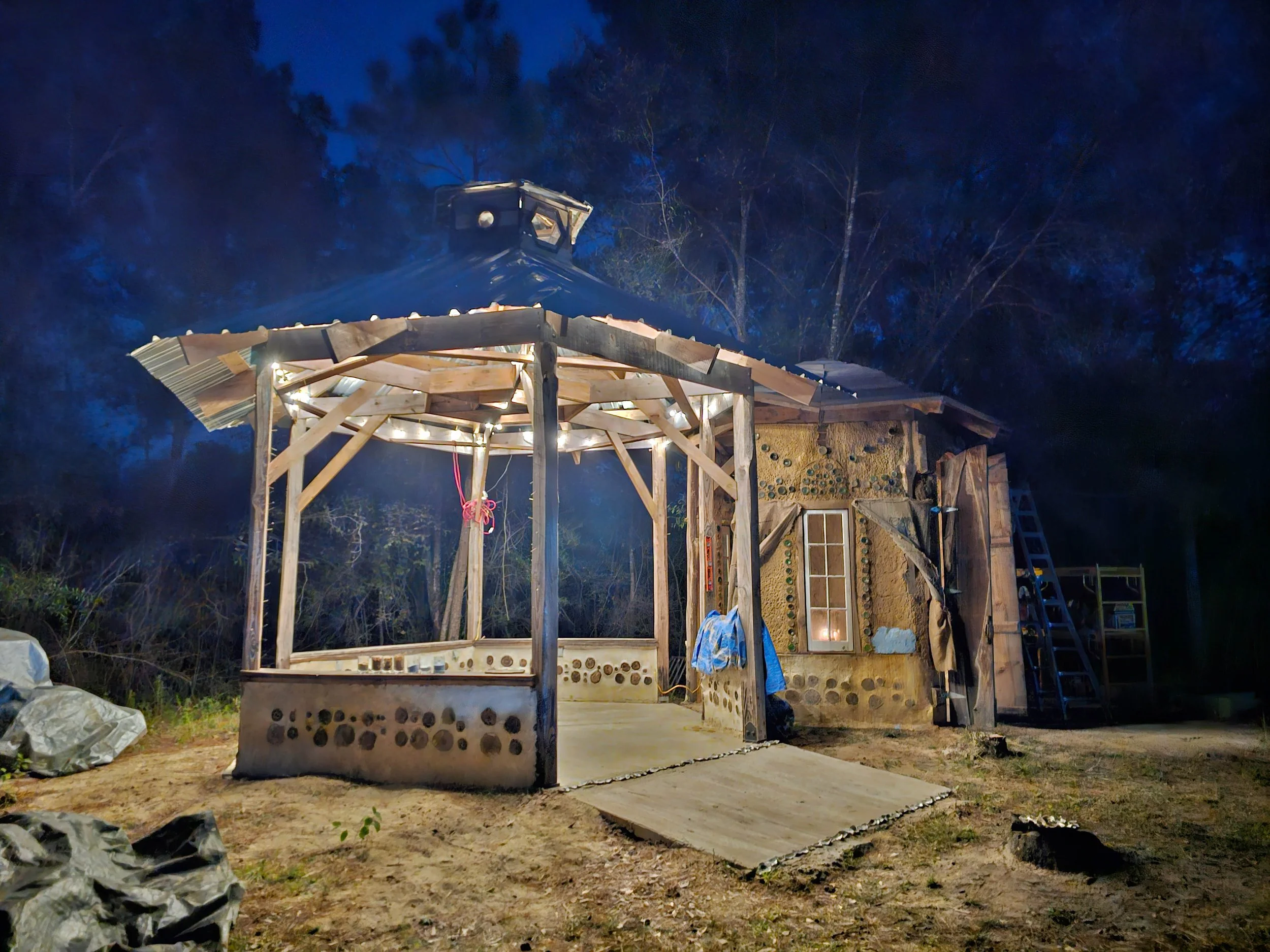
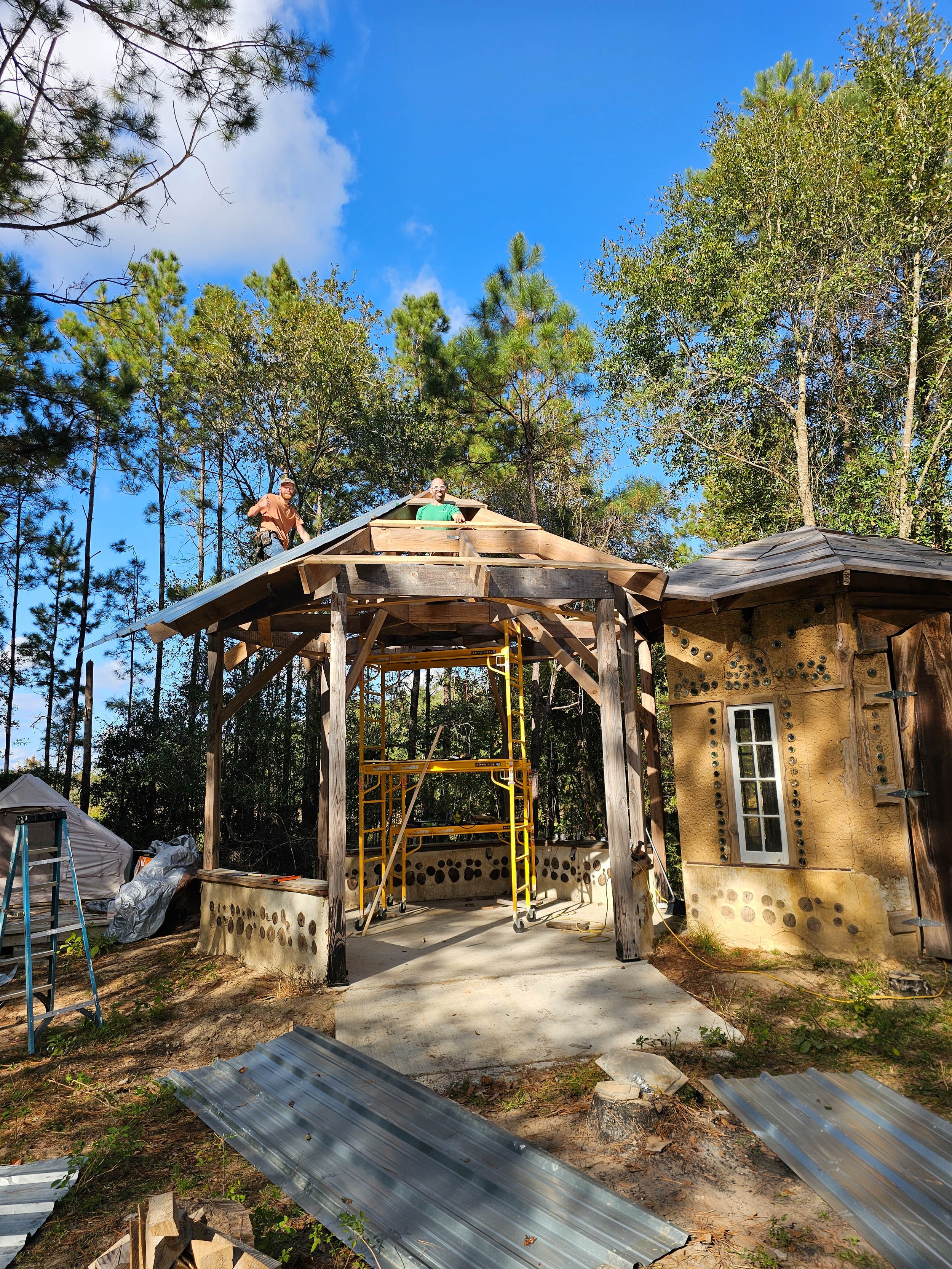
With support from grants from The New York Foundation for the Arts and Anonymous Was A Woman, Earth Rise Collective returned for the second phase of the Earth Church: adding a new hexagonal pavilion with a roof, expanding the sanctuary's capacity for gathering, teaching, and ceremony.
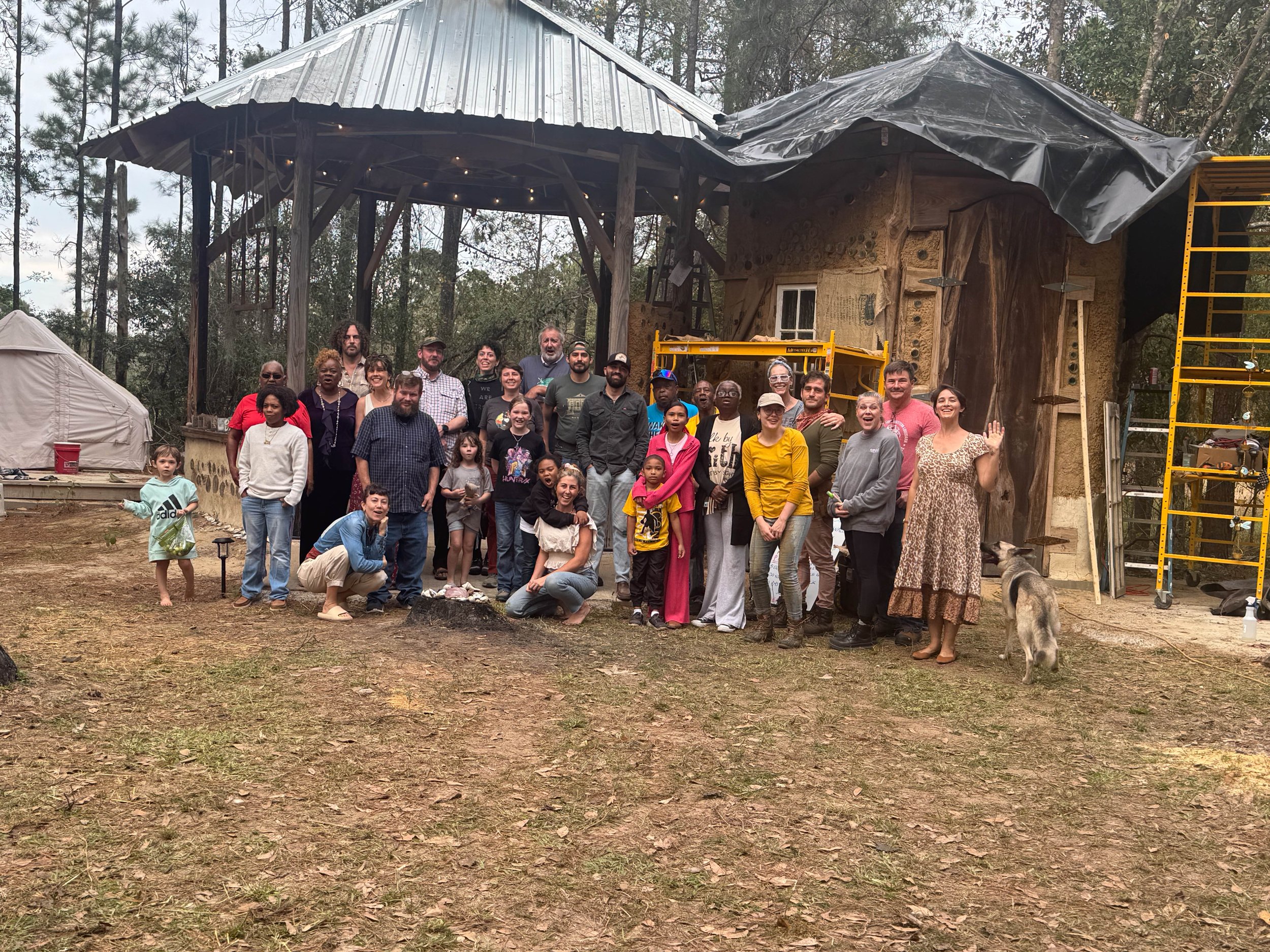
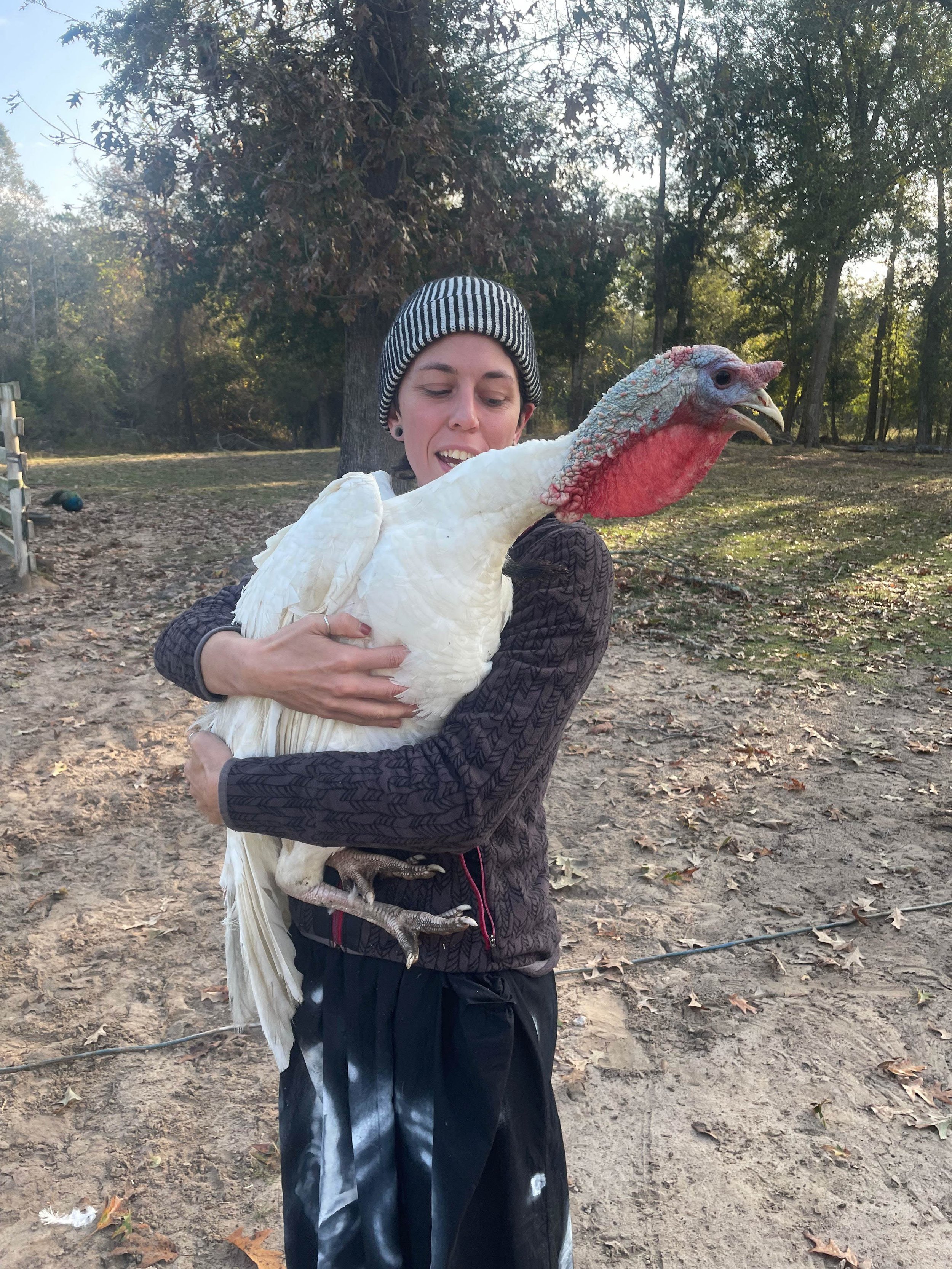
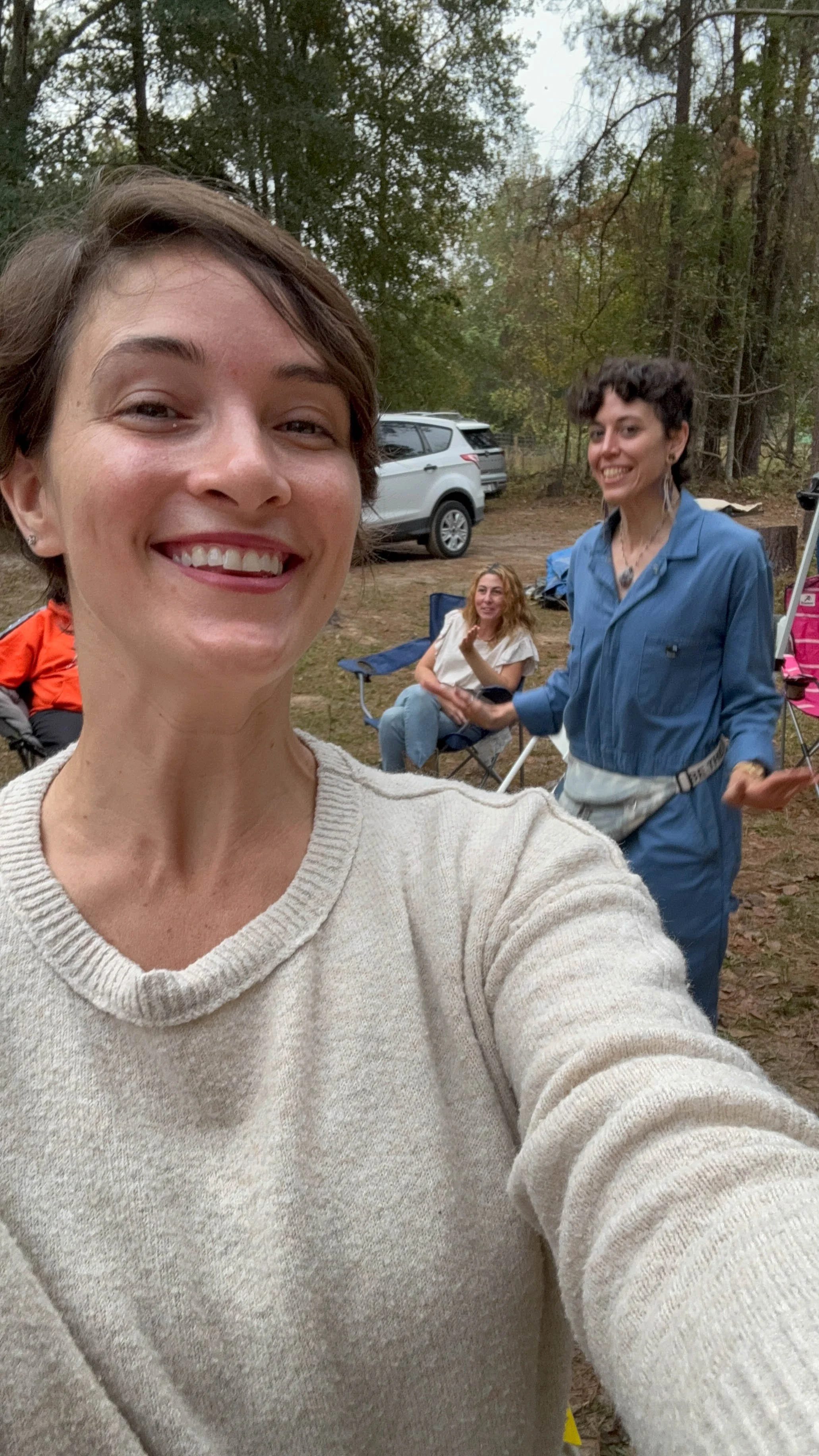
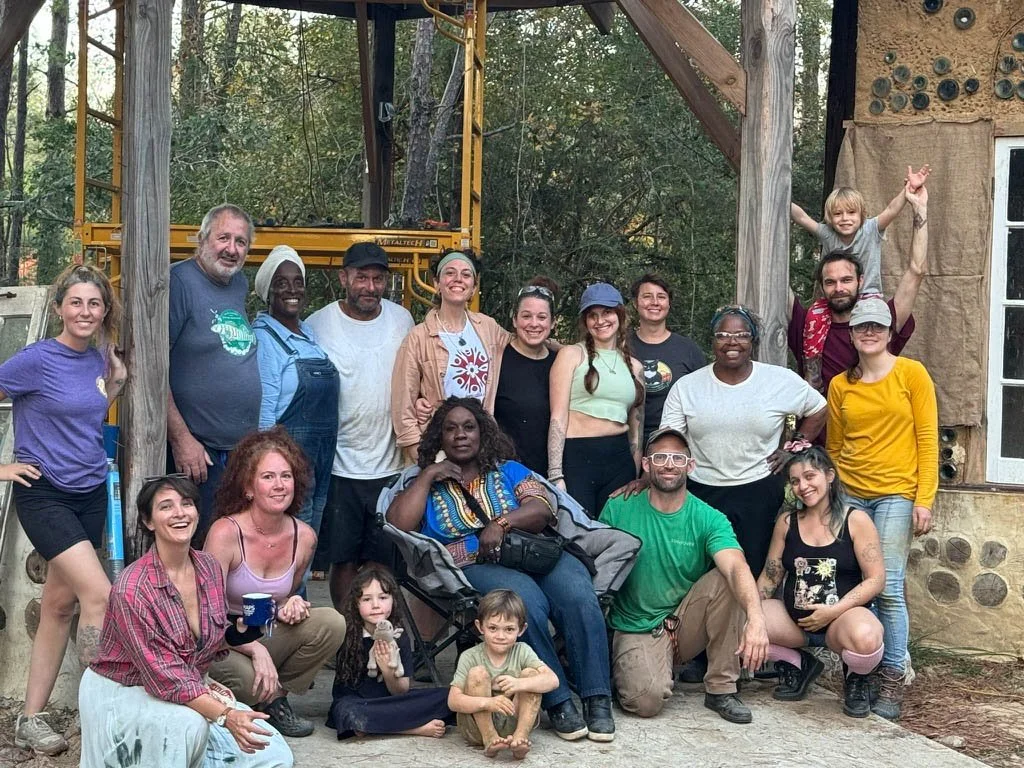
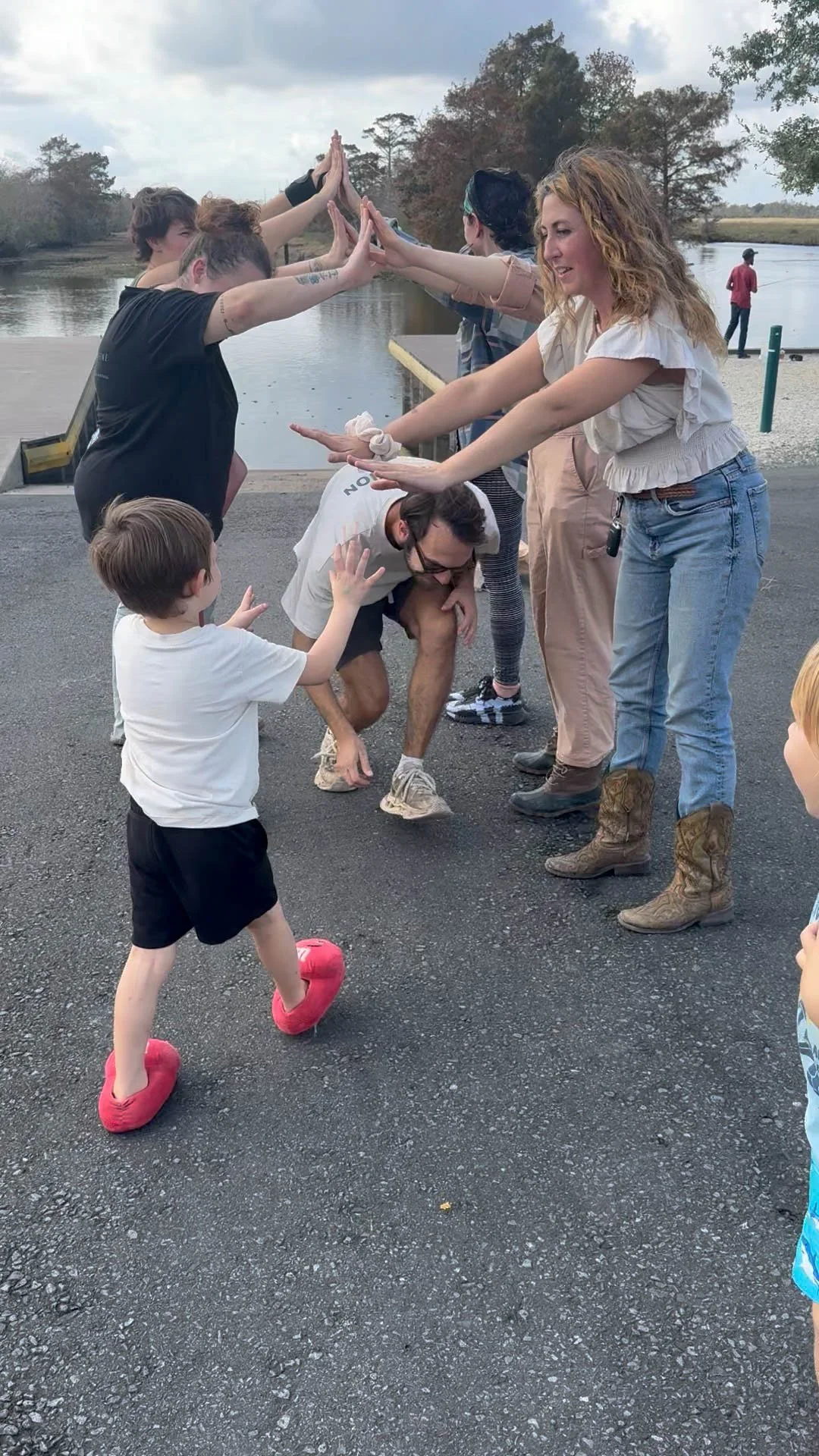
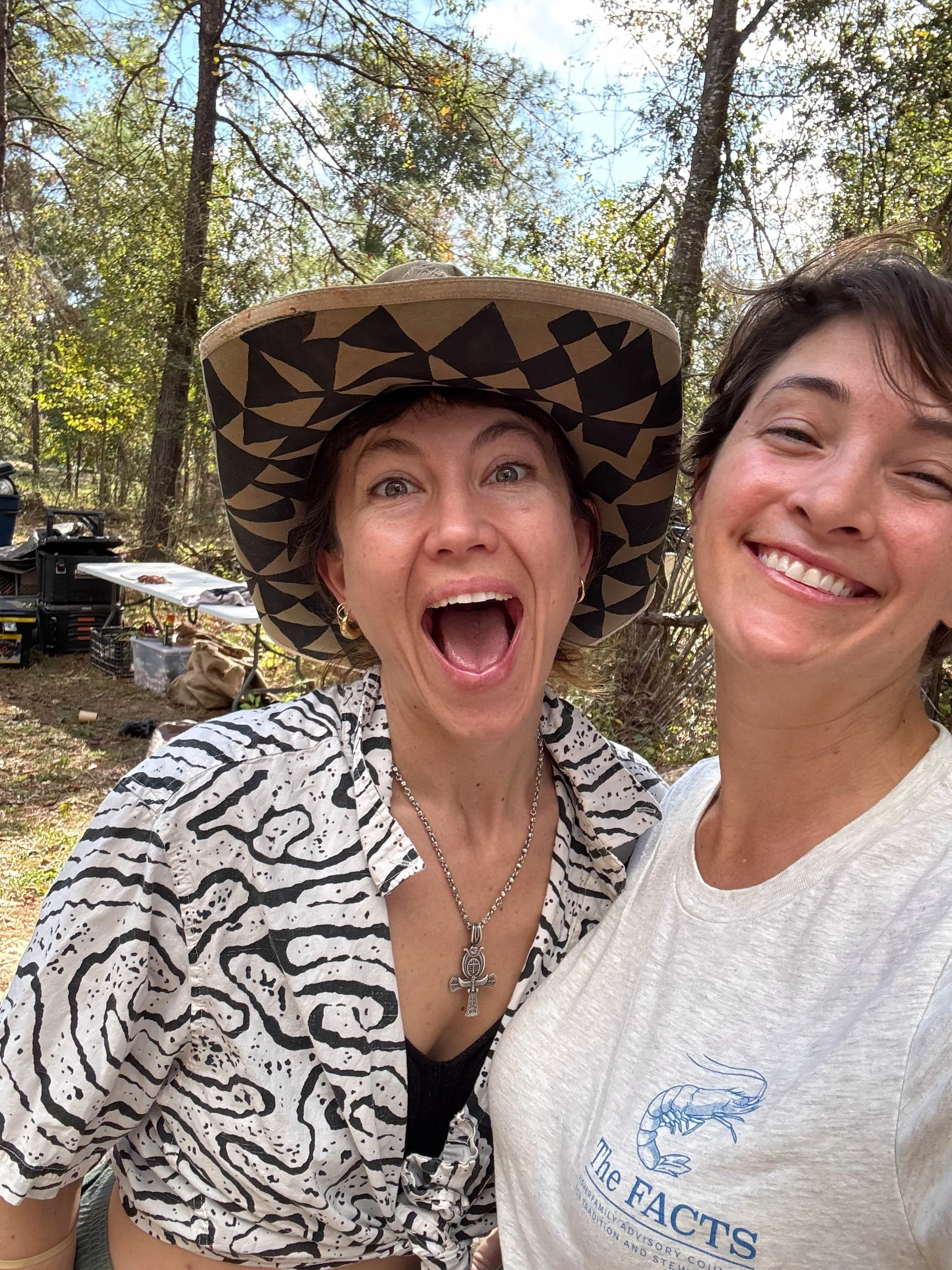
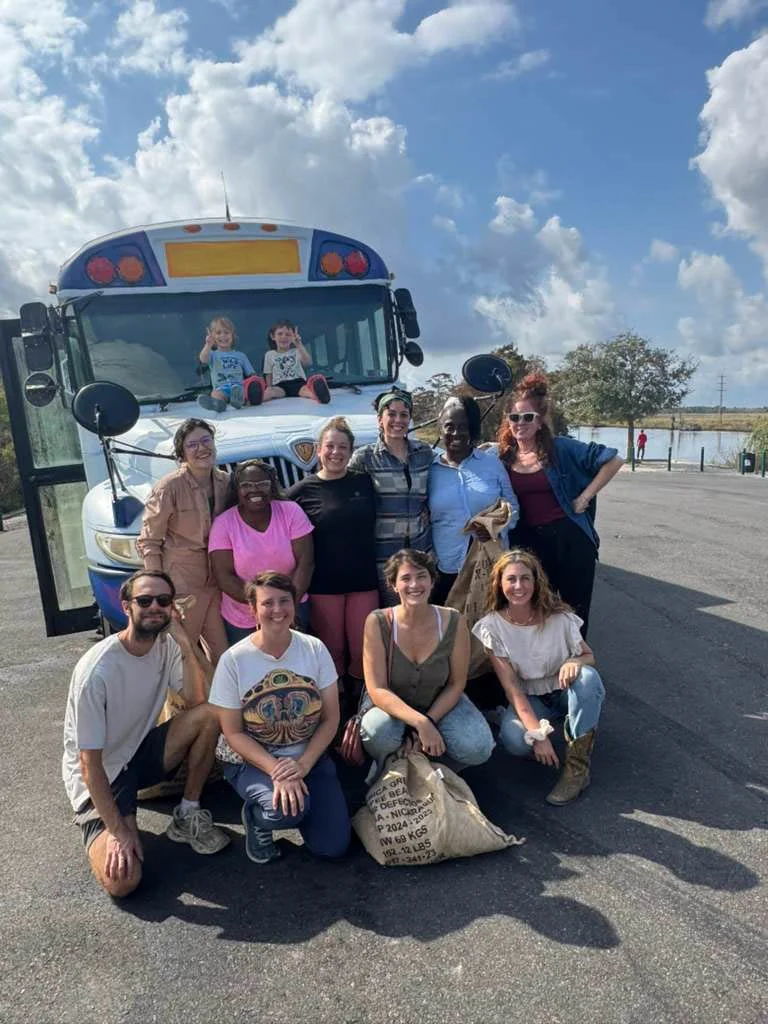
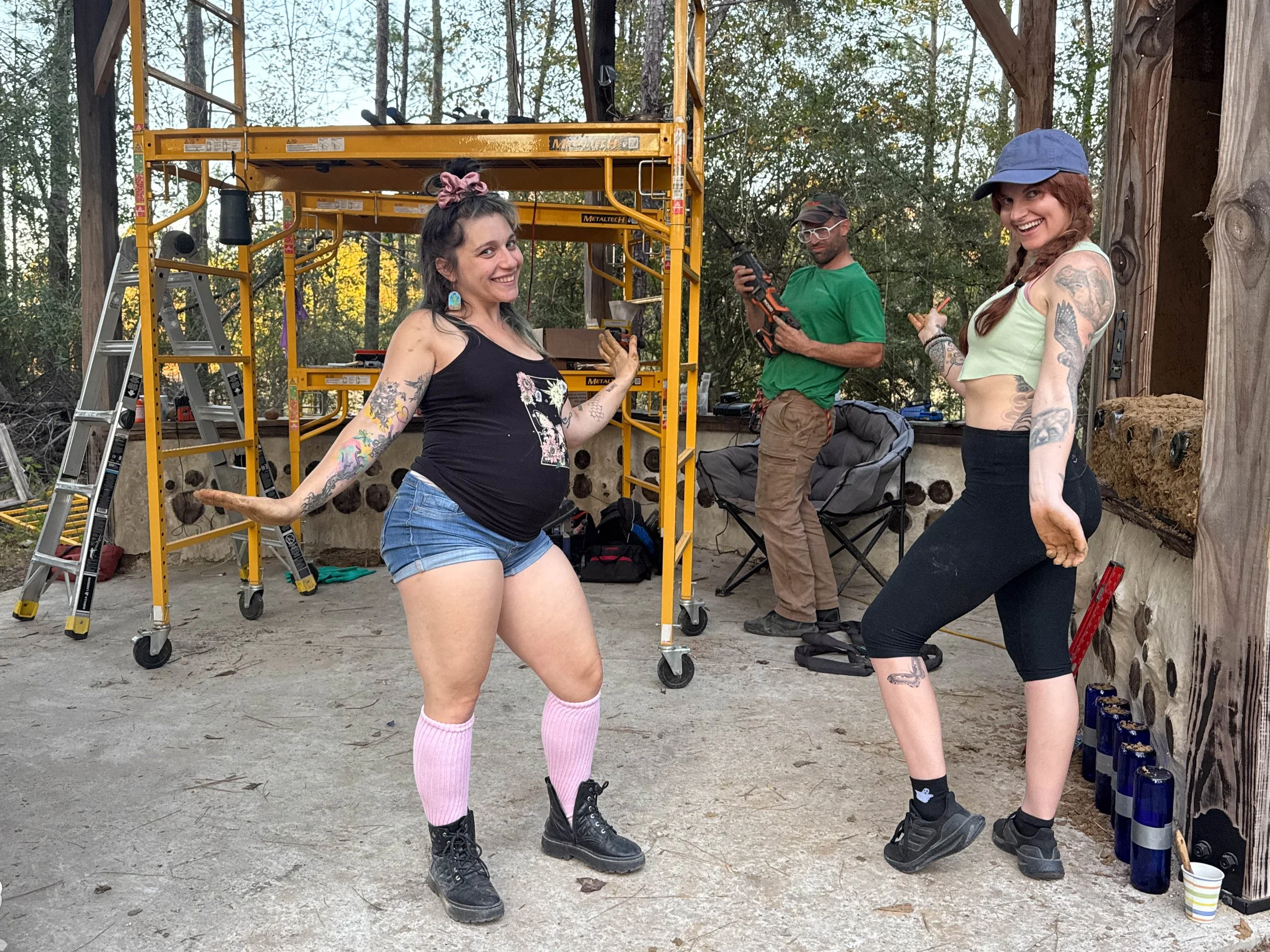
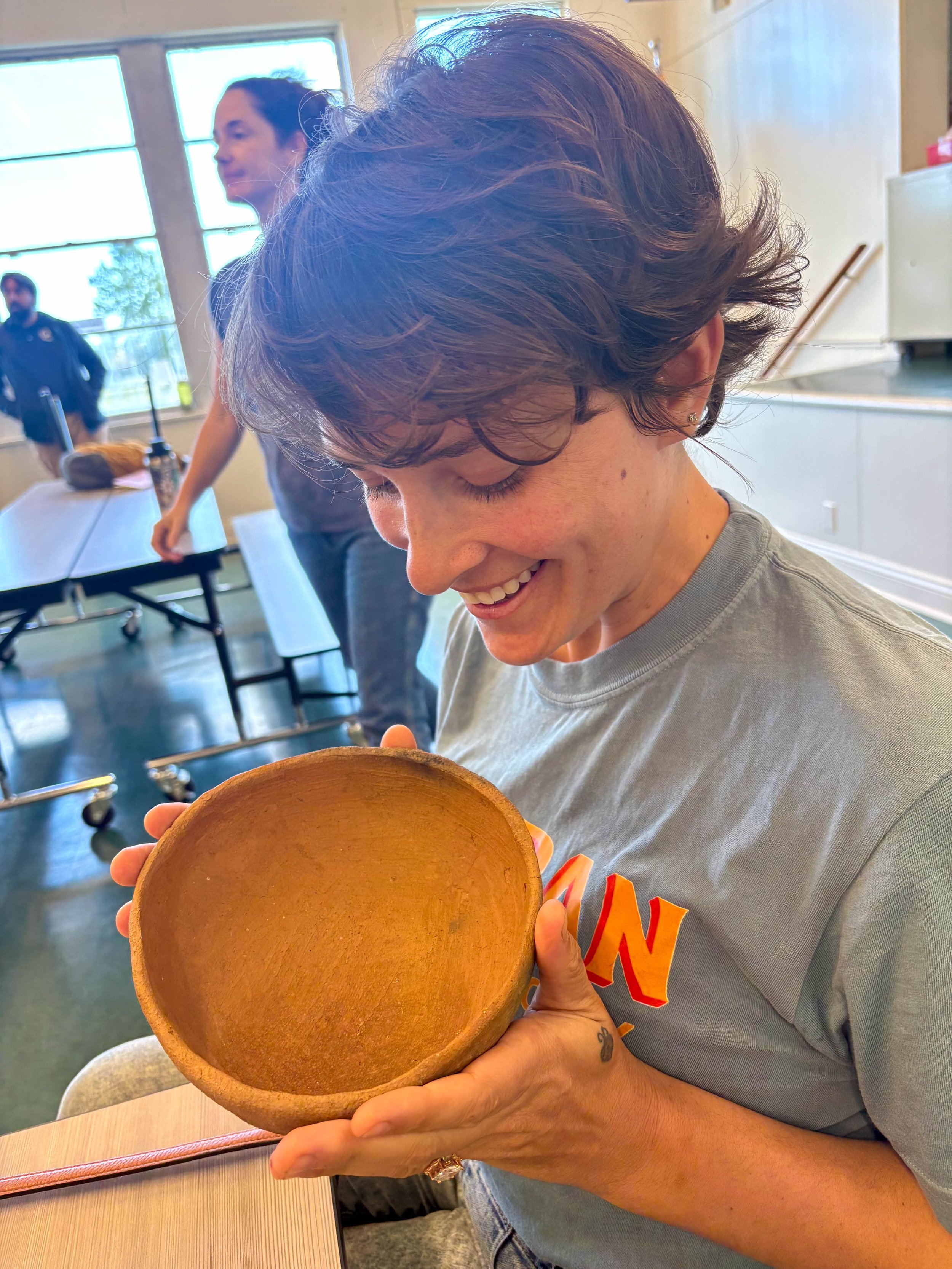
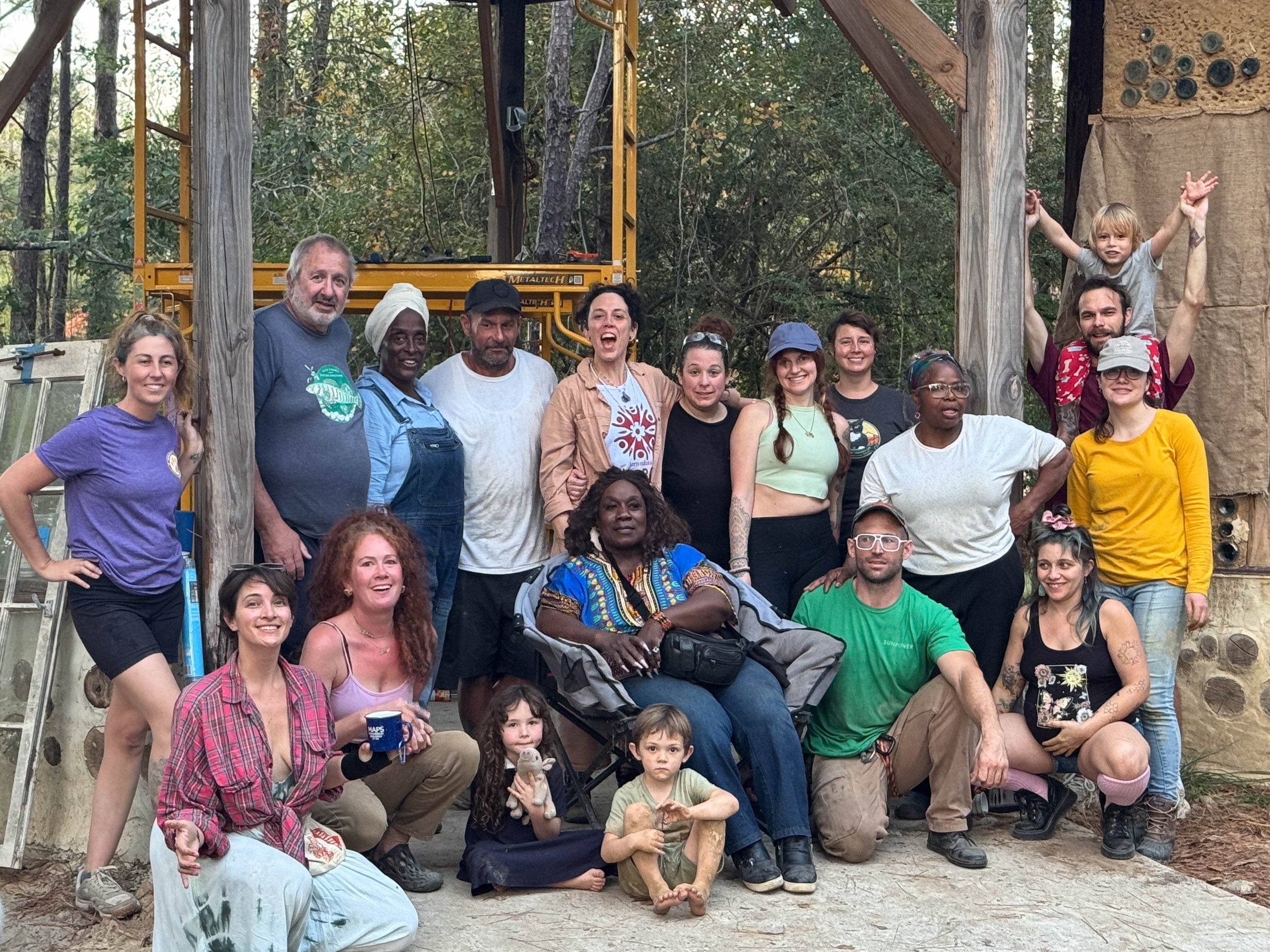
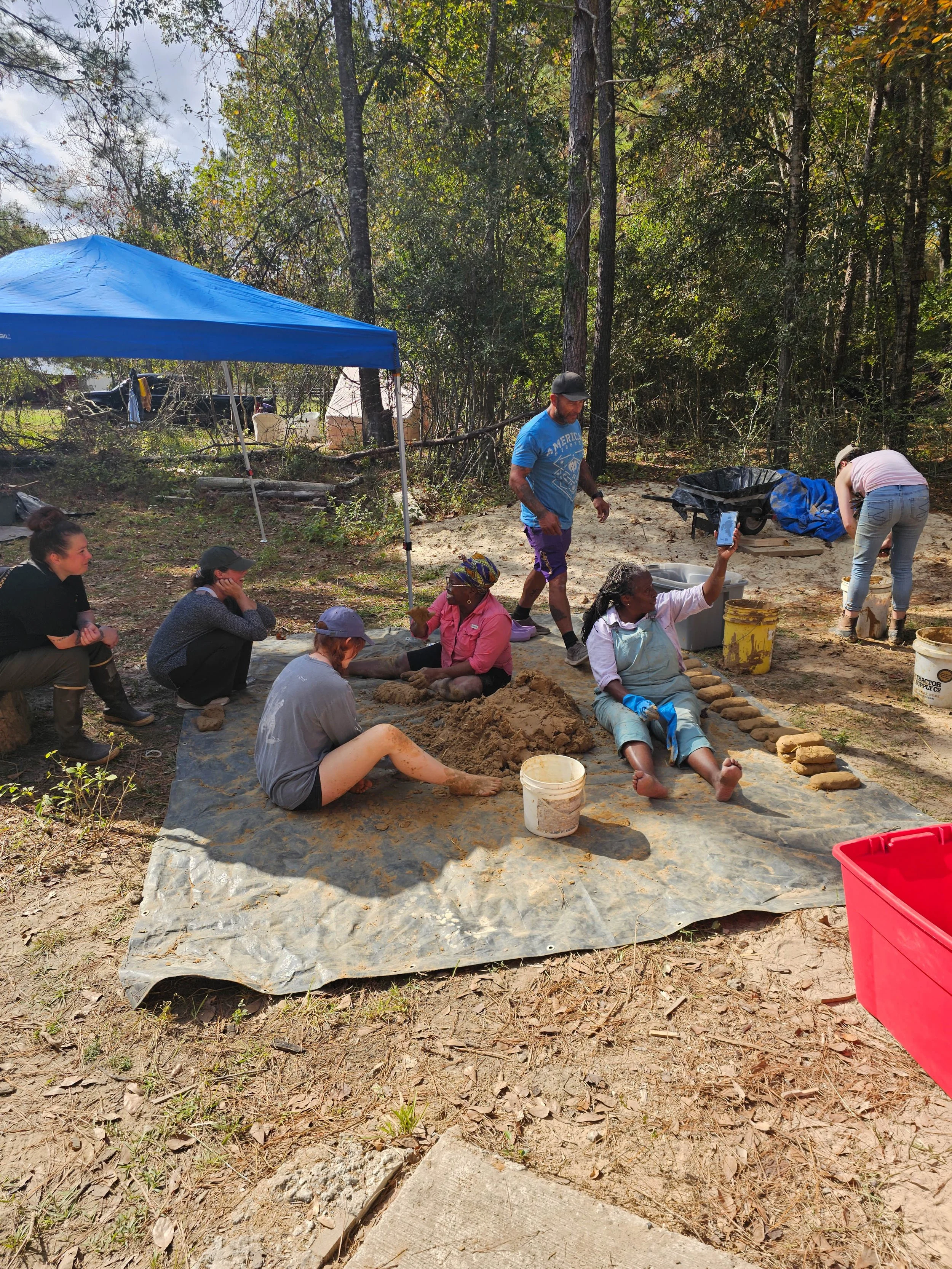
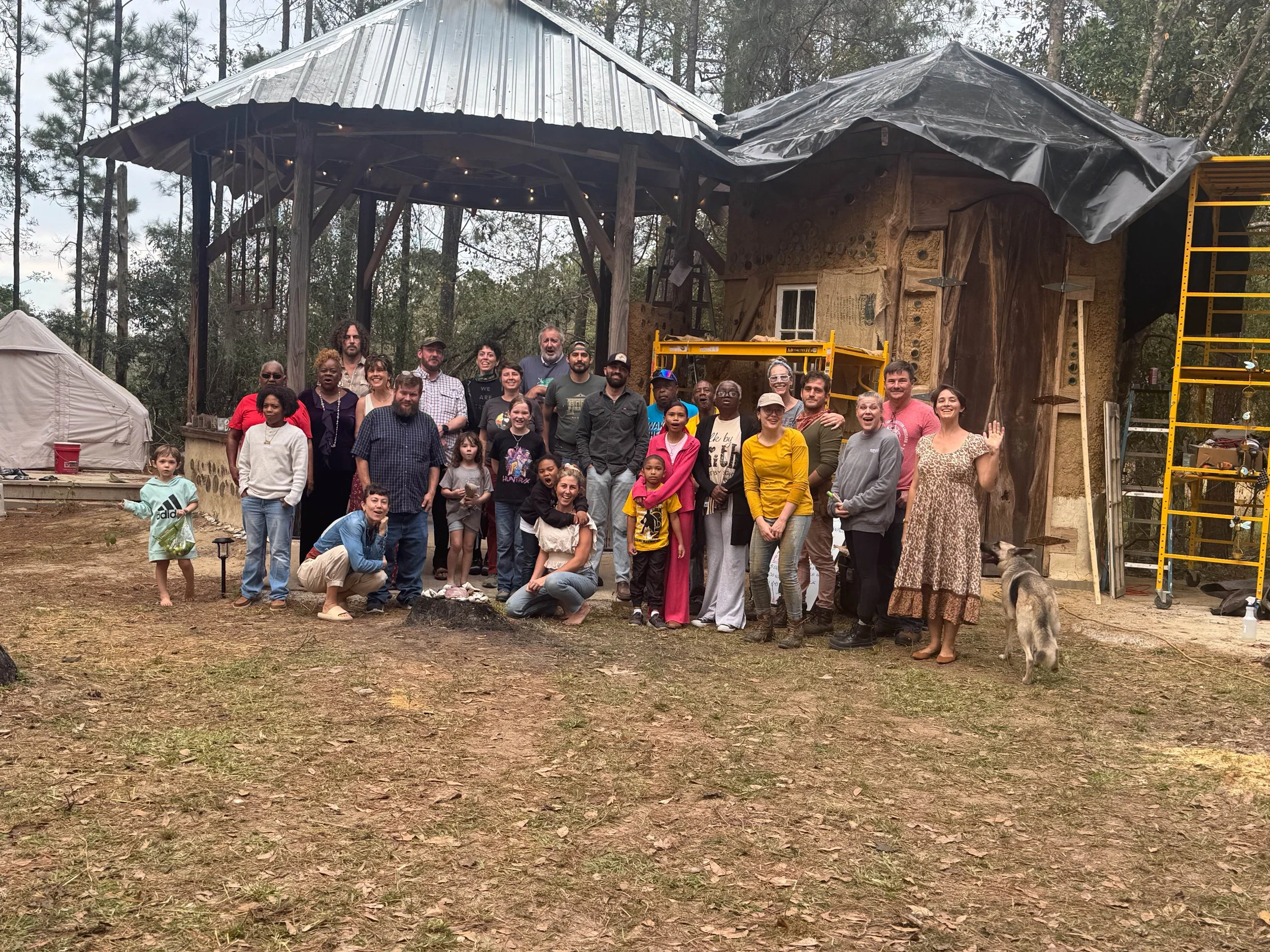
Instead of building alone, we chose to build in relationship: with the land, with visiting teachers, and with community members from the Gulf Coast and Appalachia who gathered for nine days of hands-on creation. The project was hosted at Snow White Sanctuary, a 24-acre homestead and nature sanctuary, and brought together dozens of participants for workshops in natural building, material experimentation, and ecological connection.
What we built:
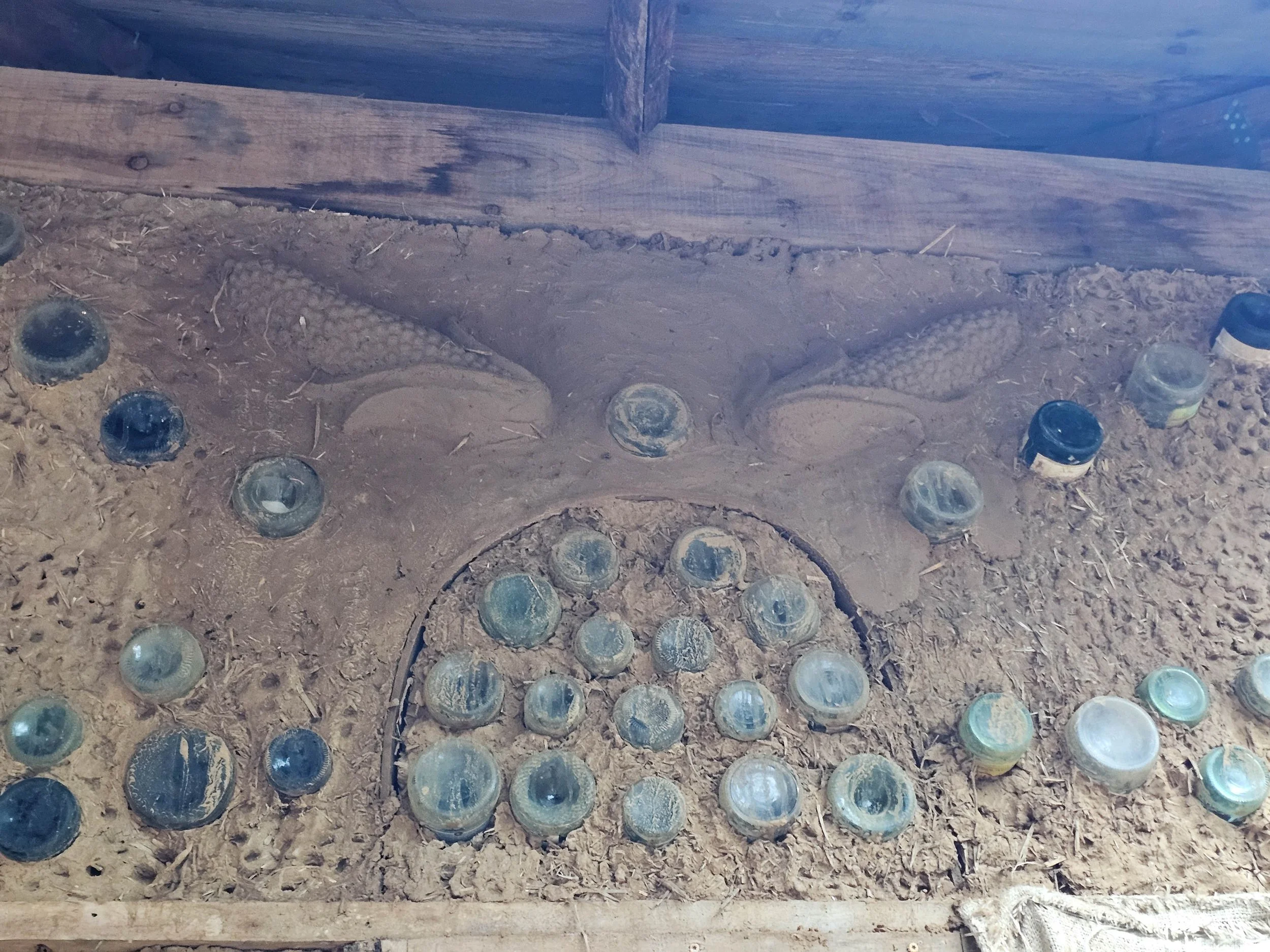
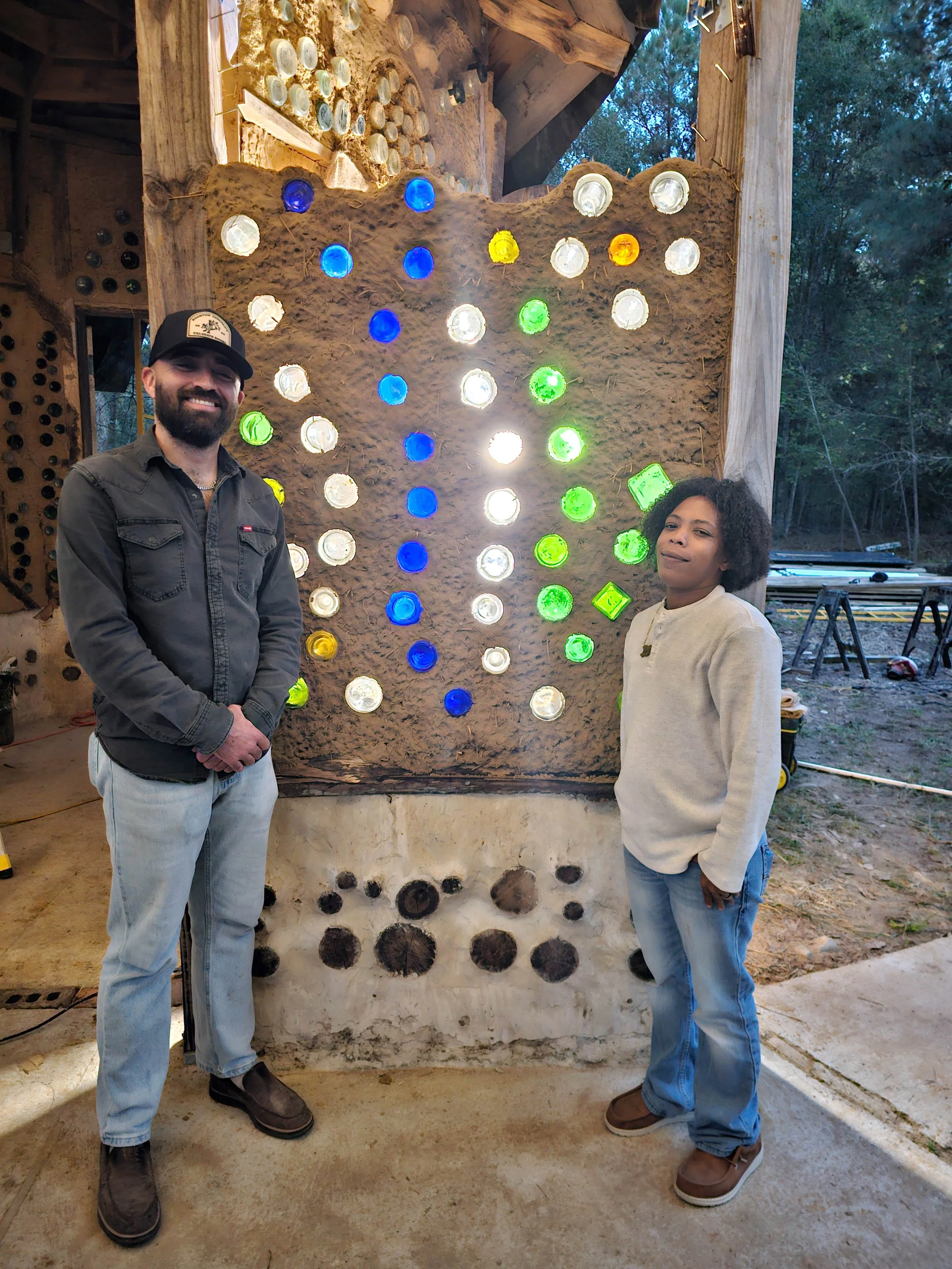
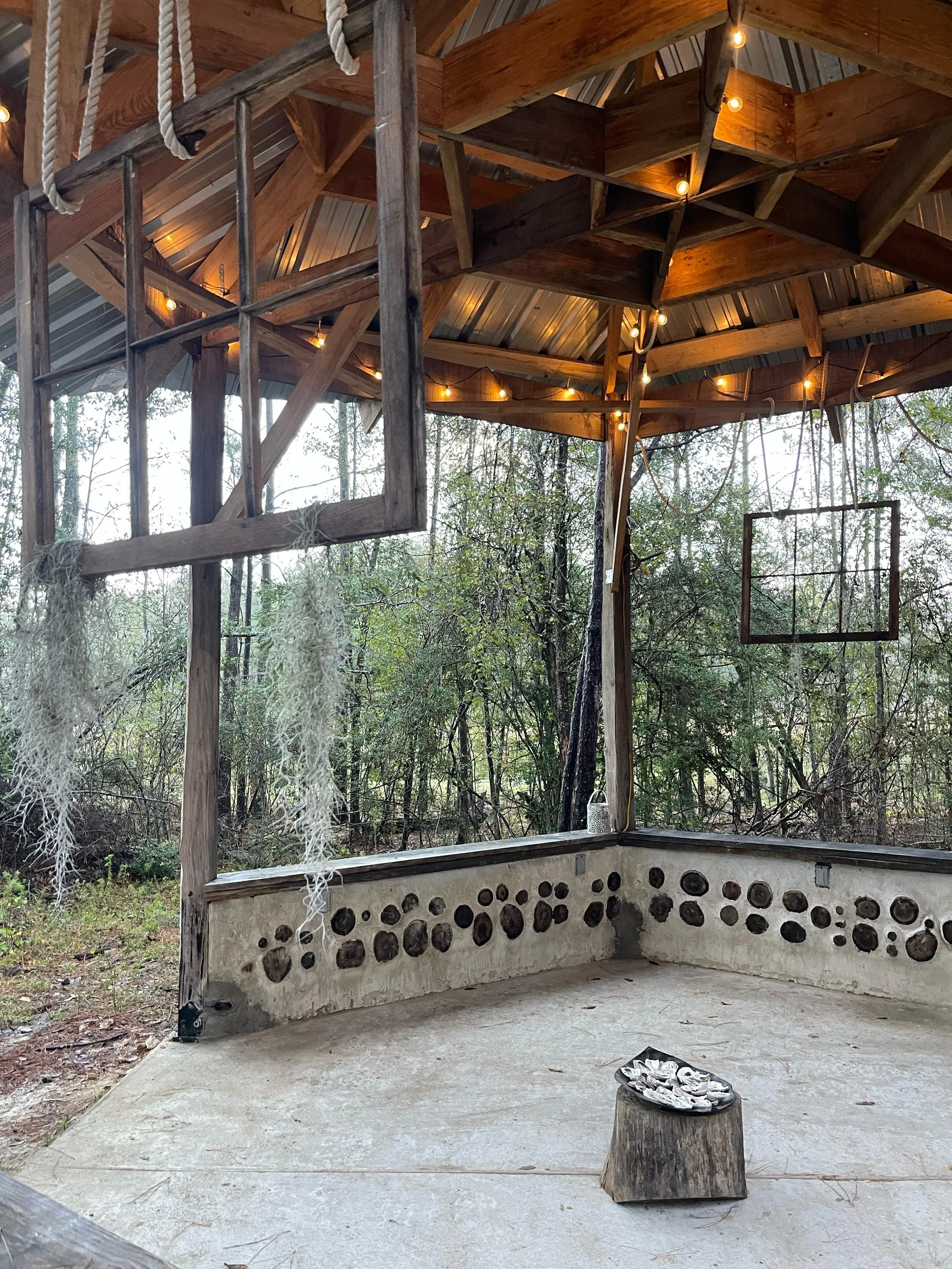
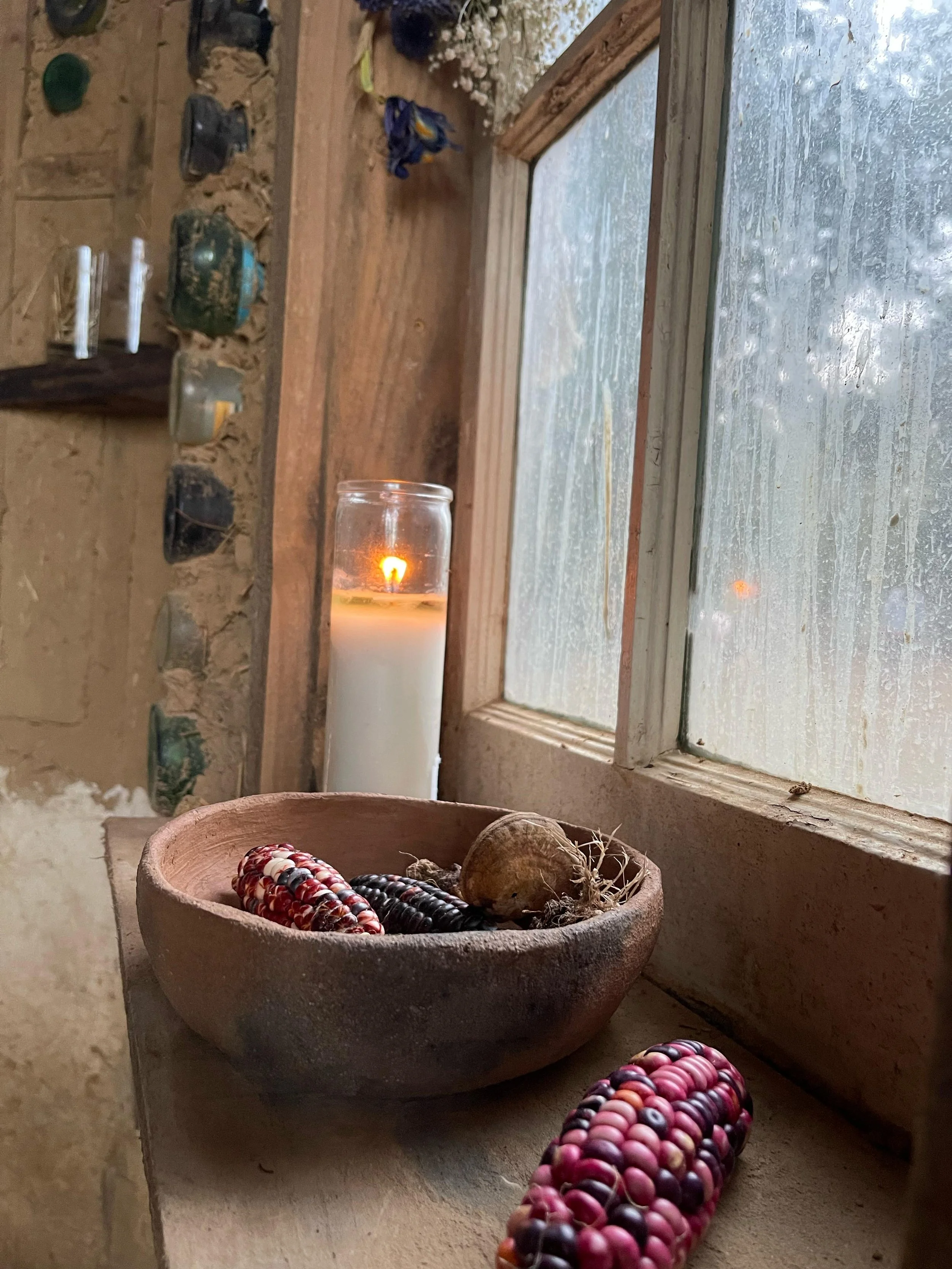
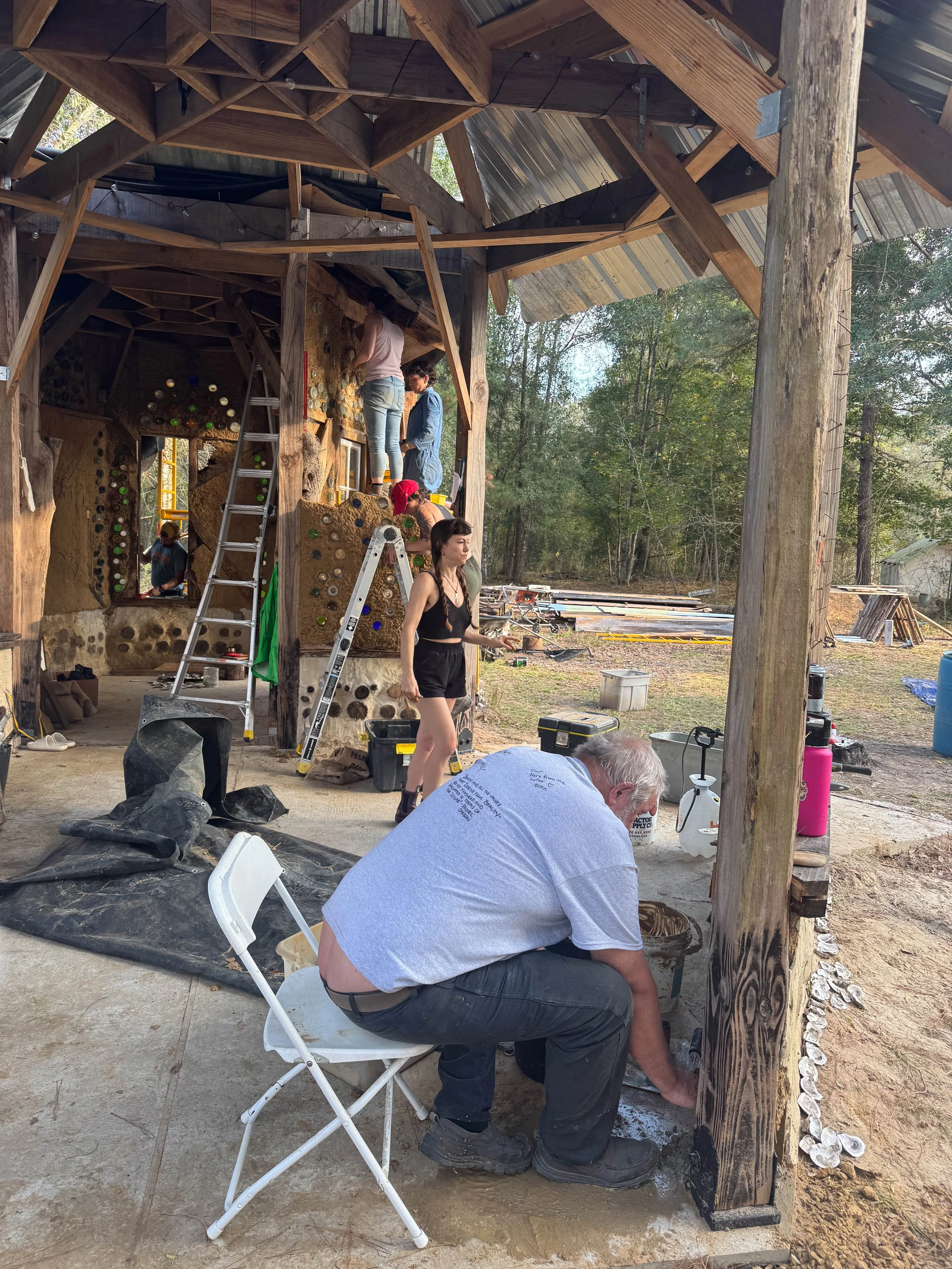
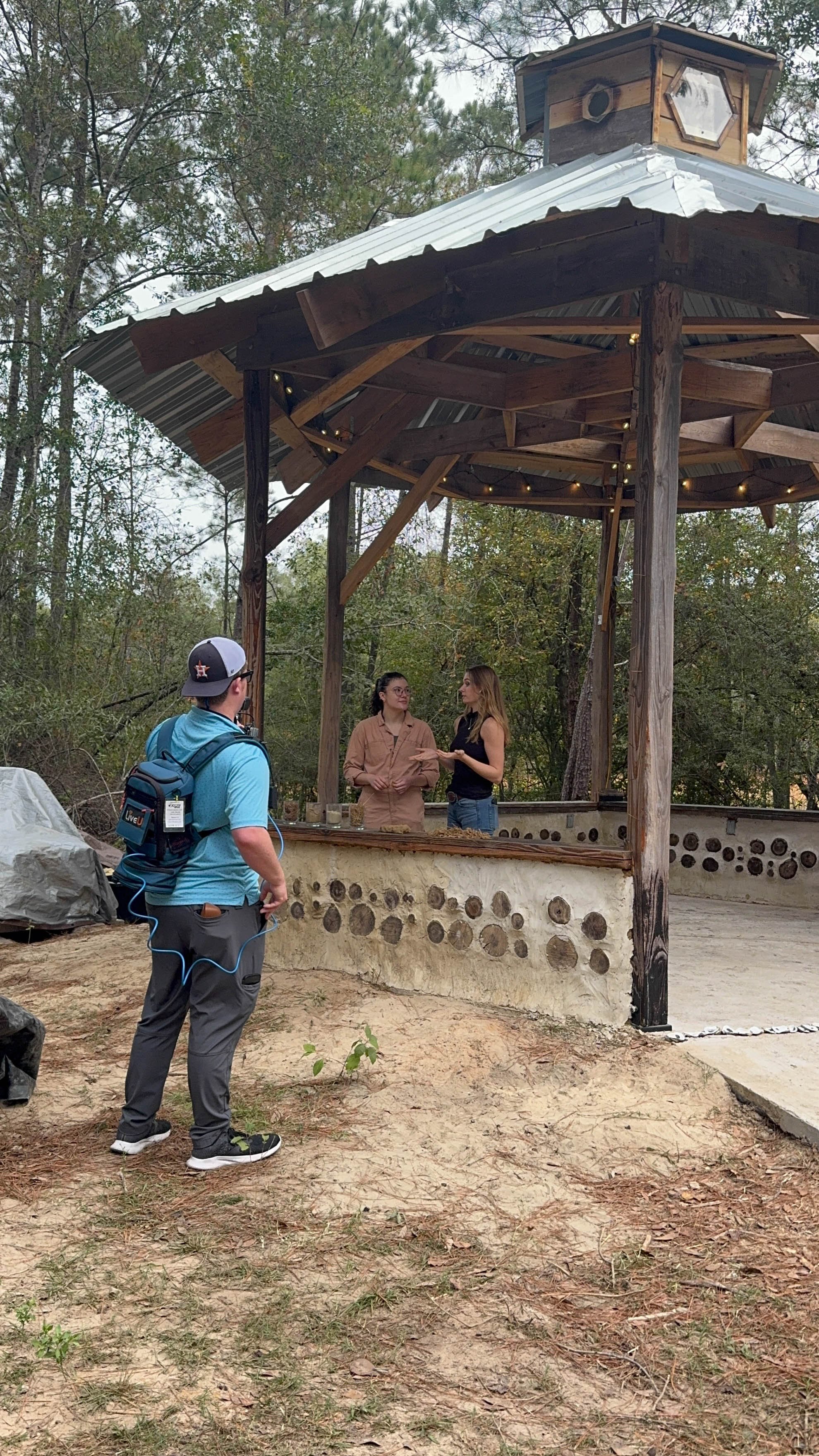
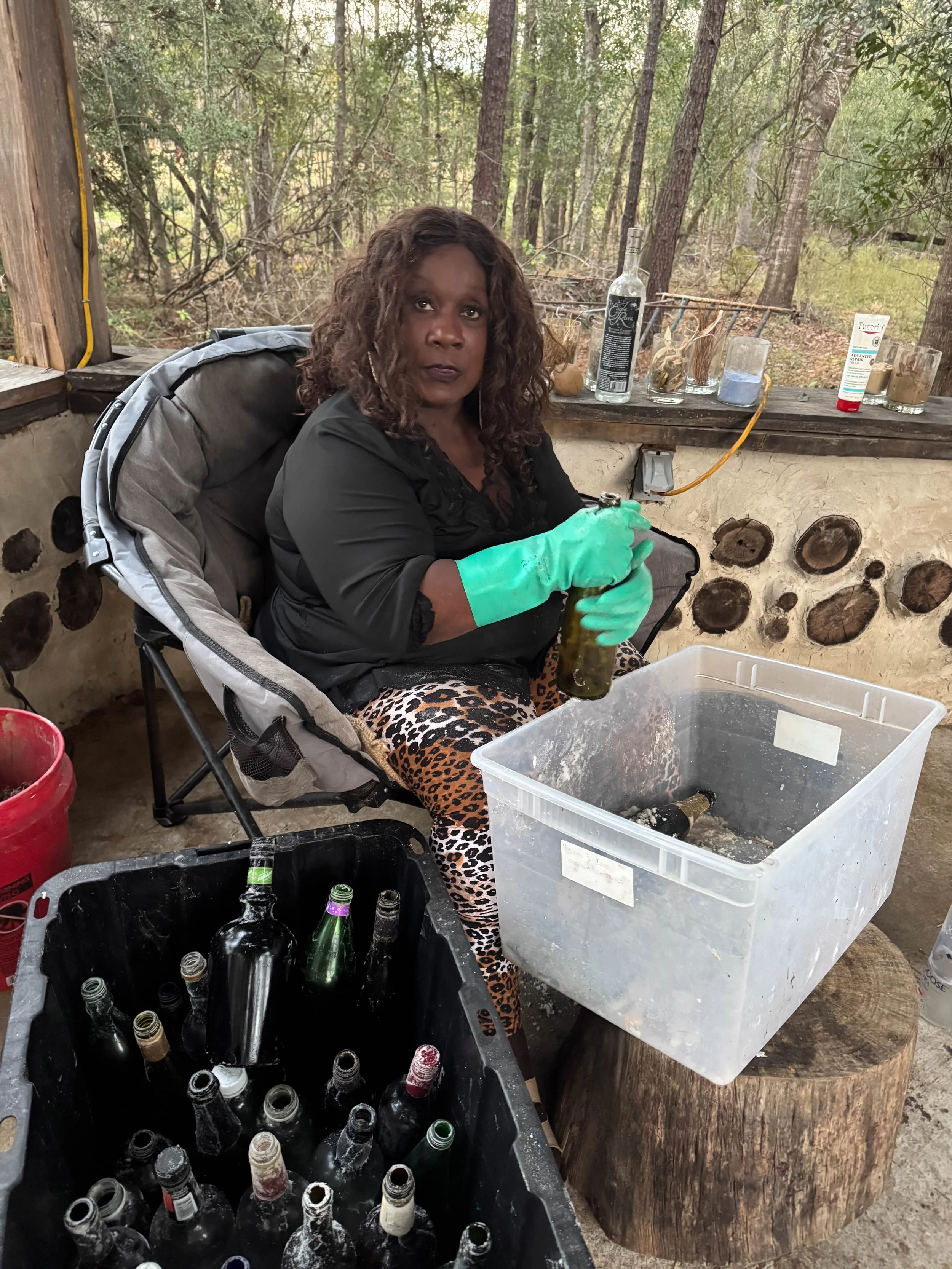
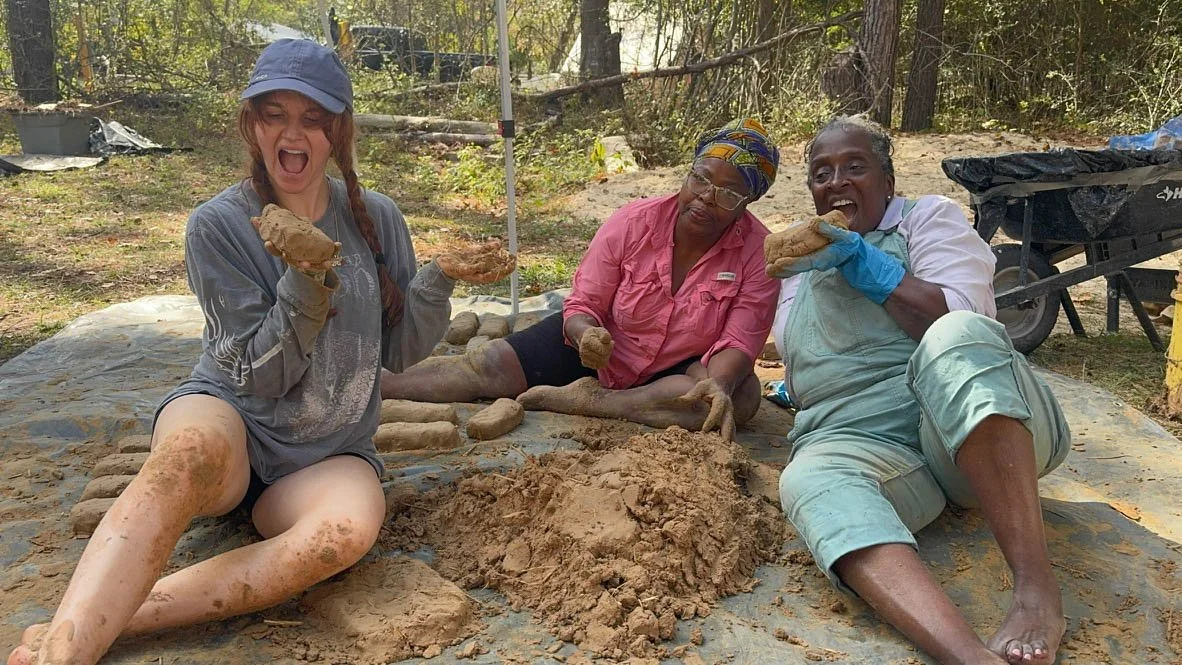
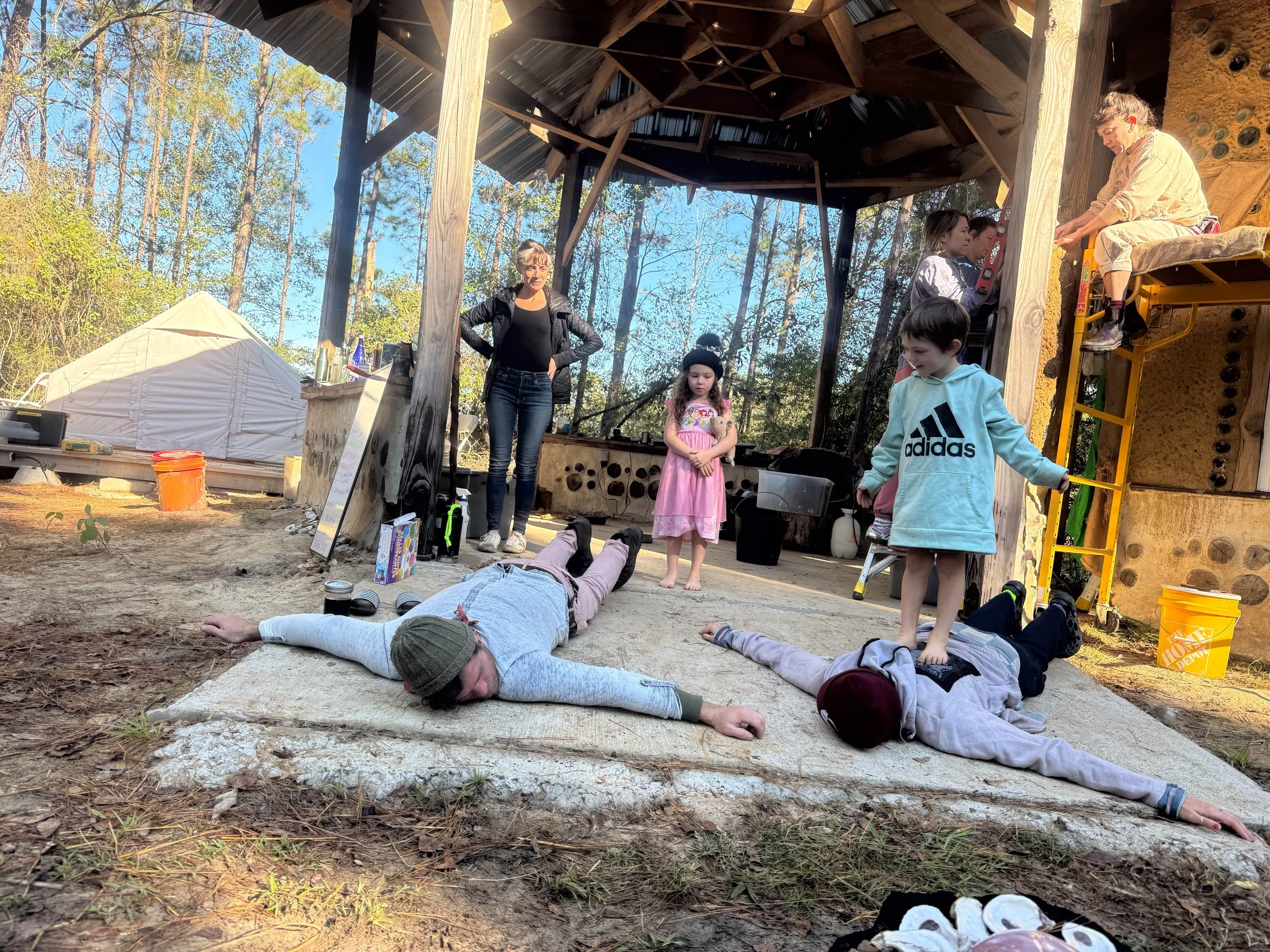
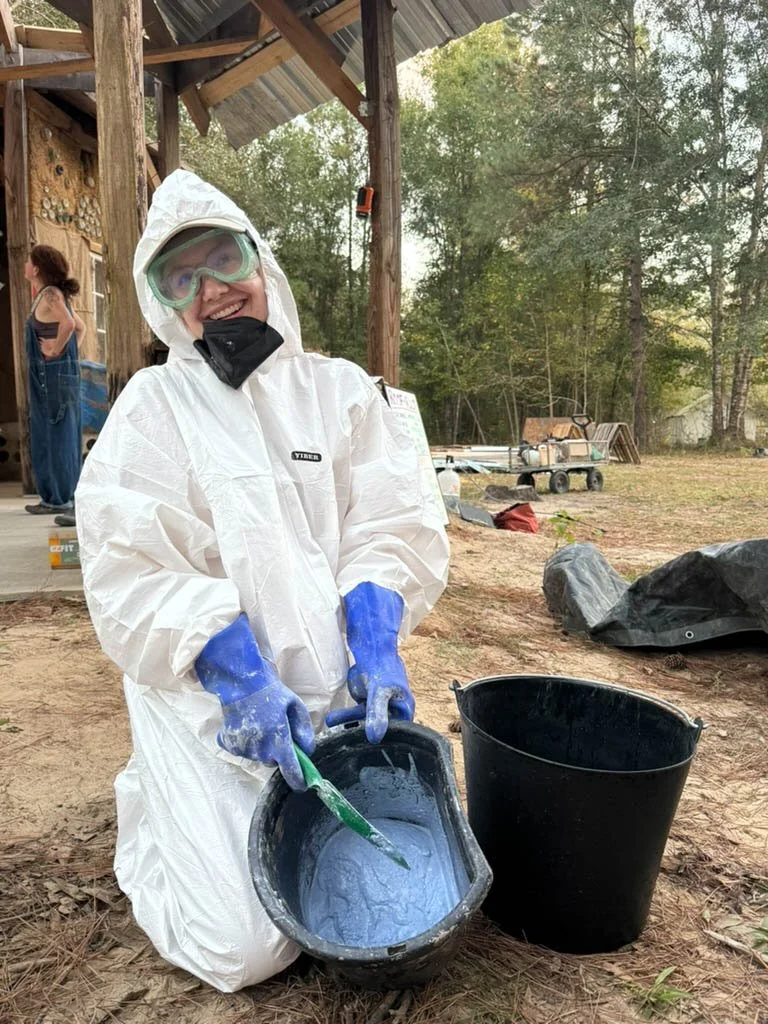
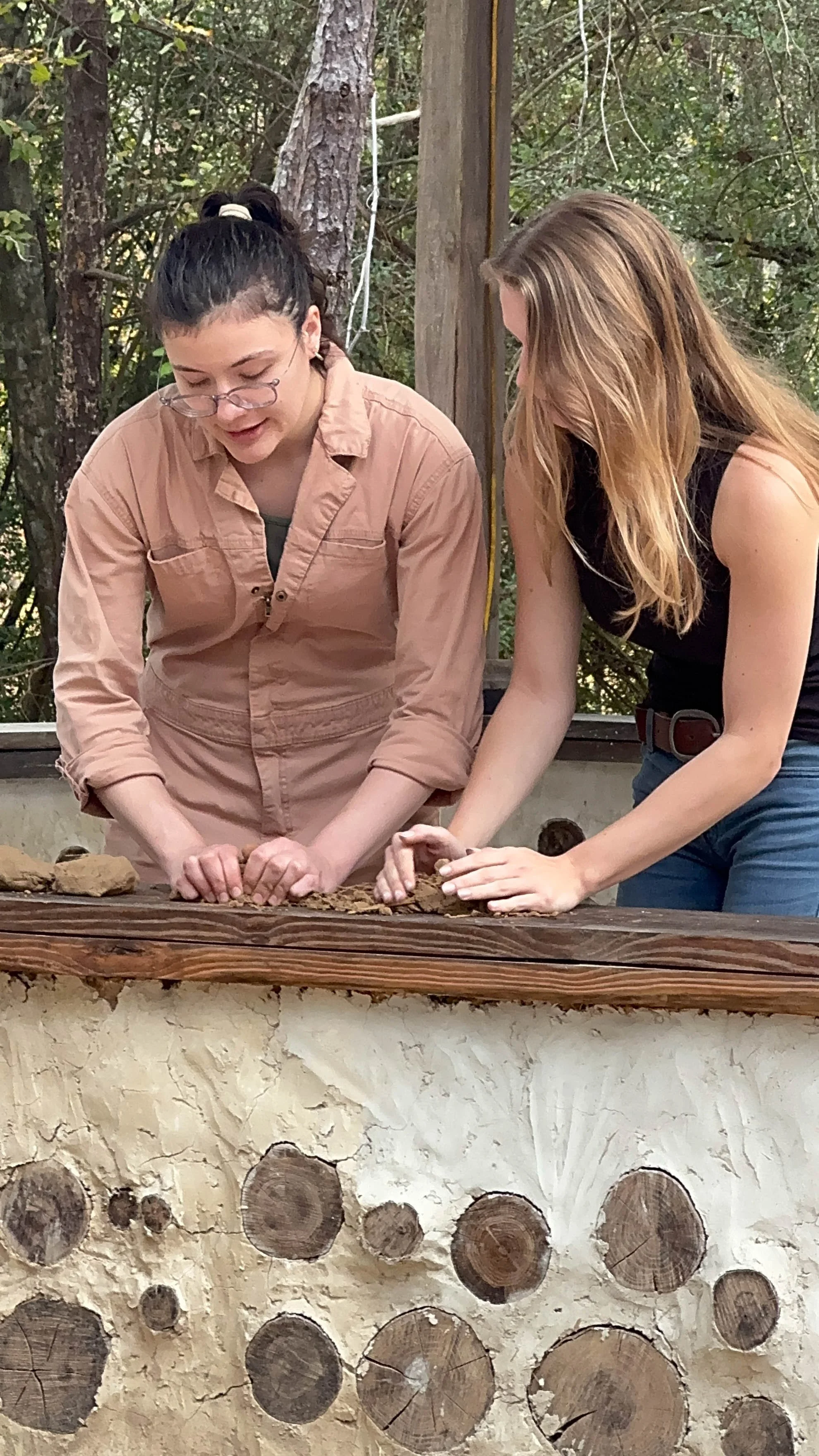
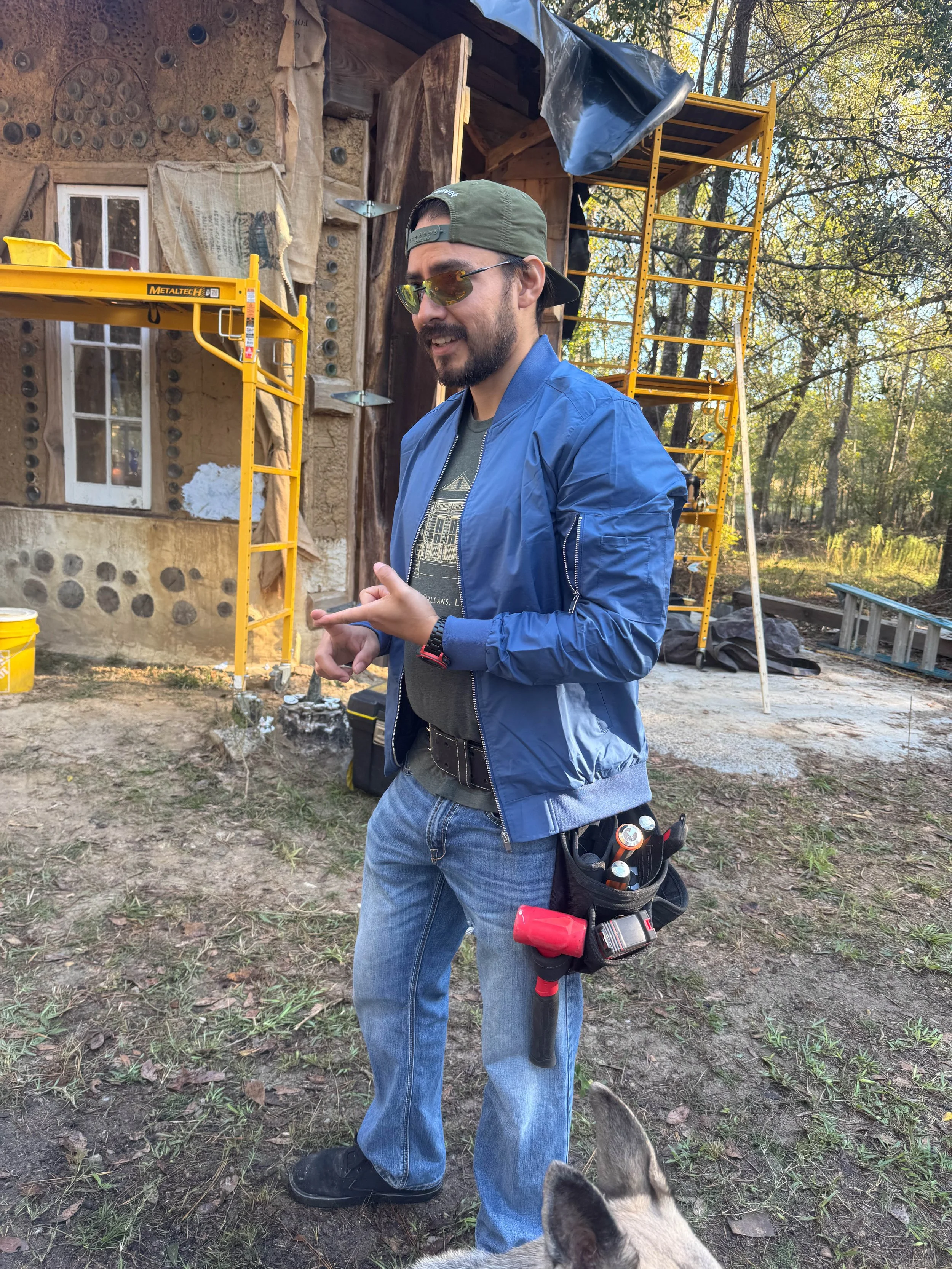
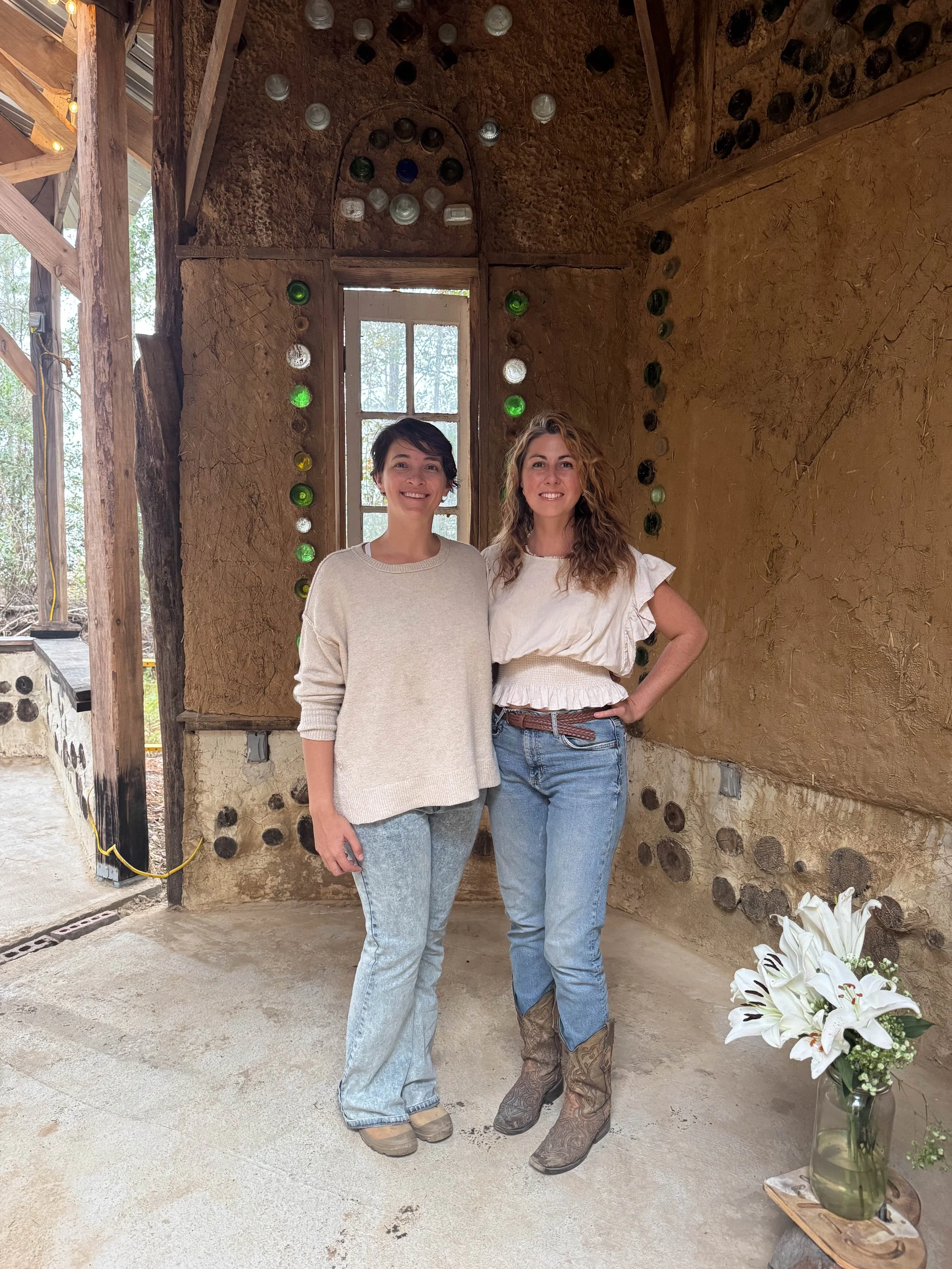
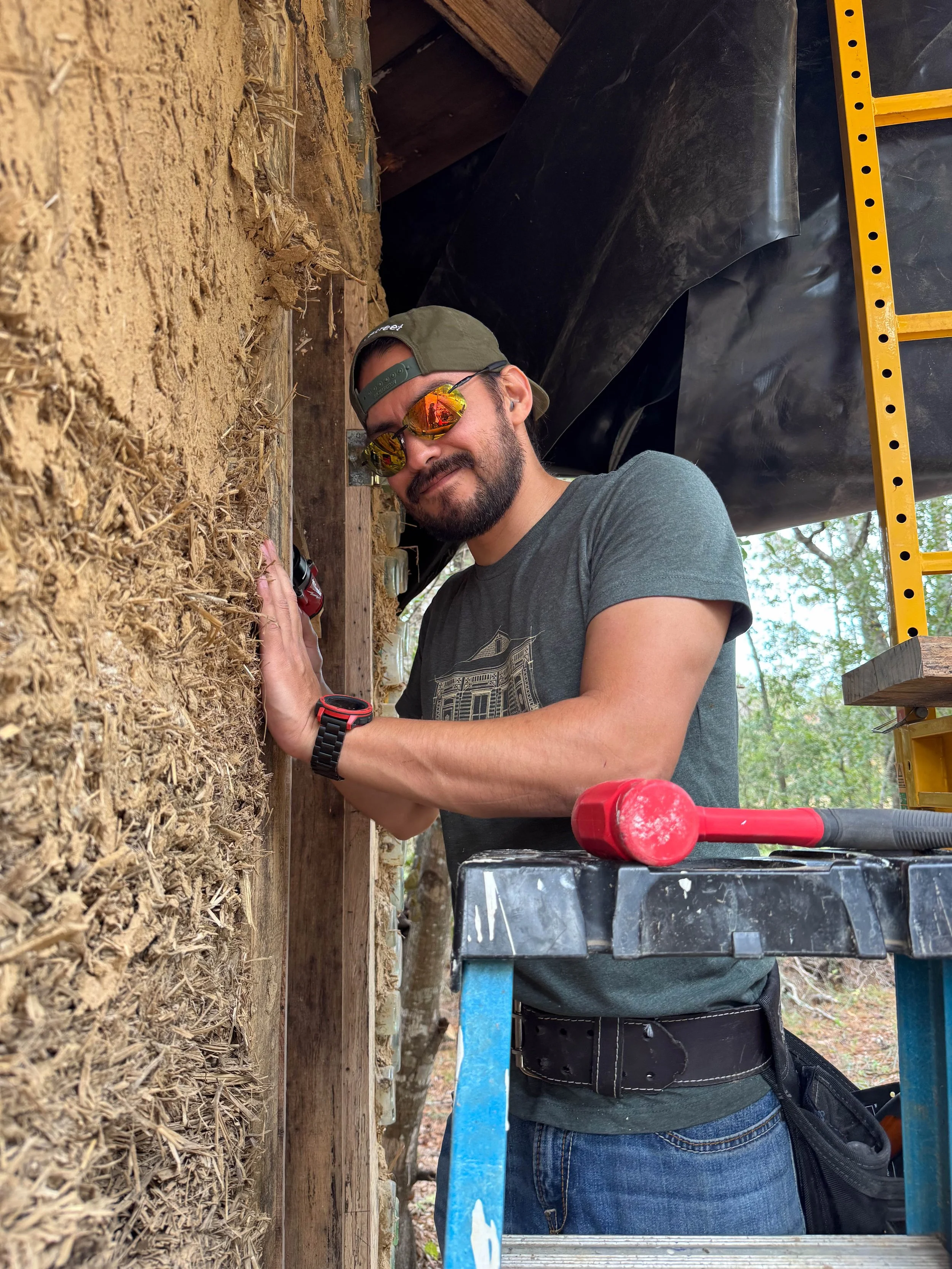
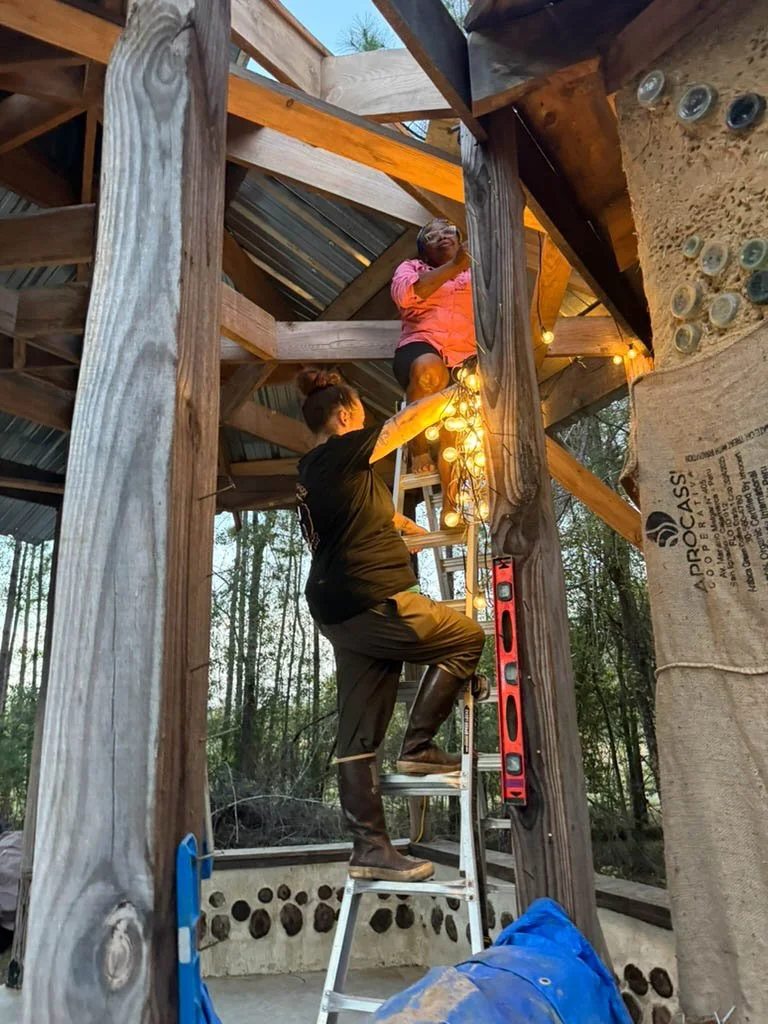
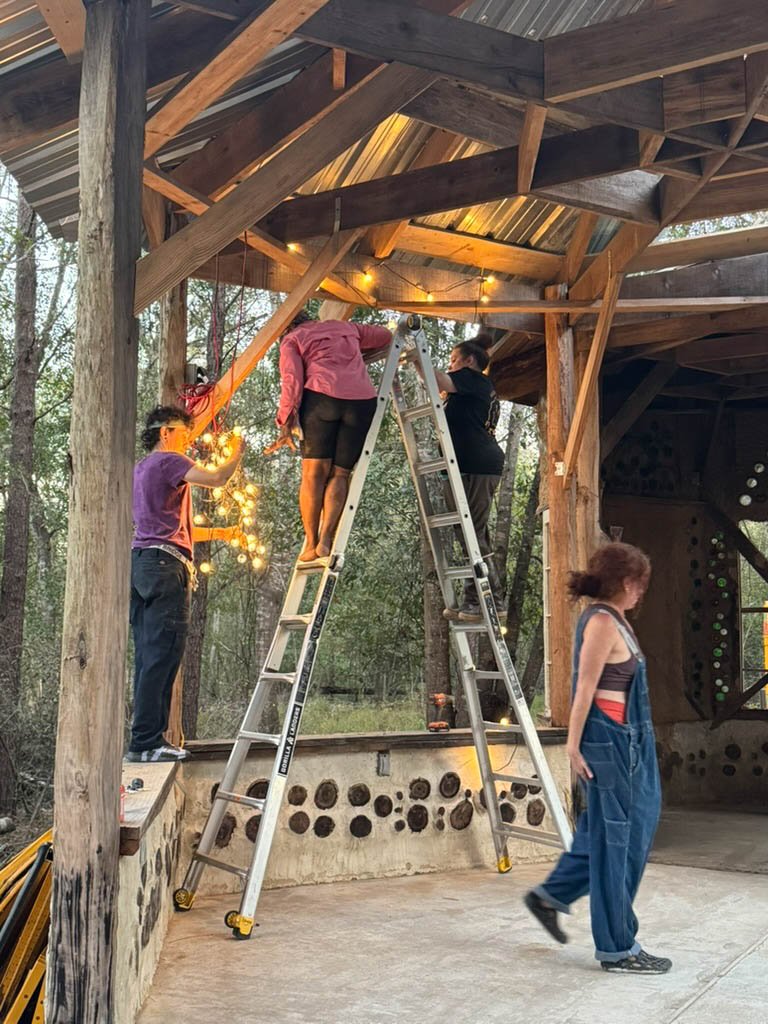
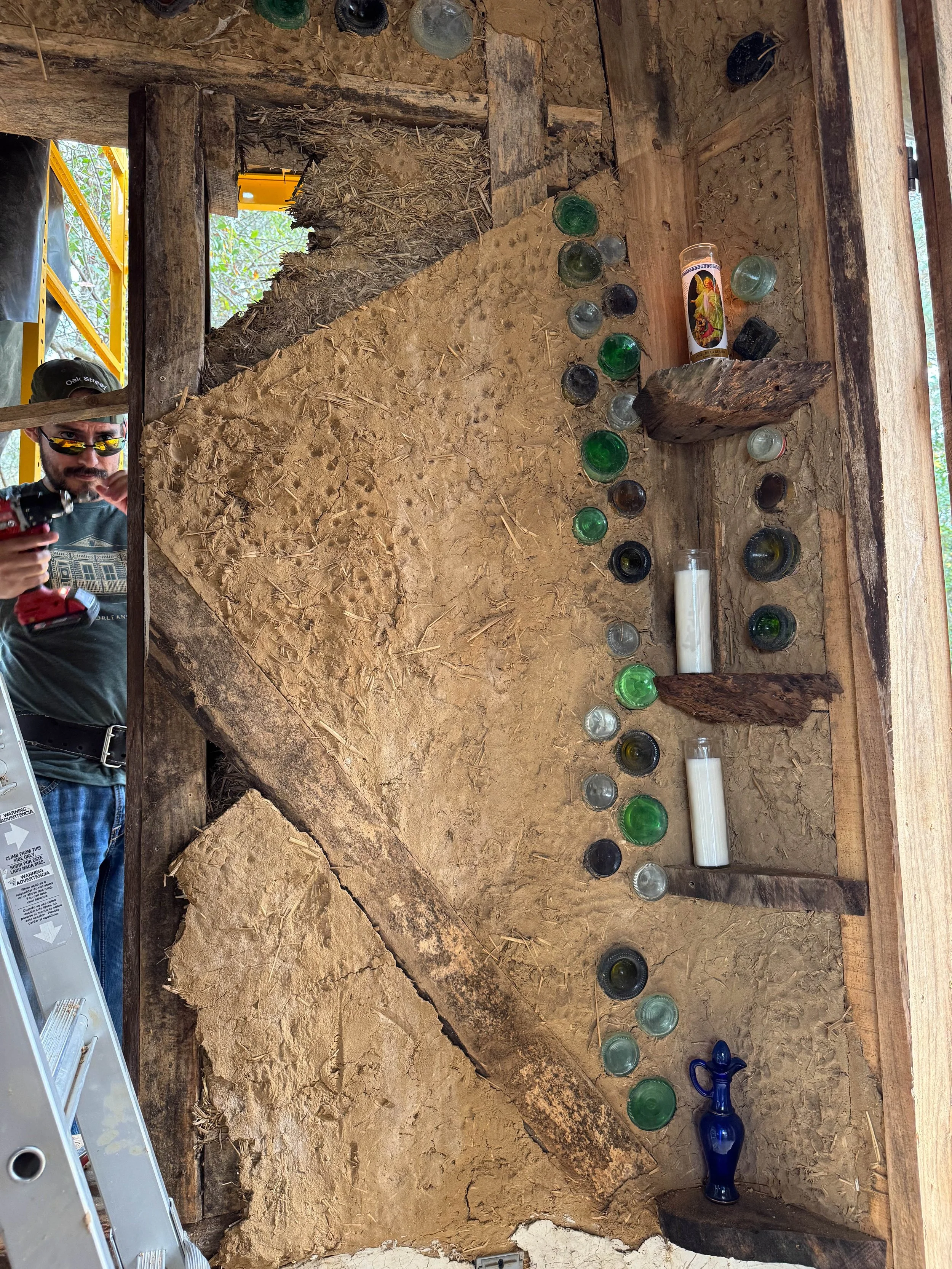
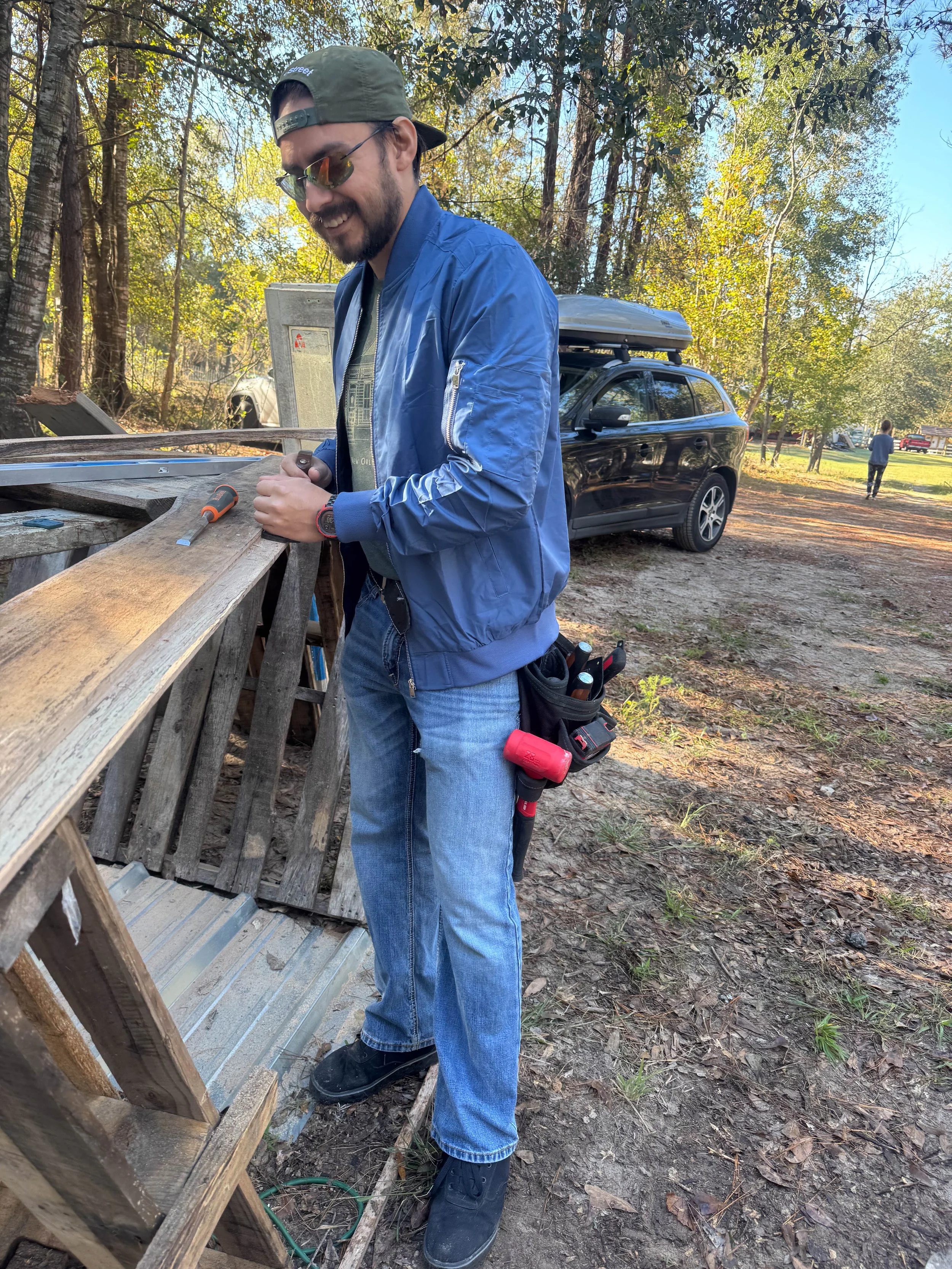
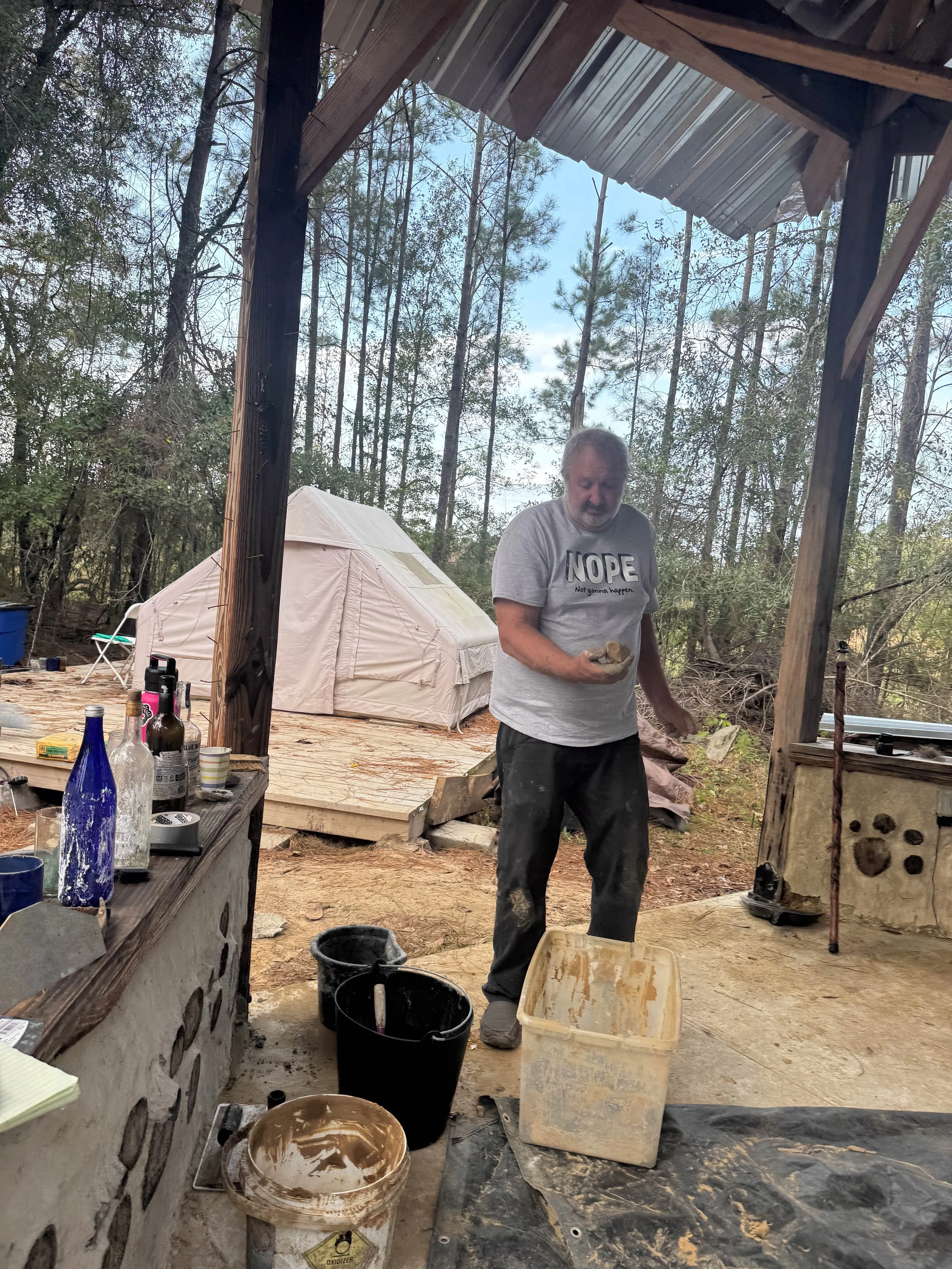
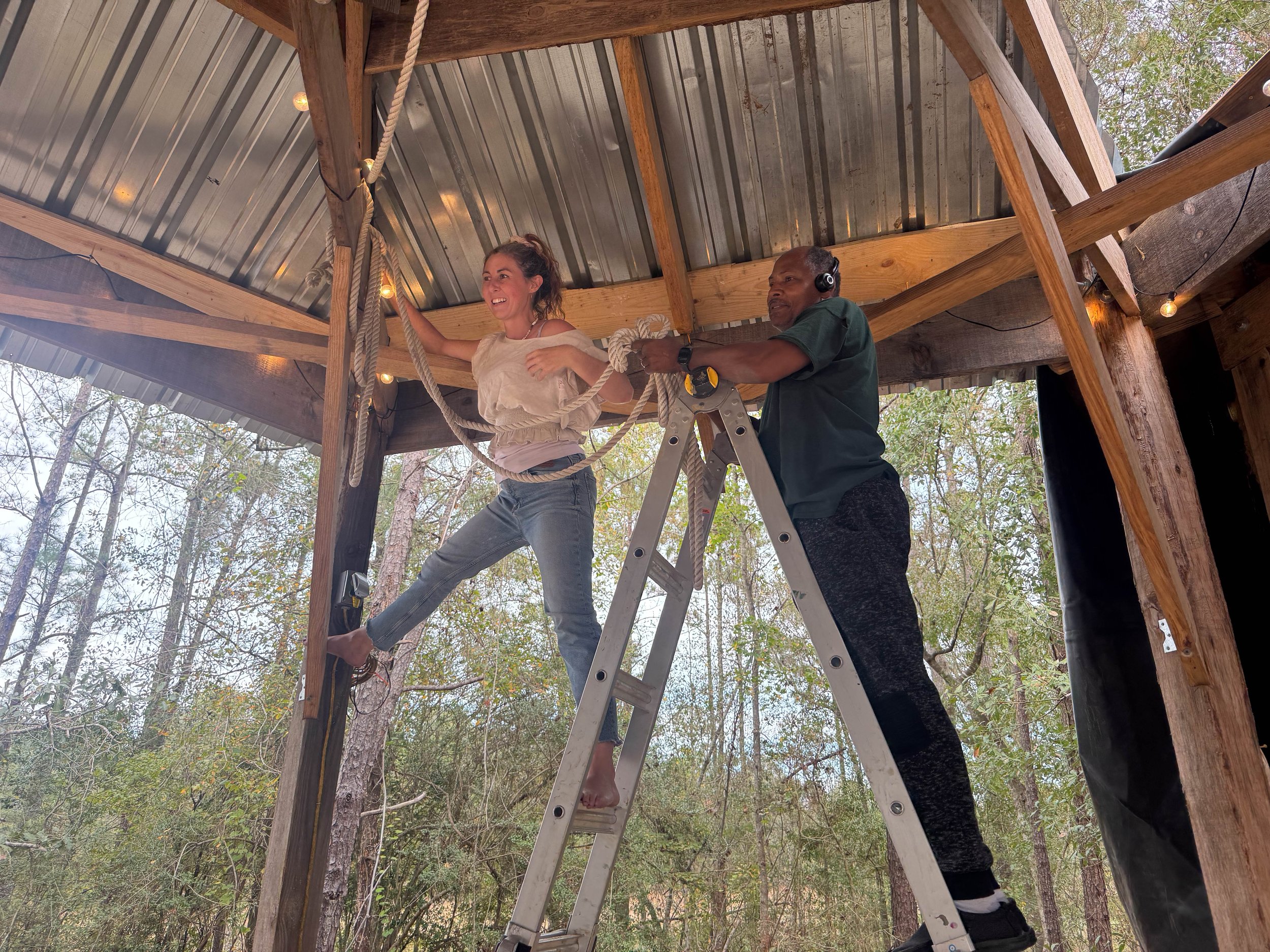
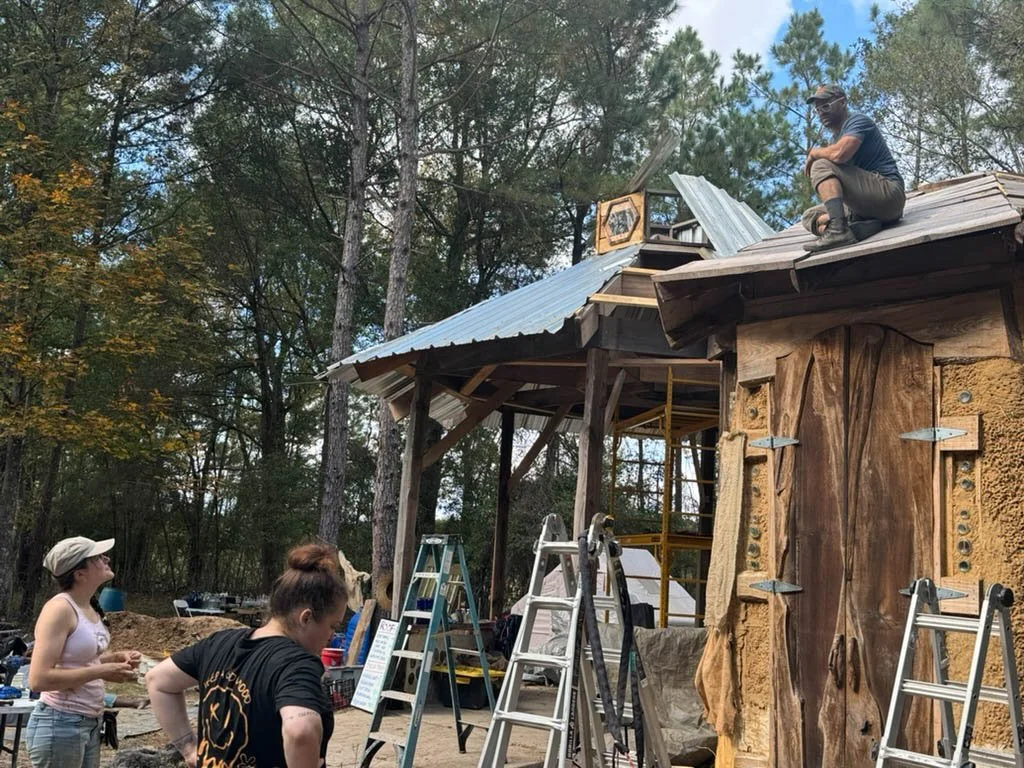
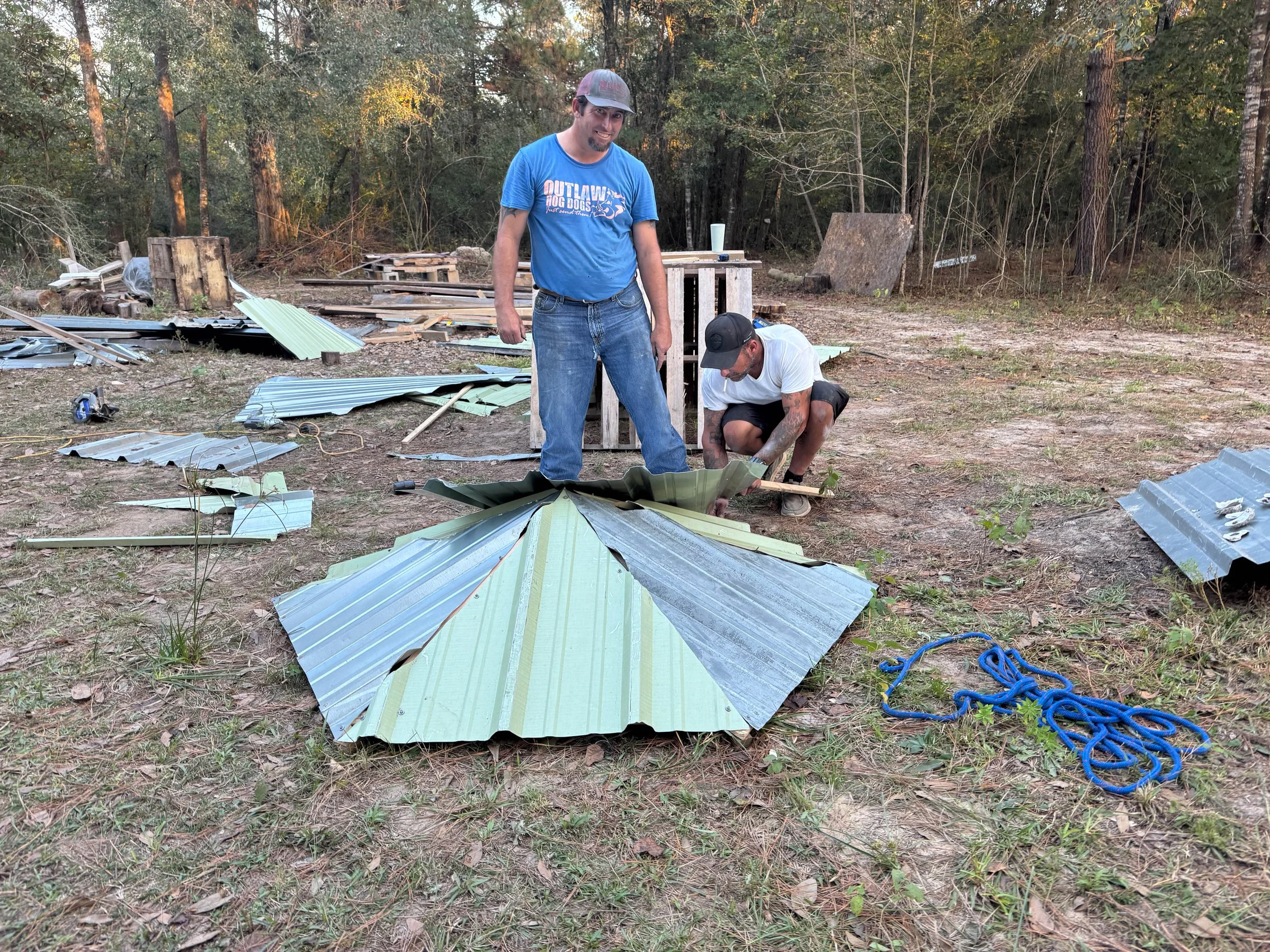
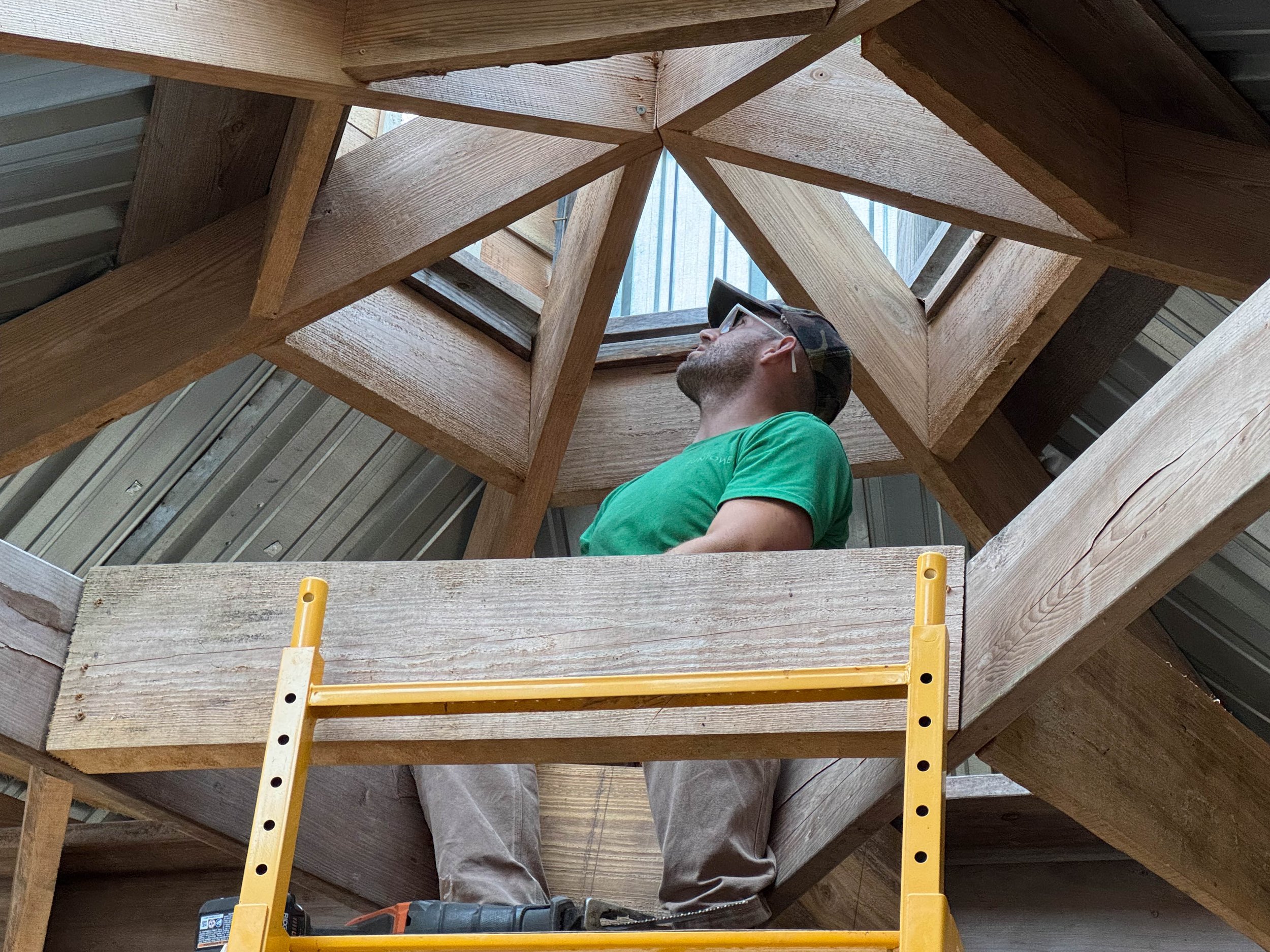
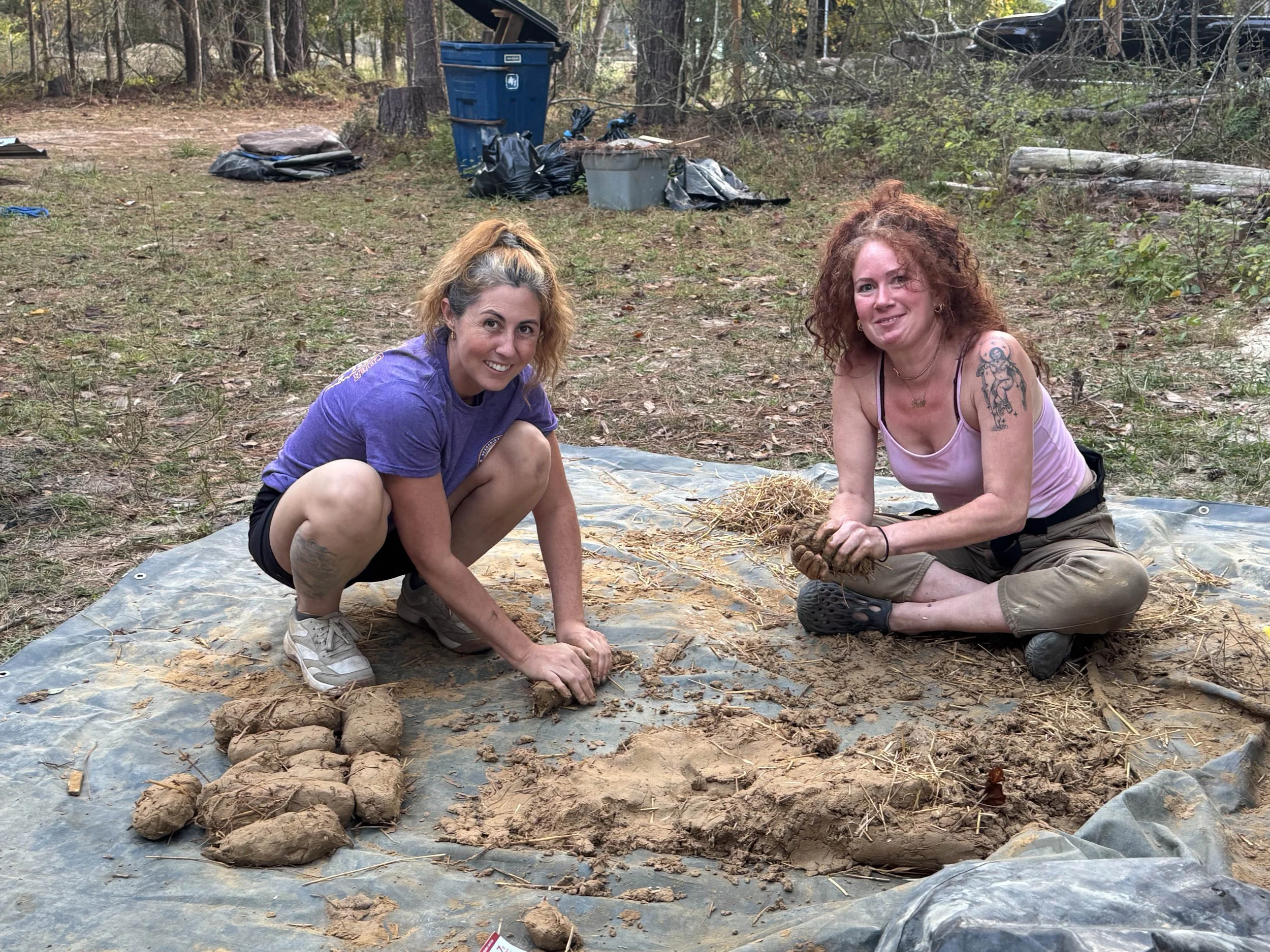
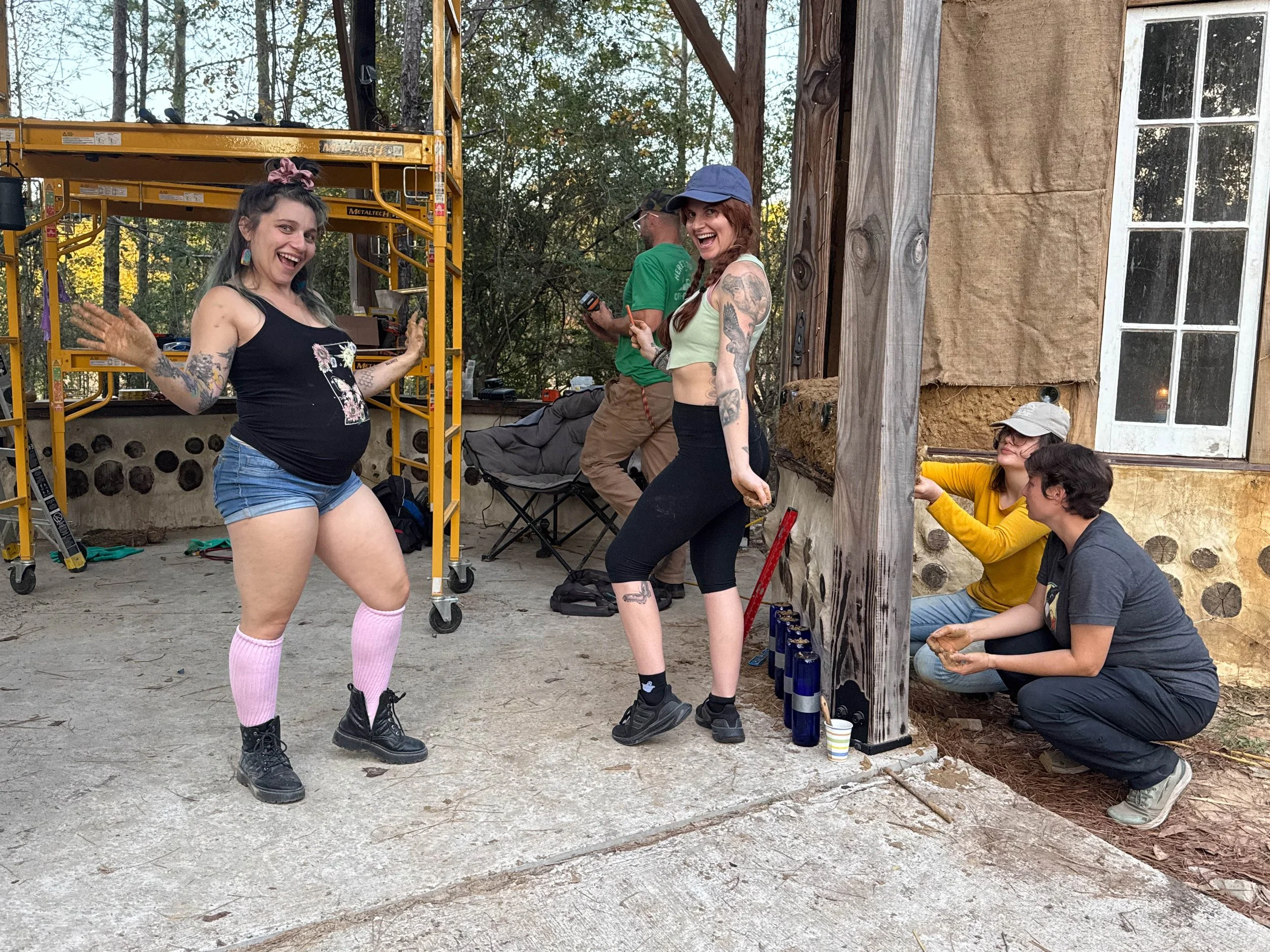
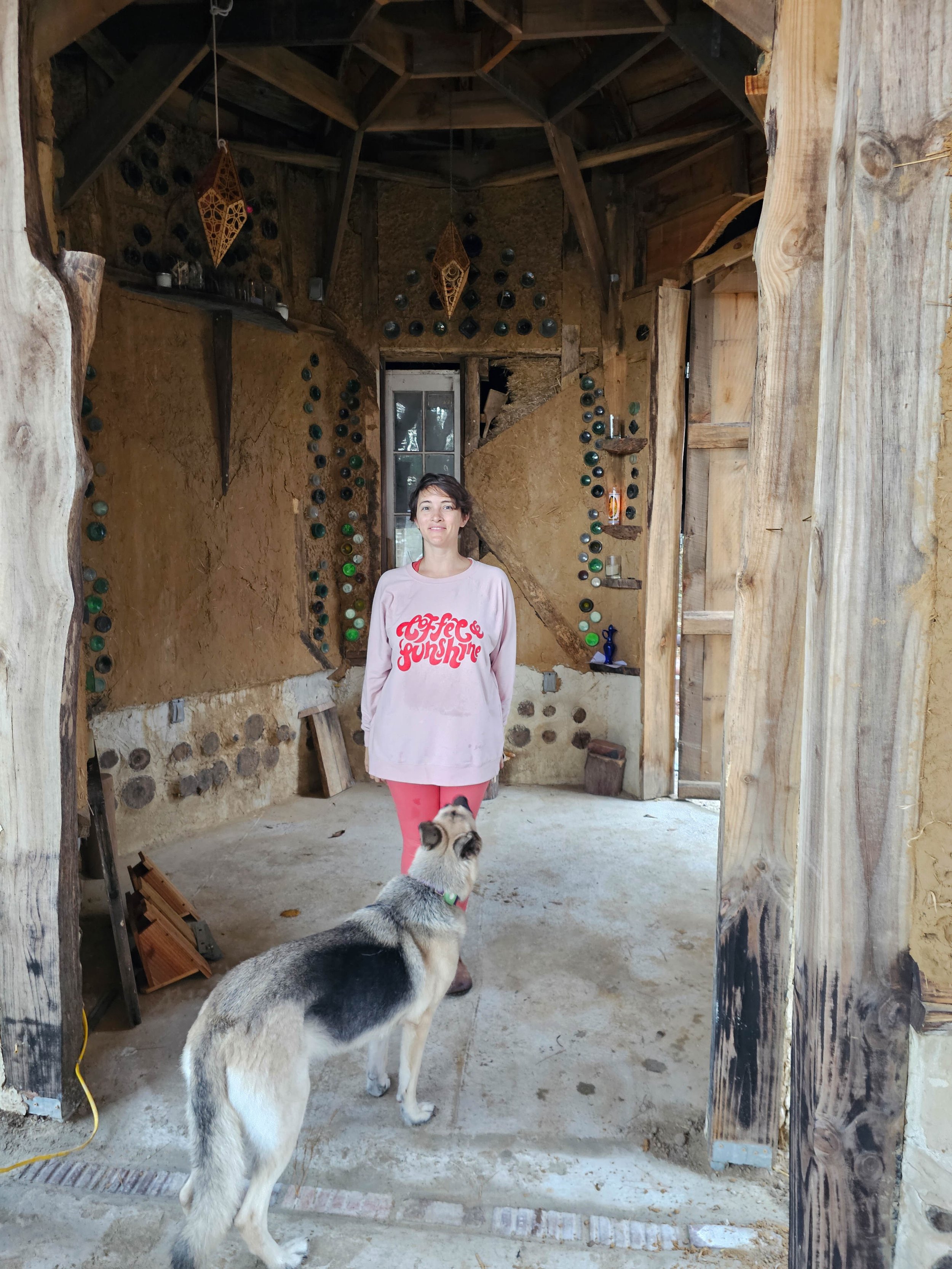
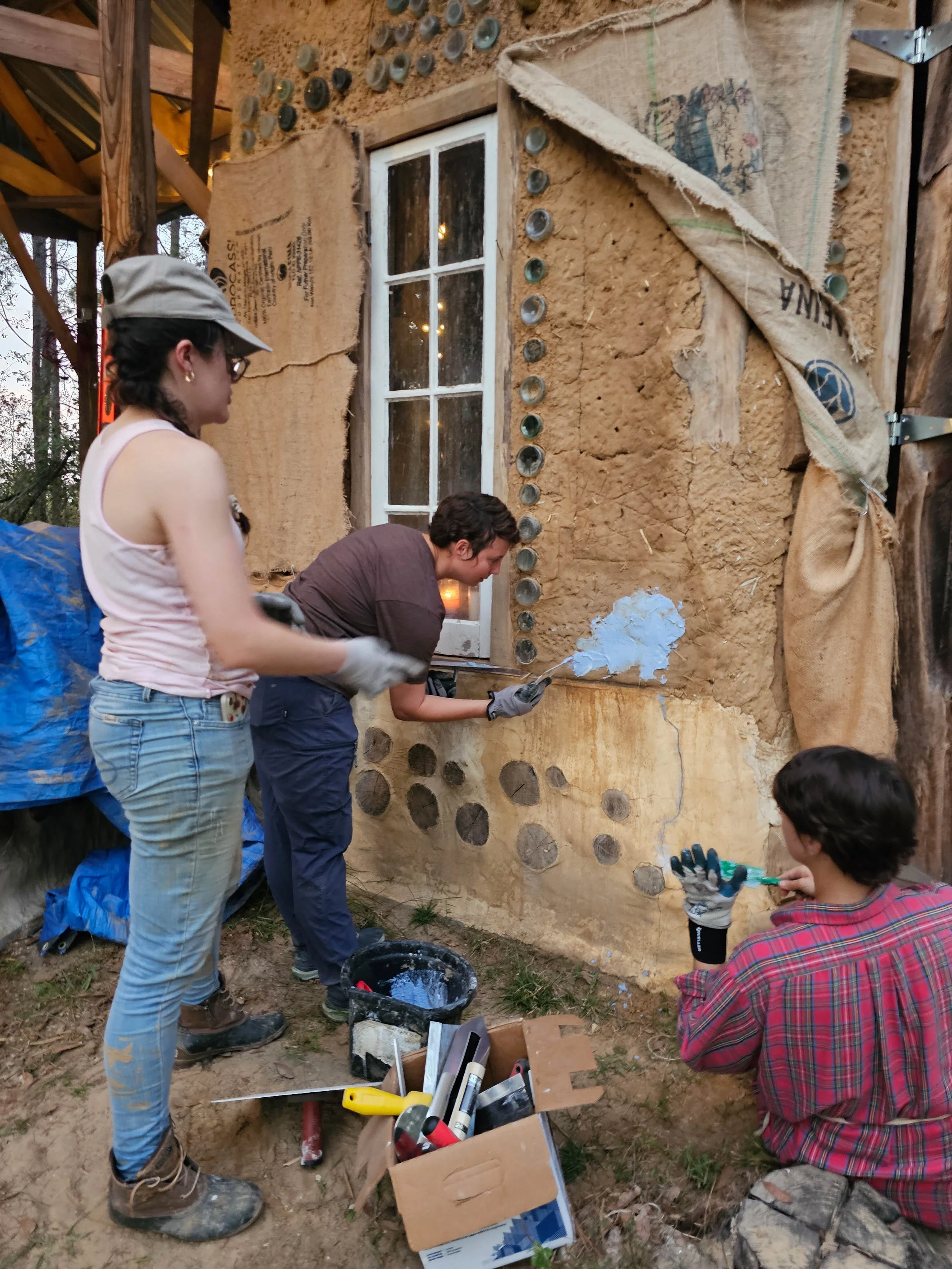
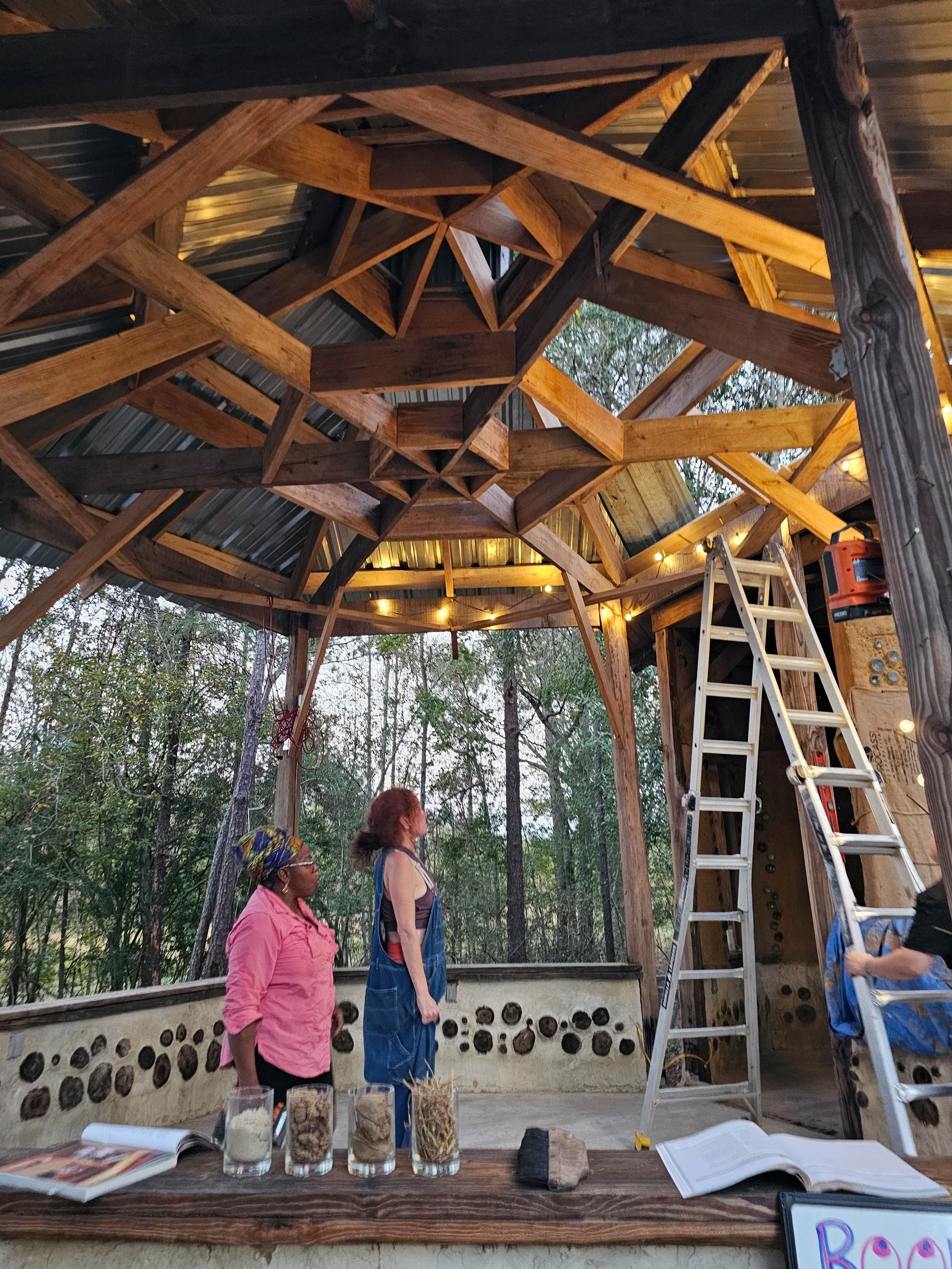
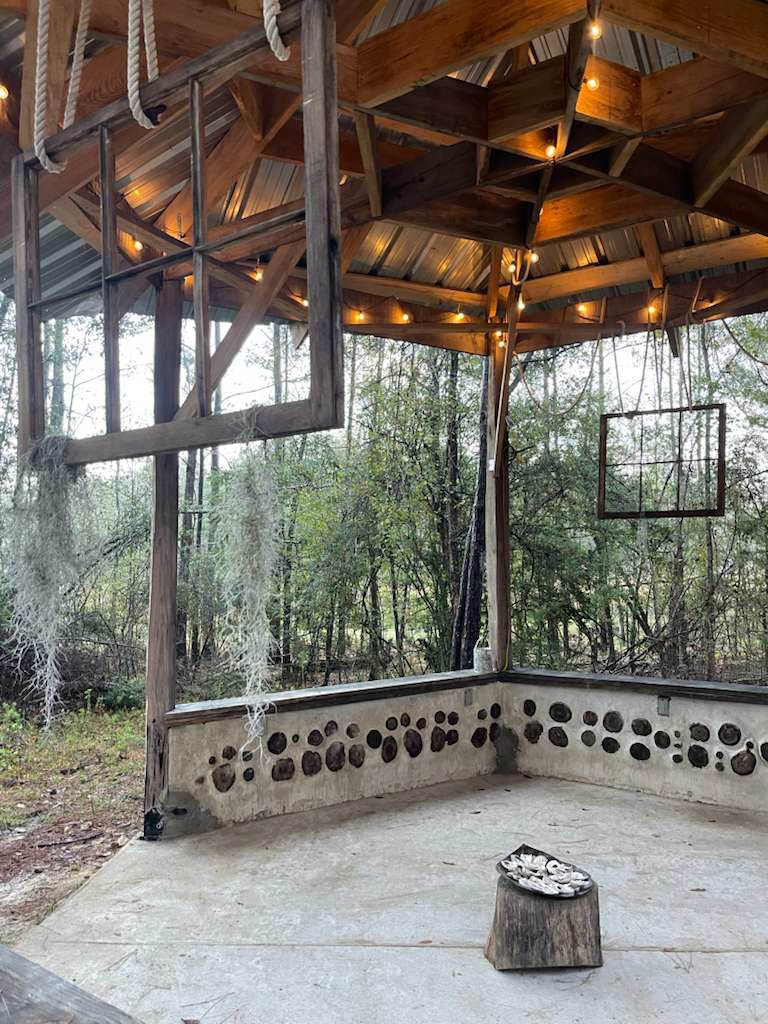
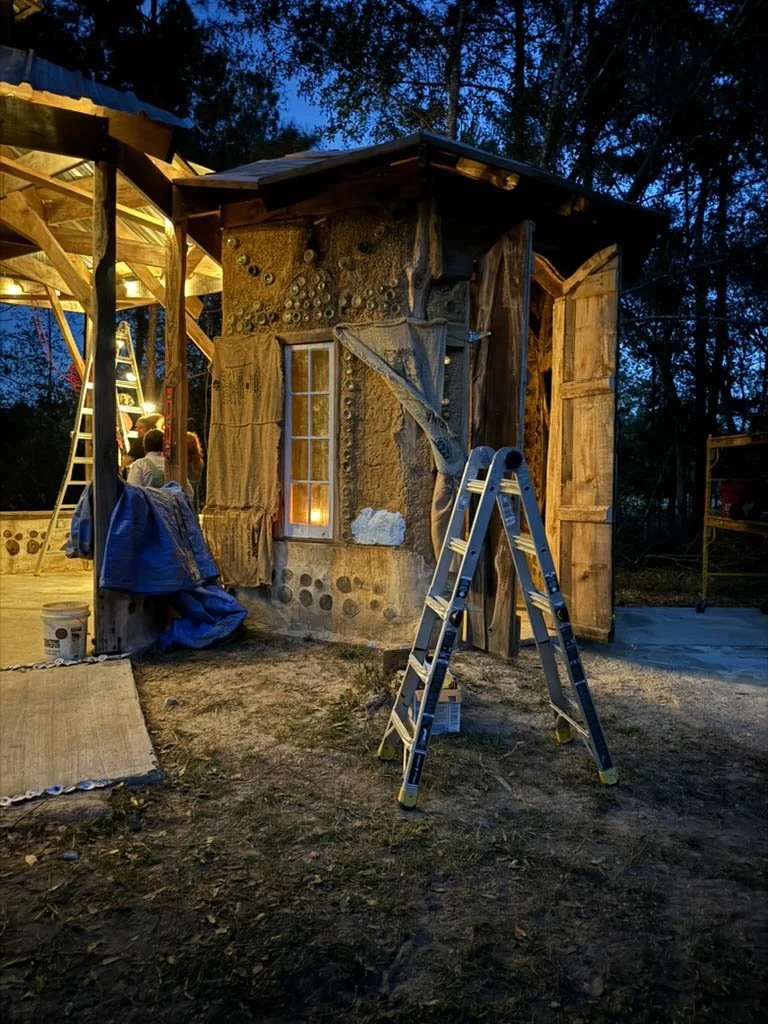
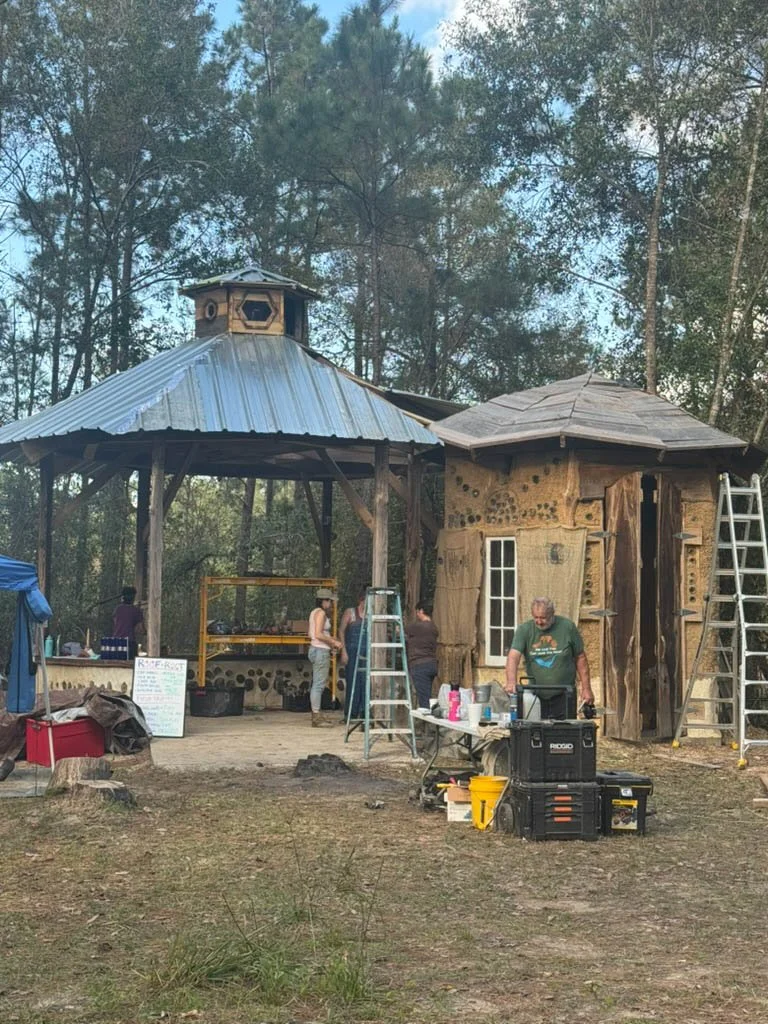
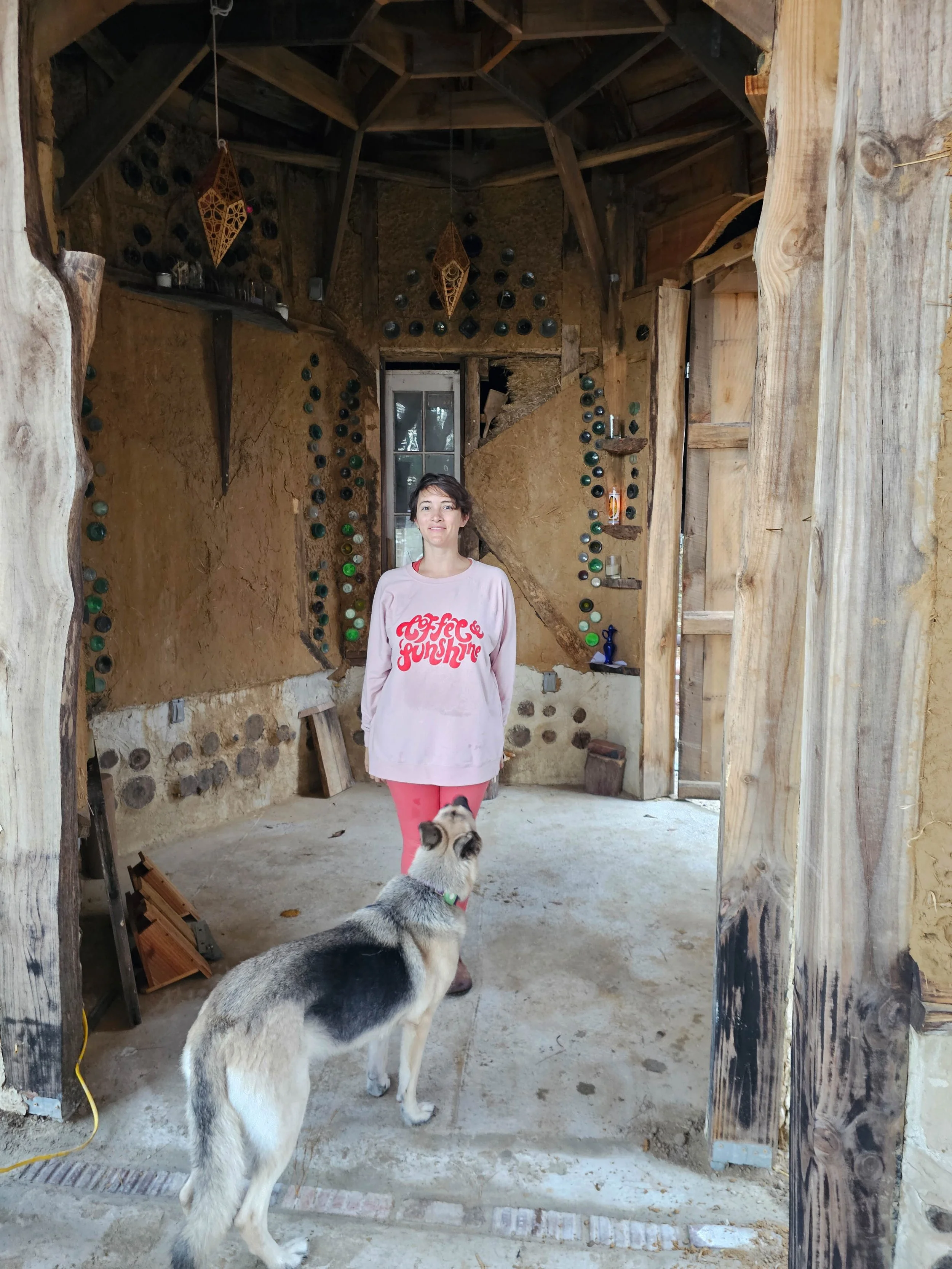
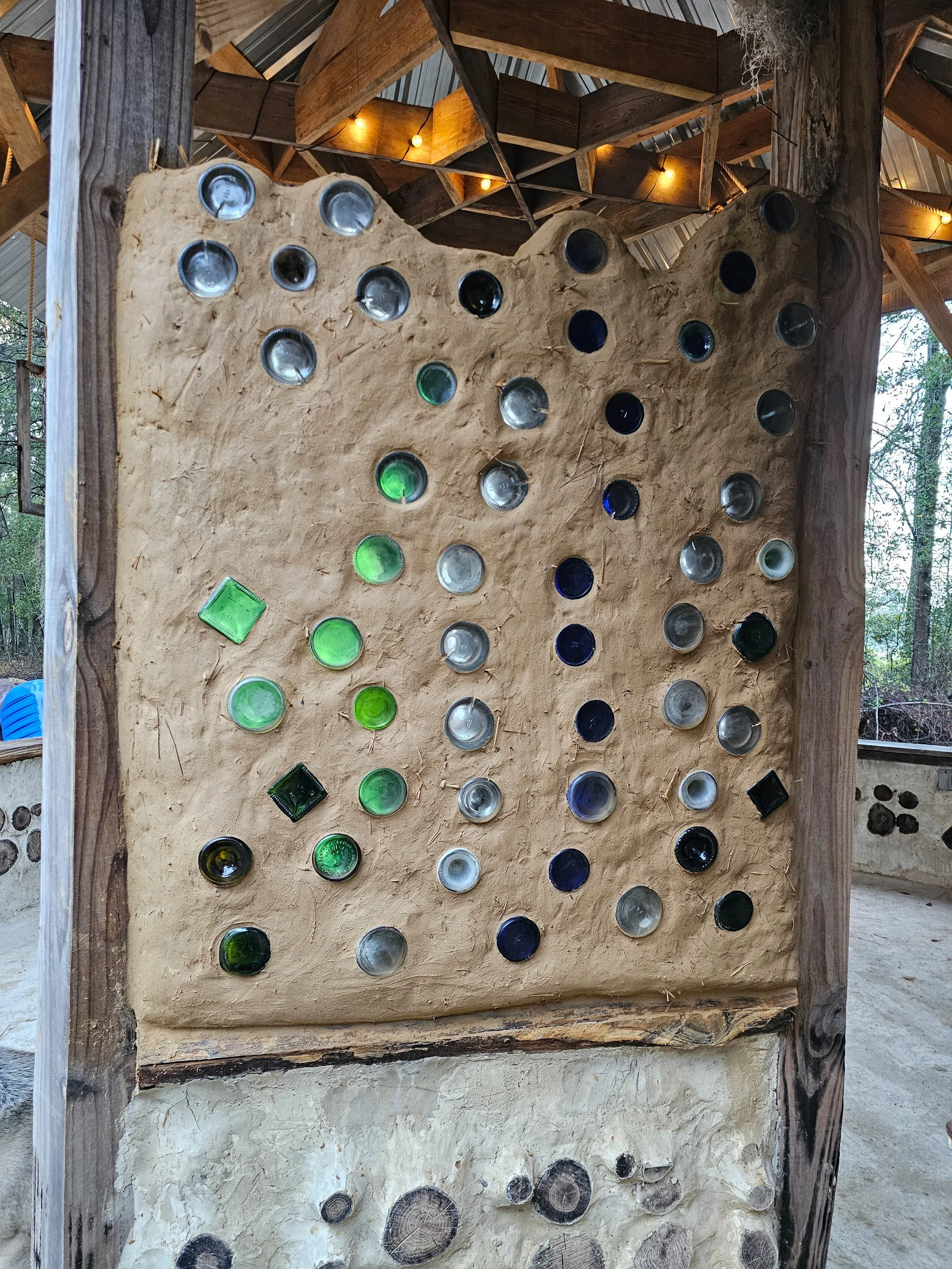
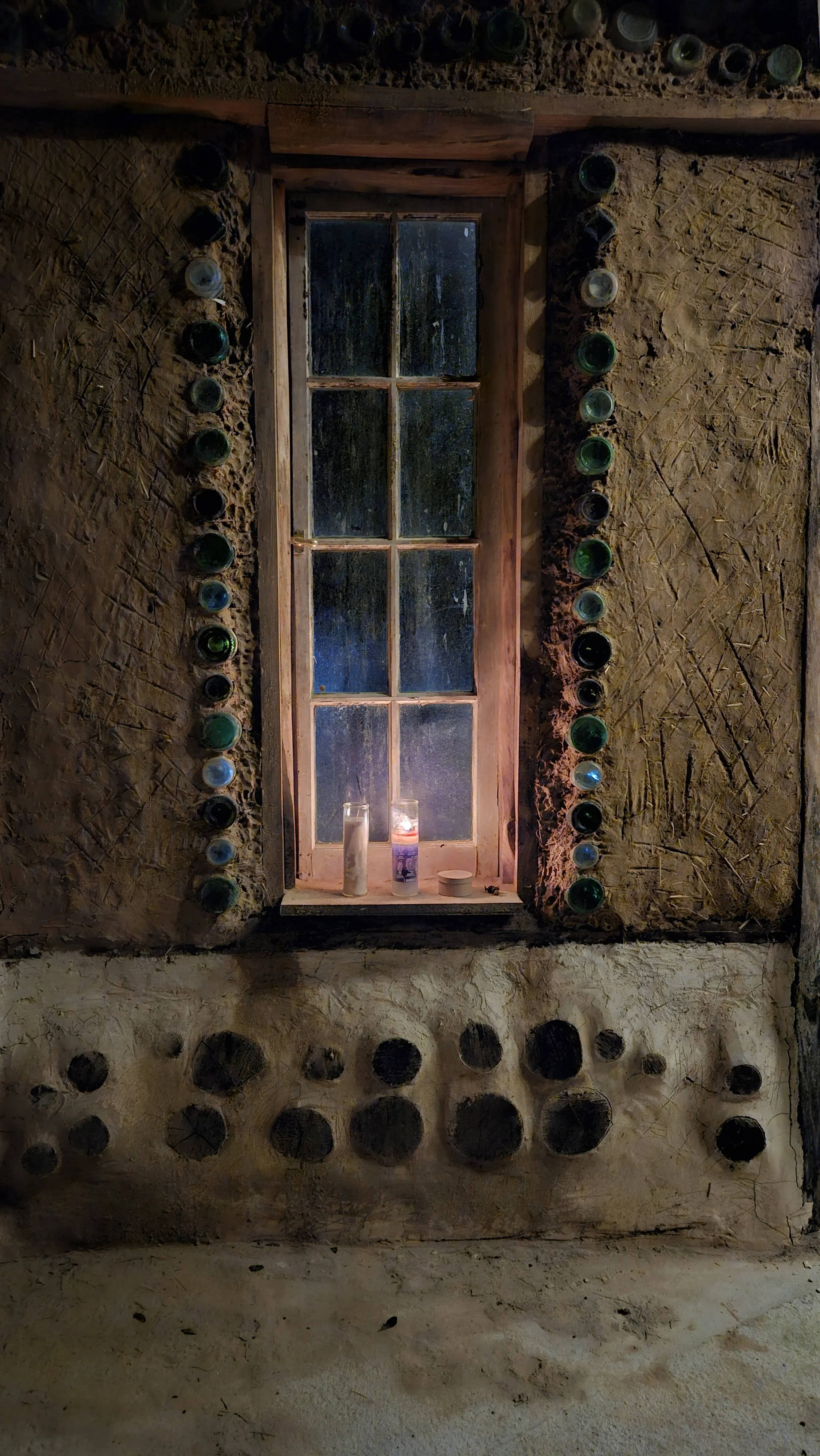
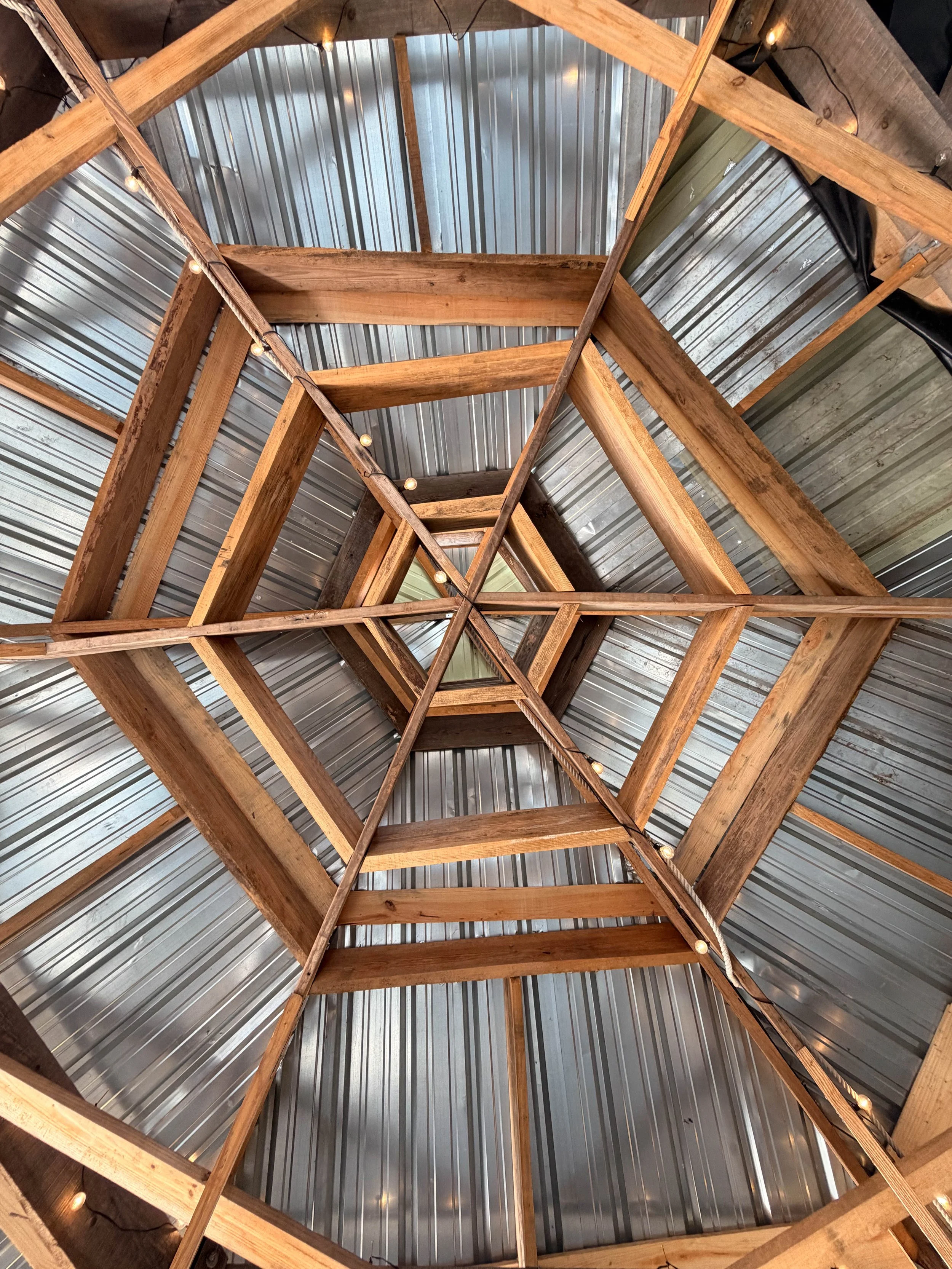
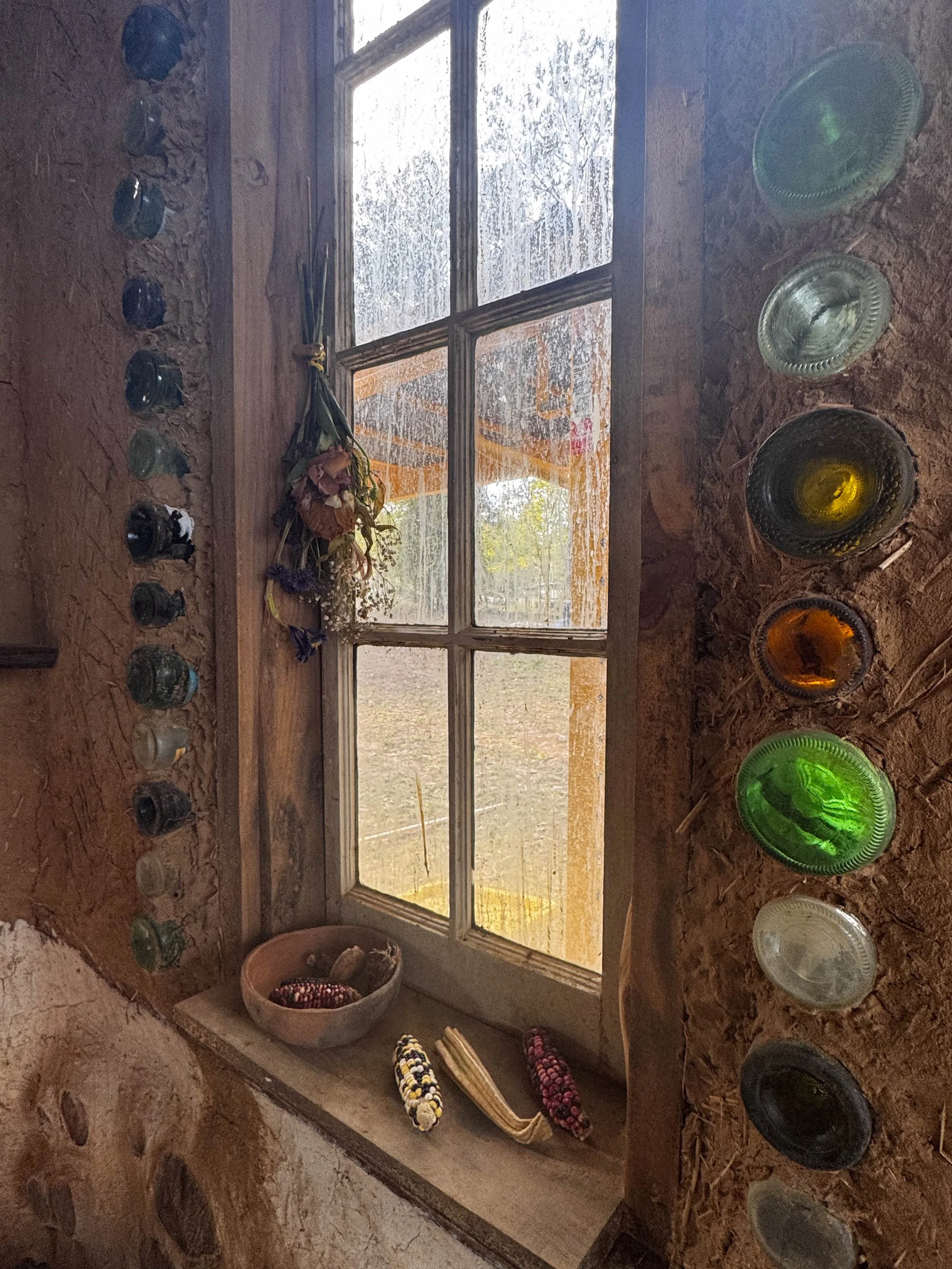
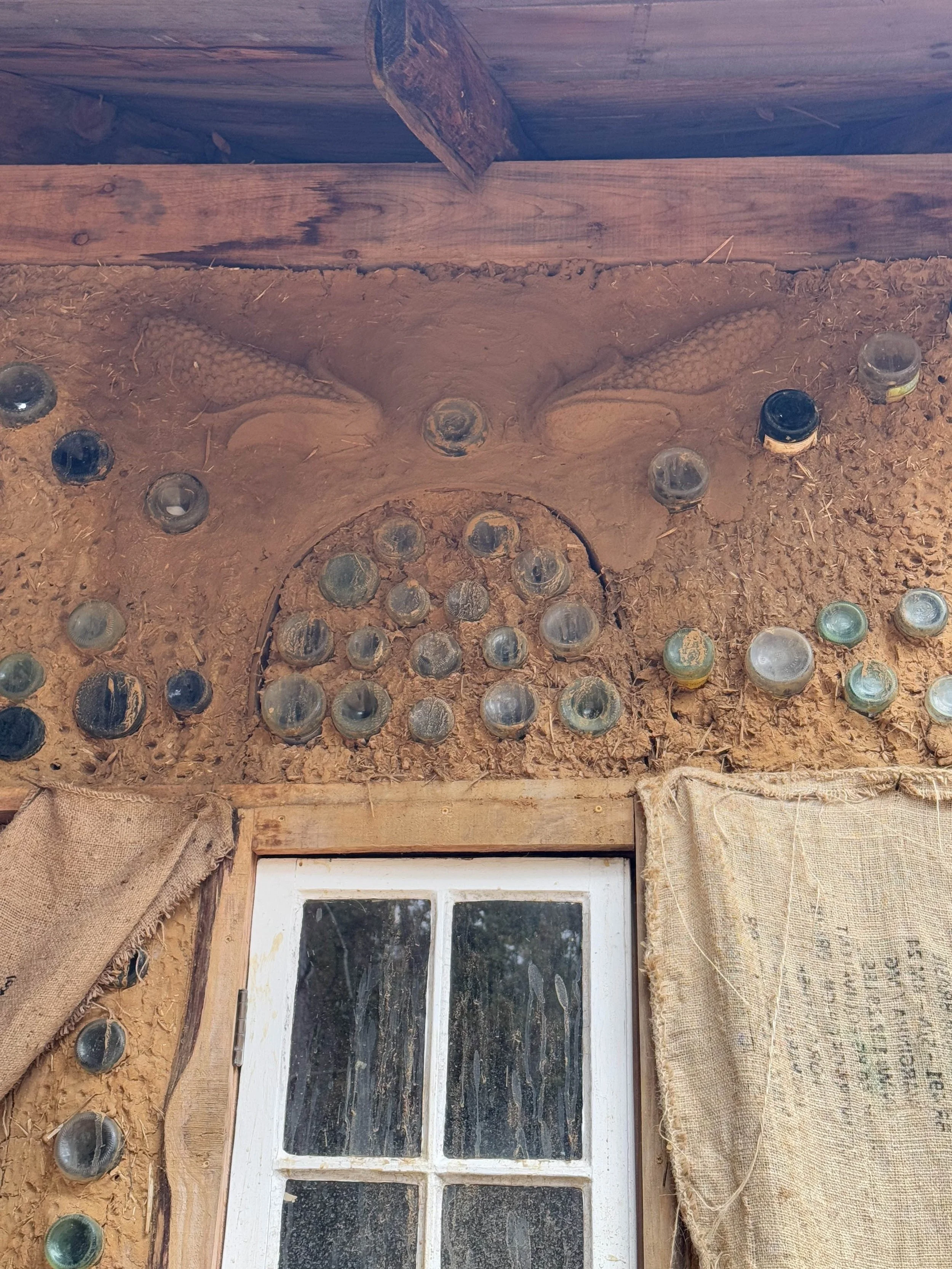
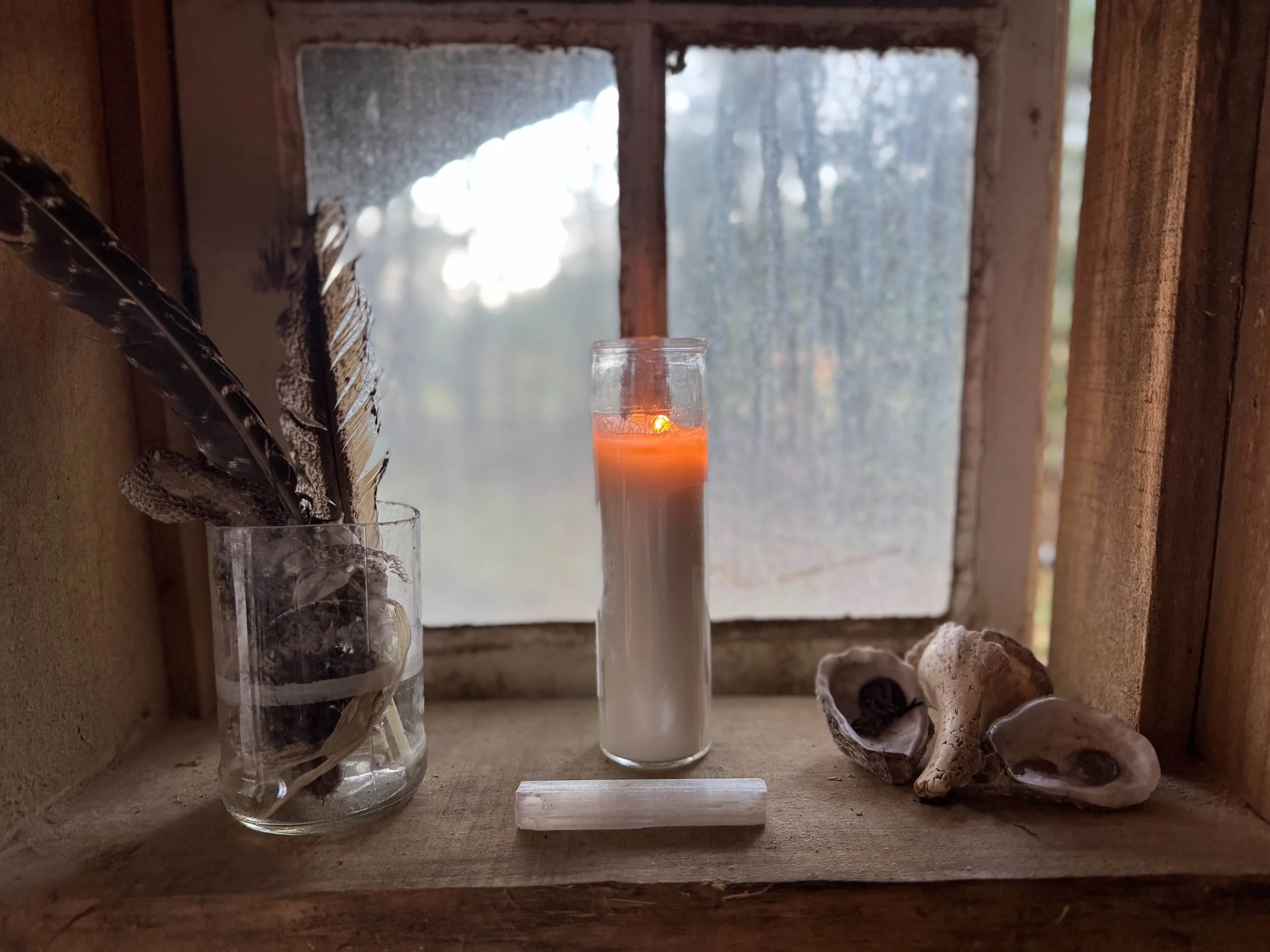
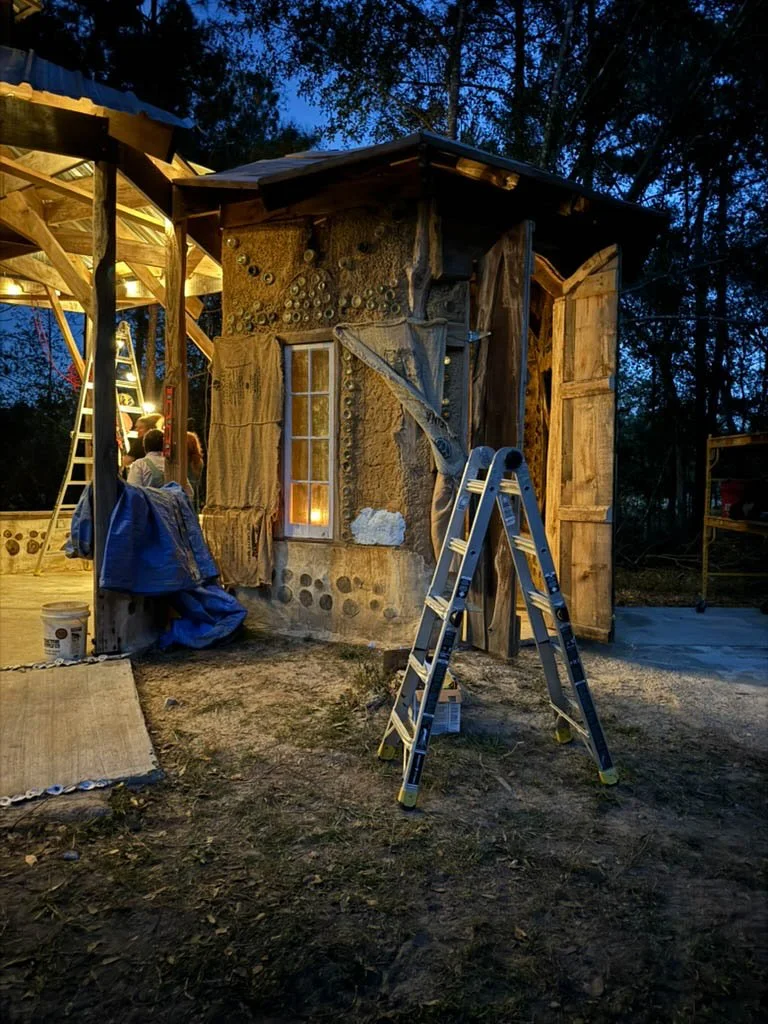
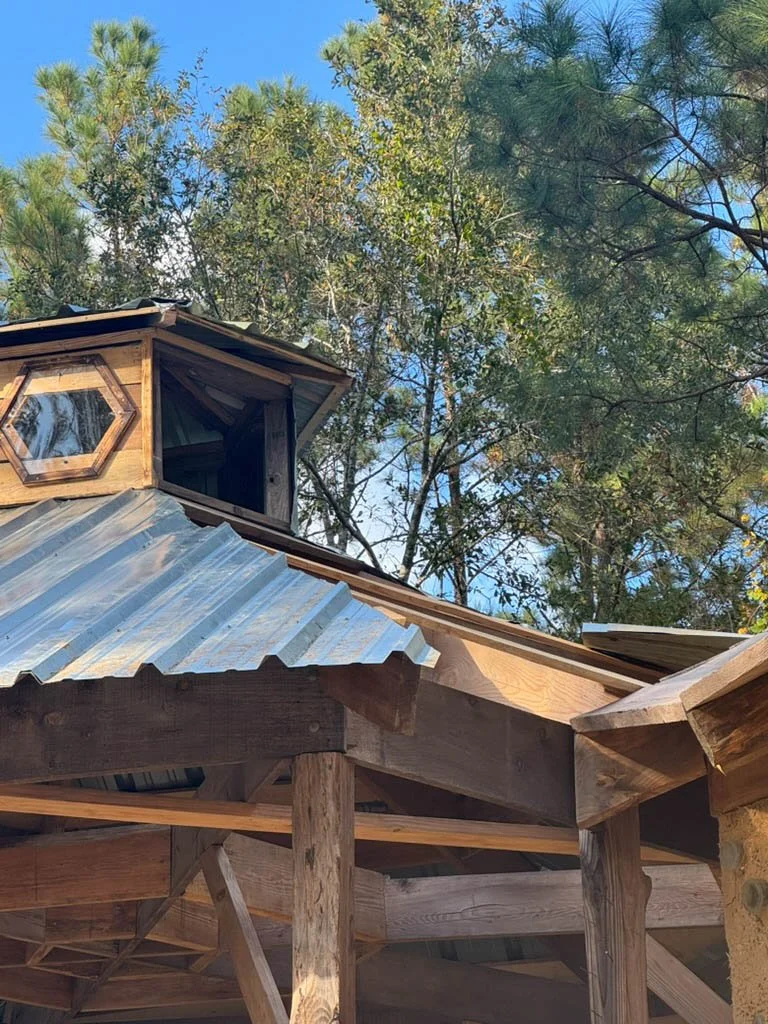
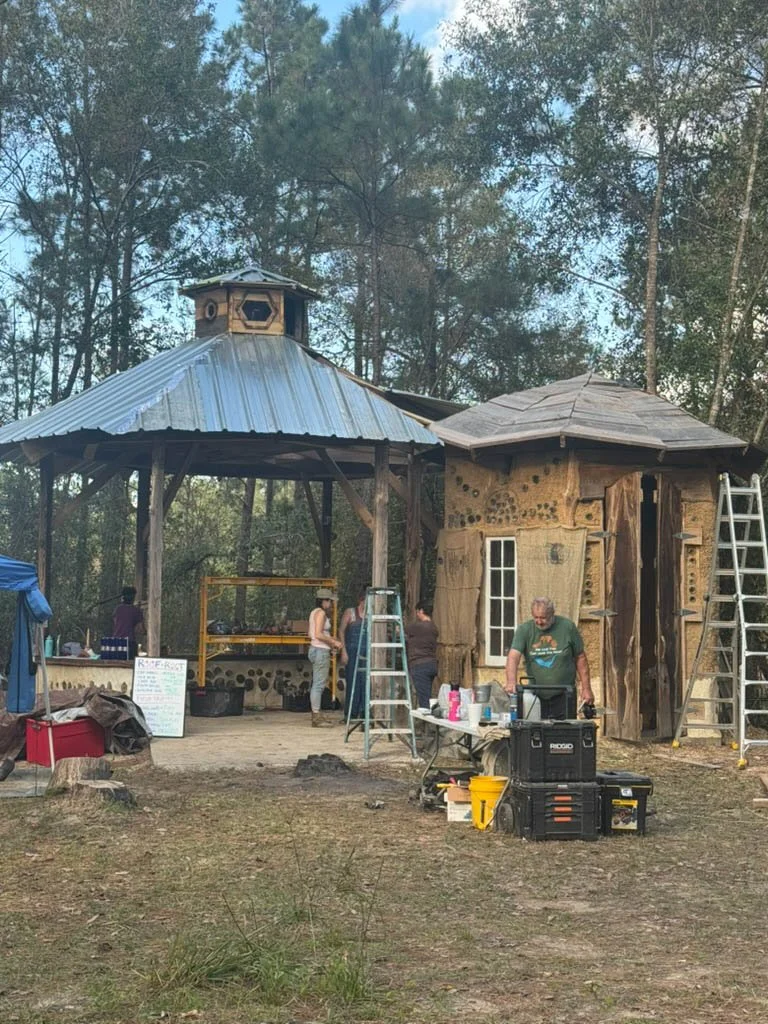
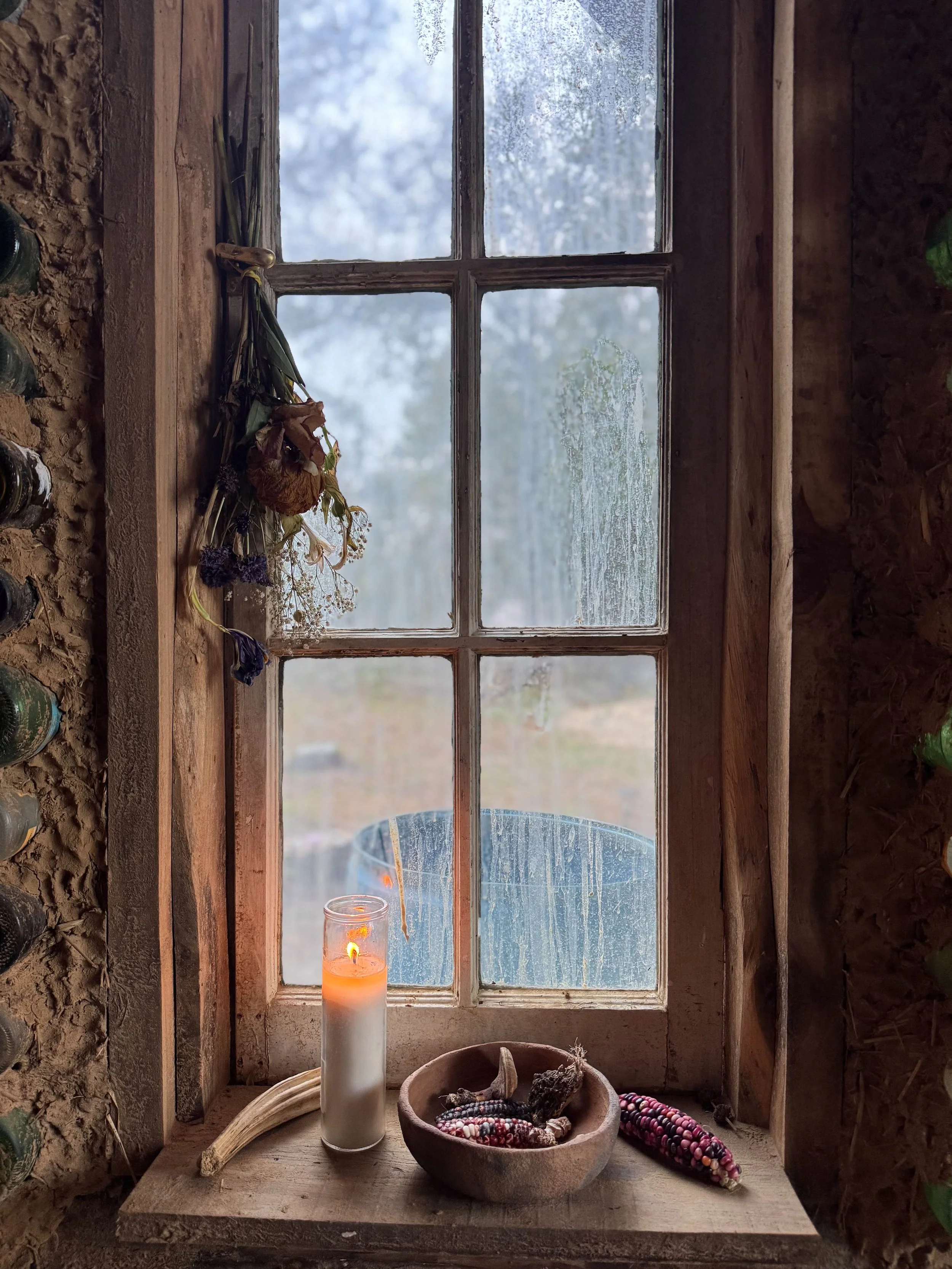
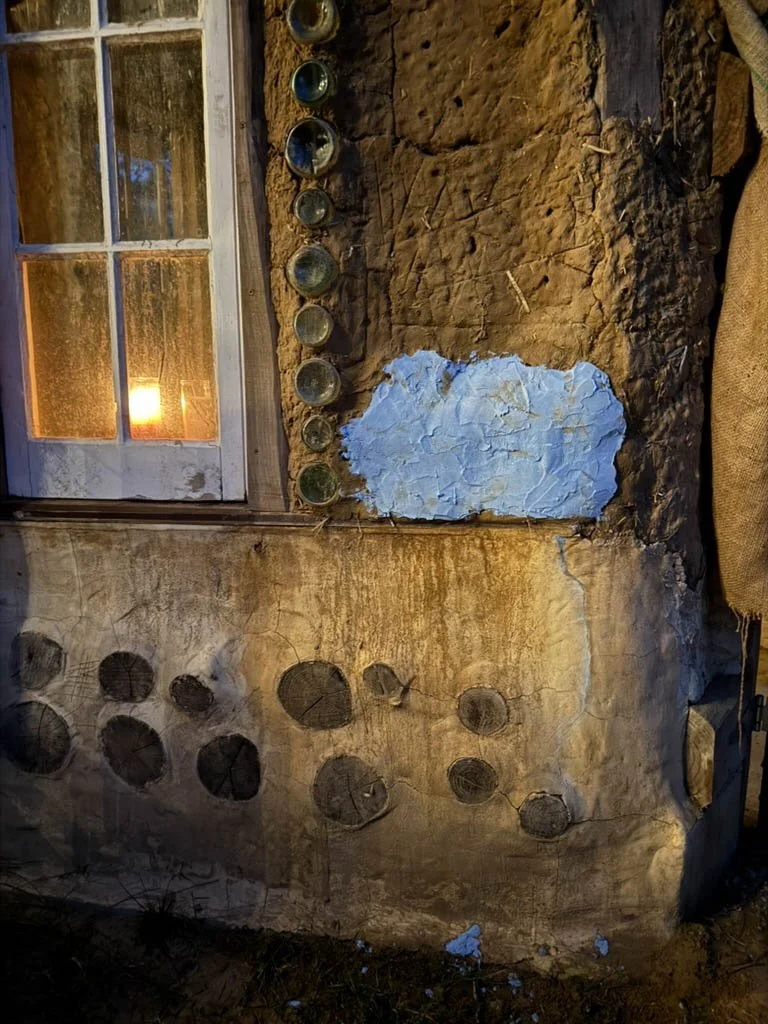
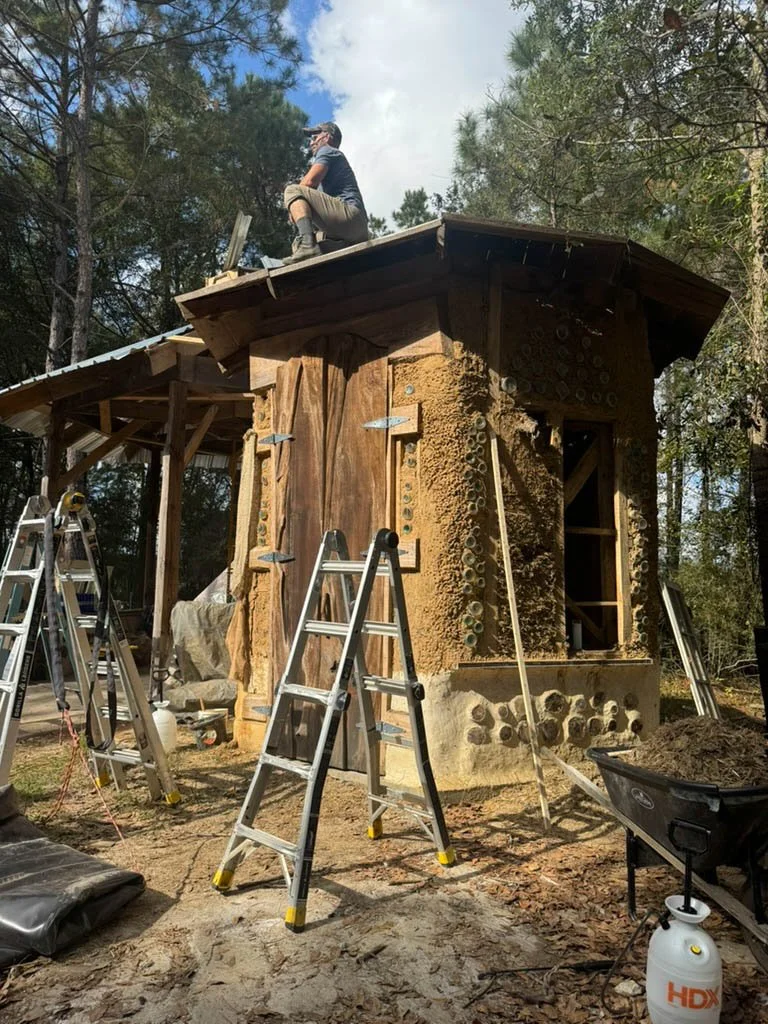
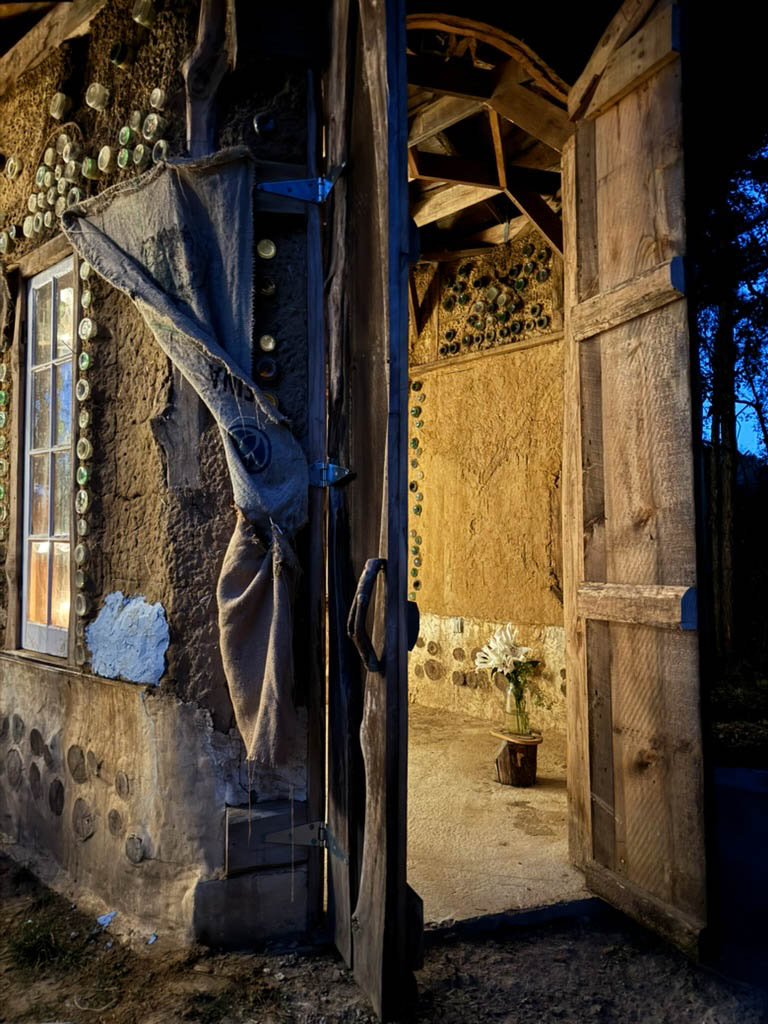
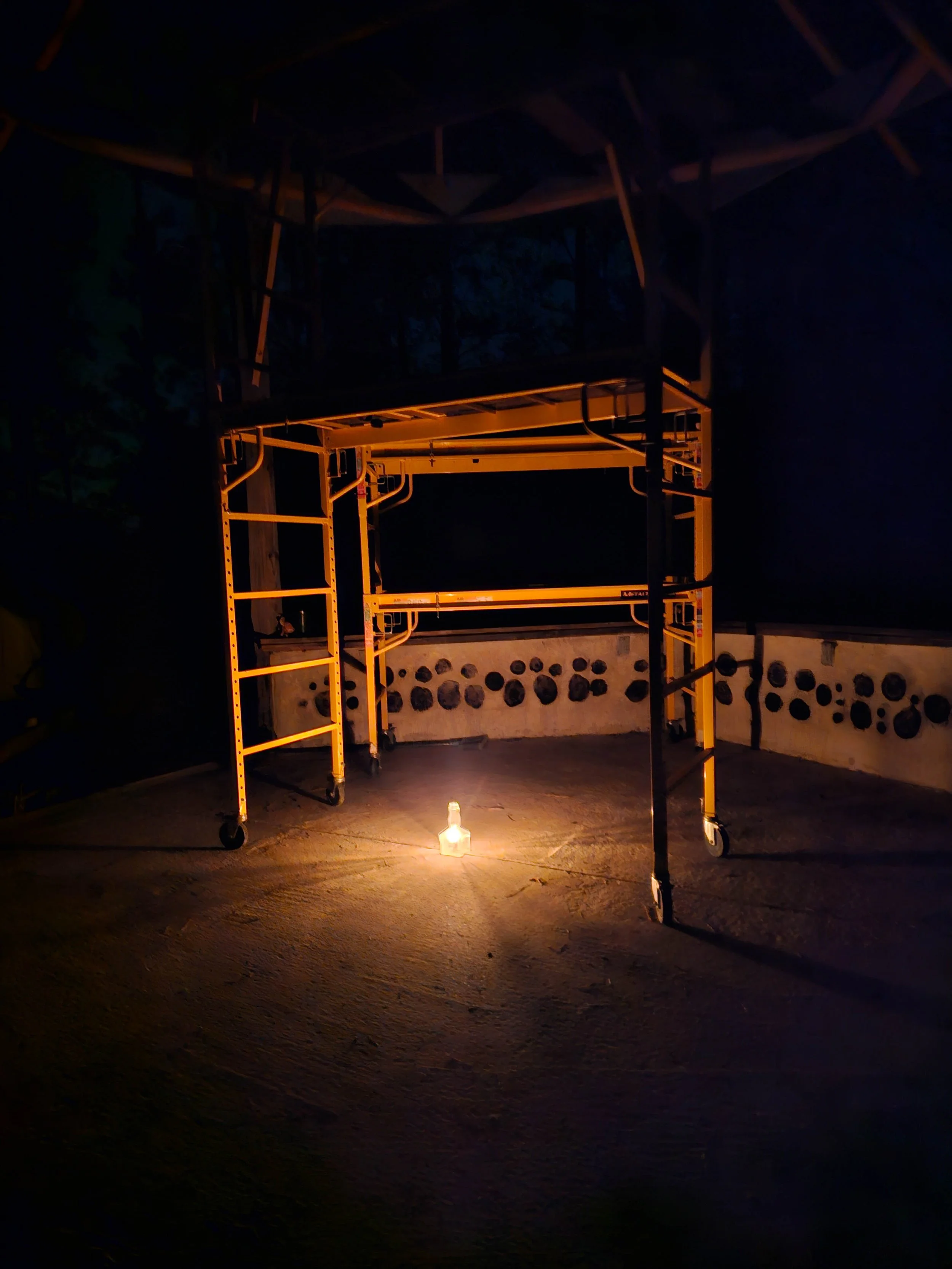
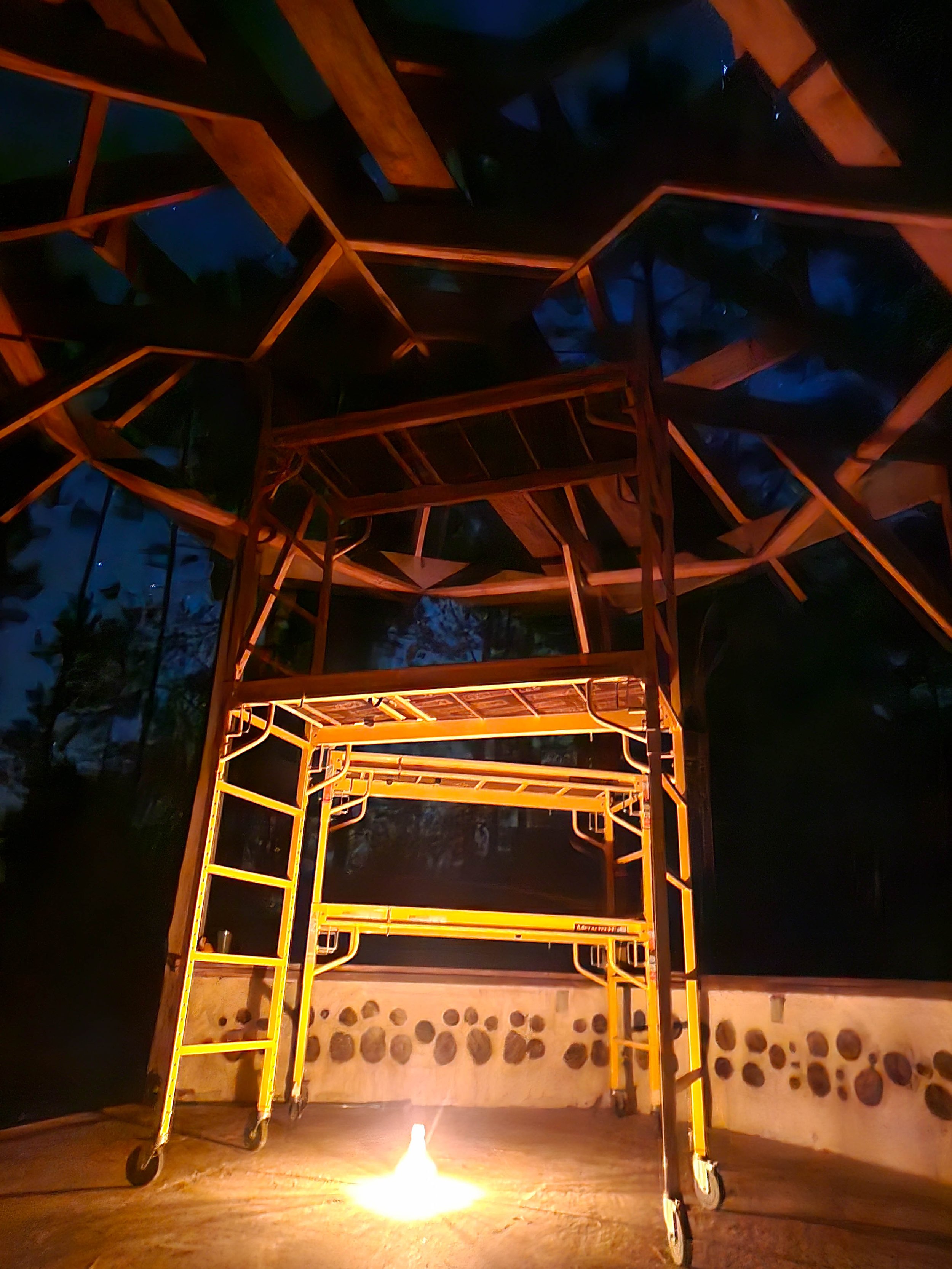
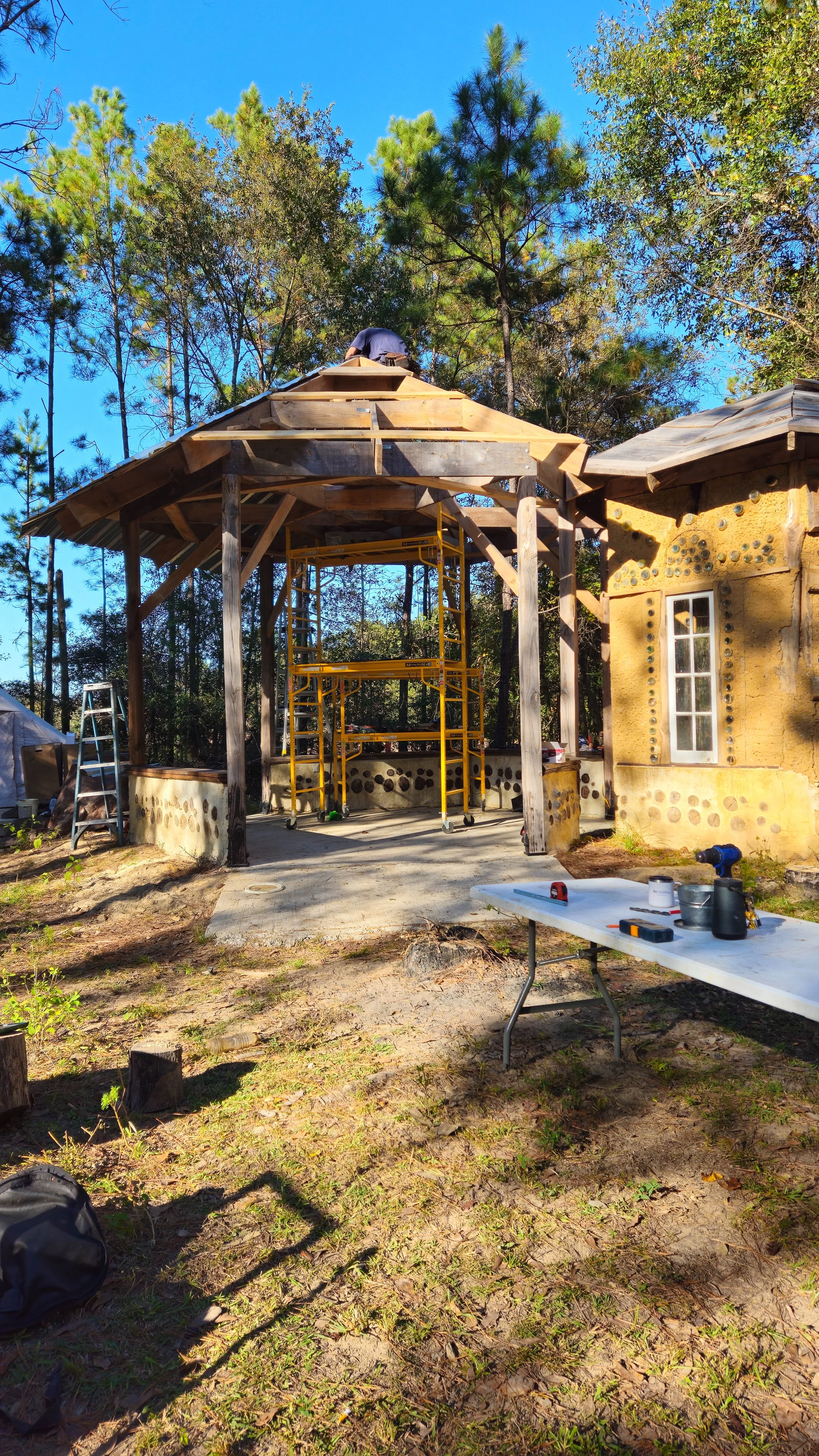
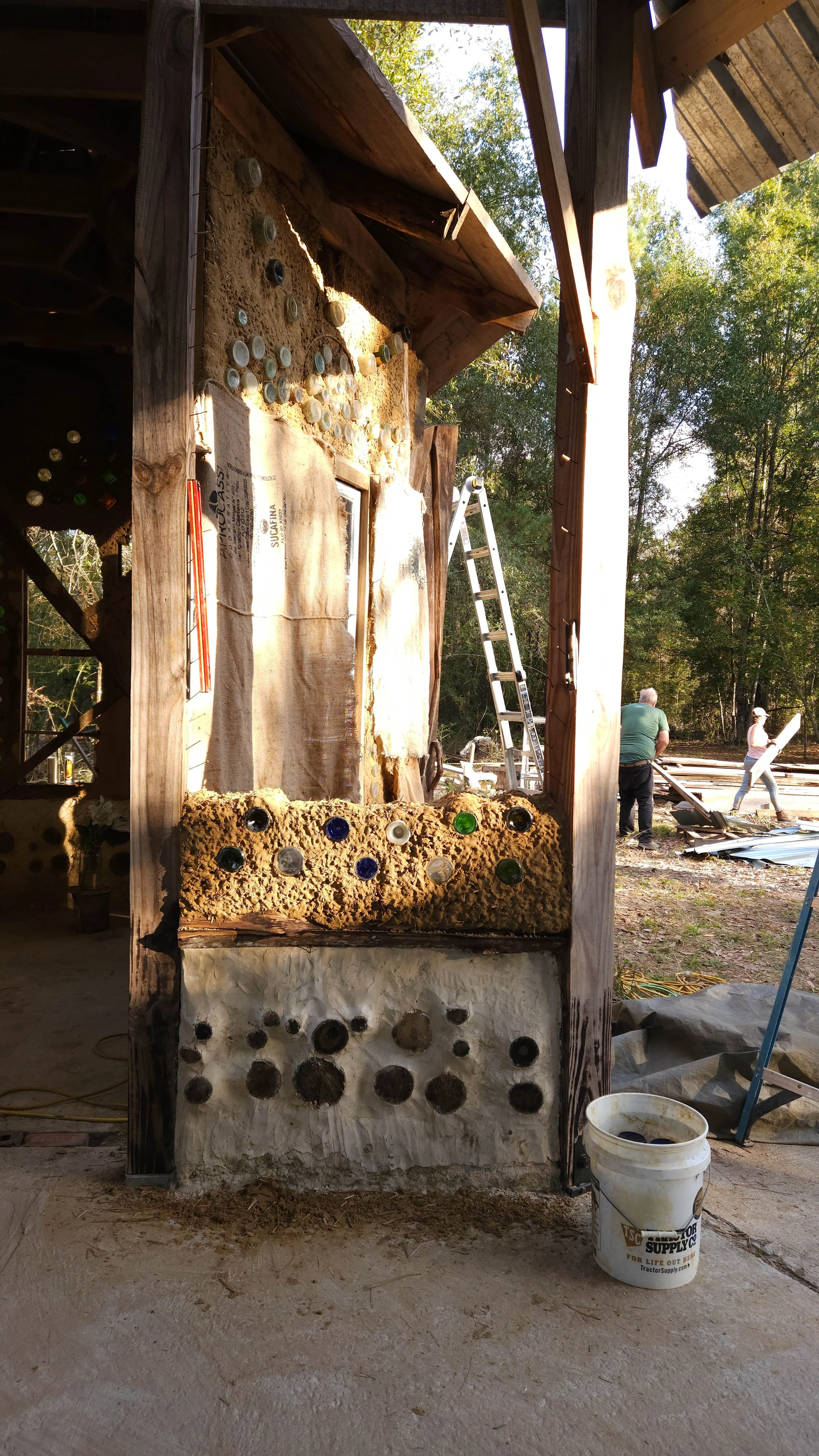
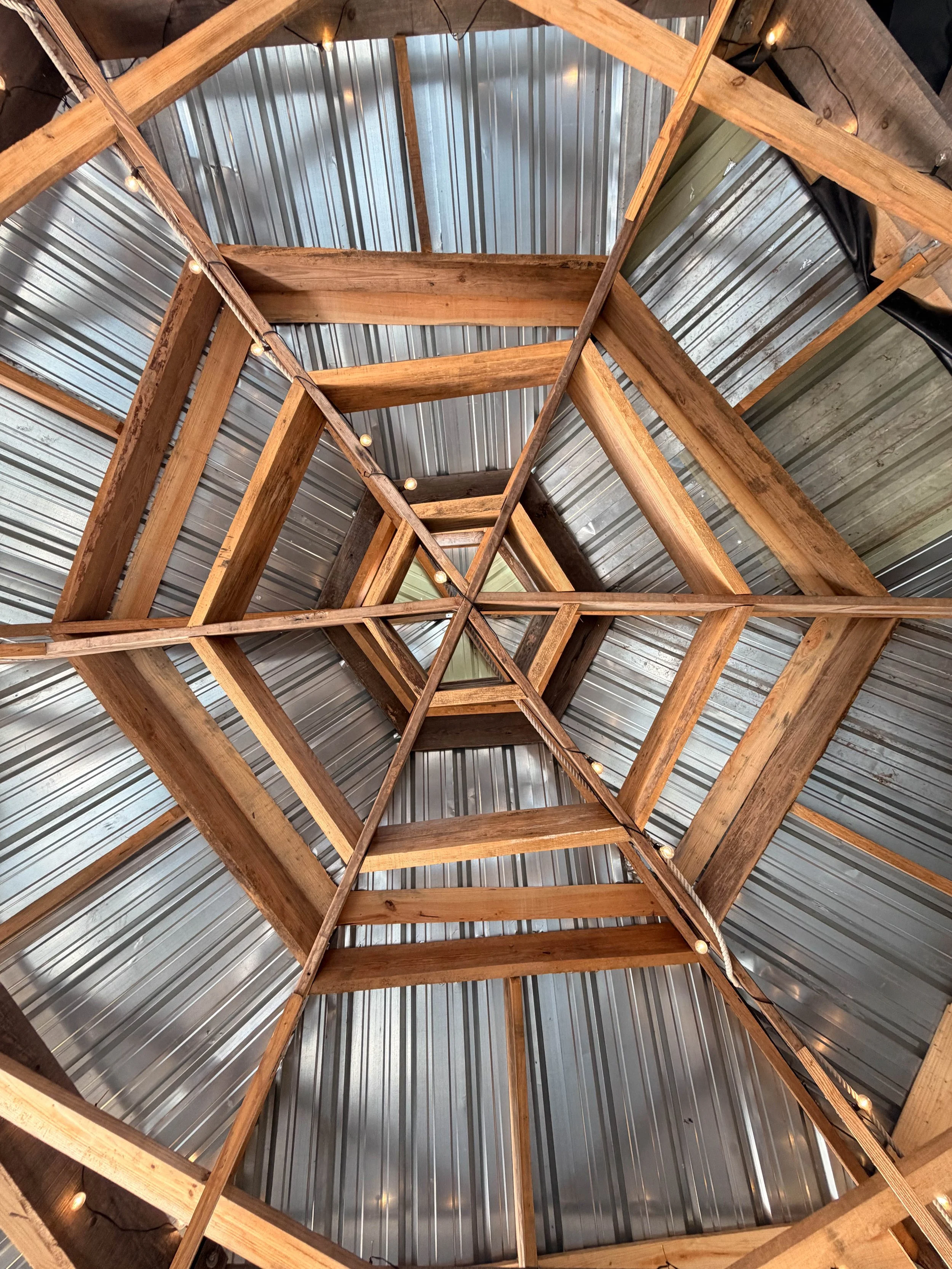
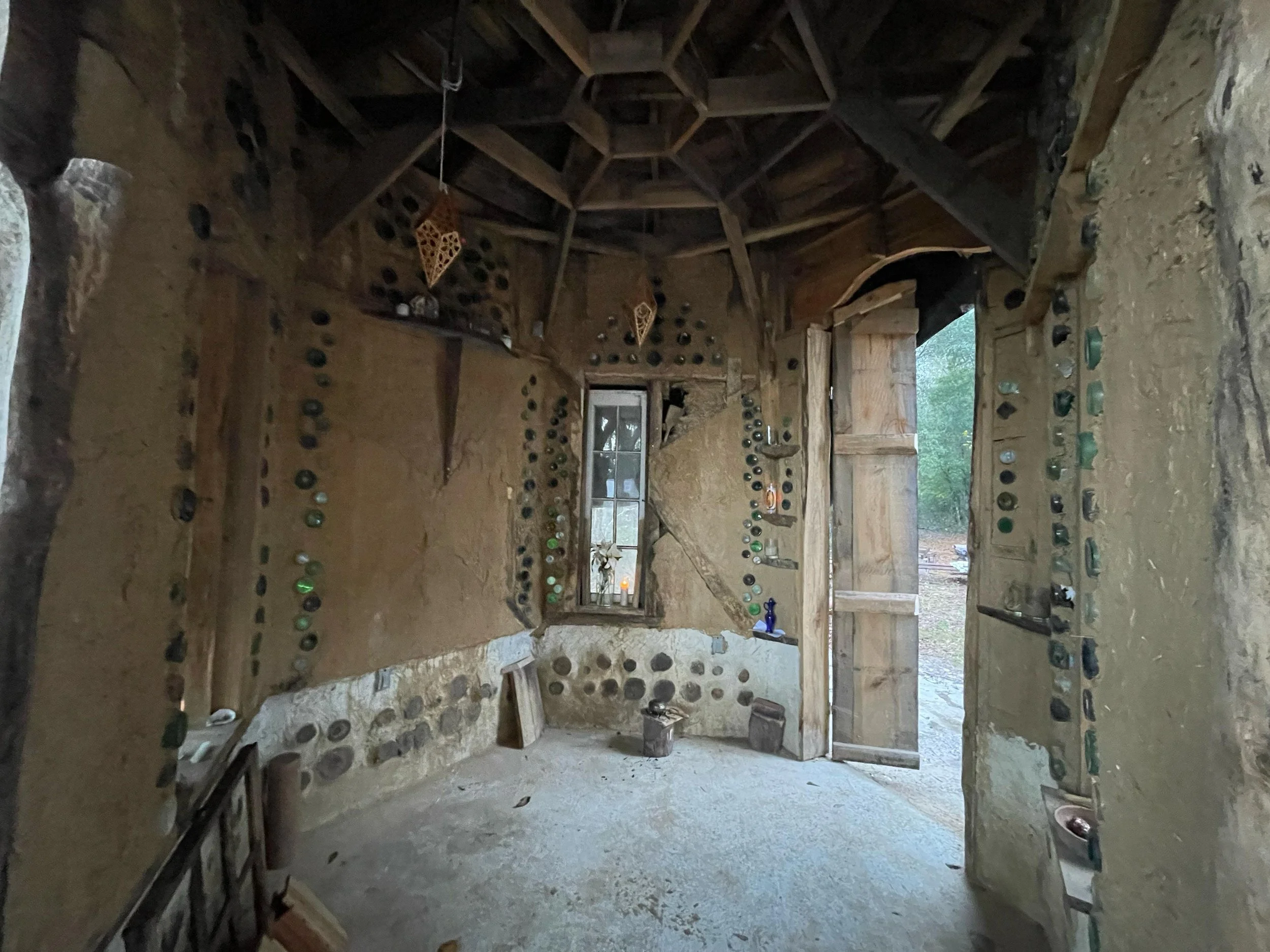
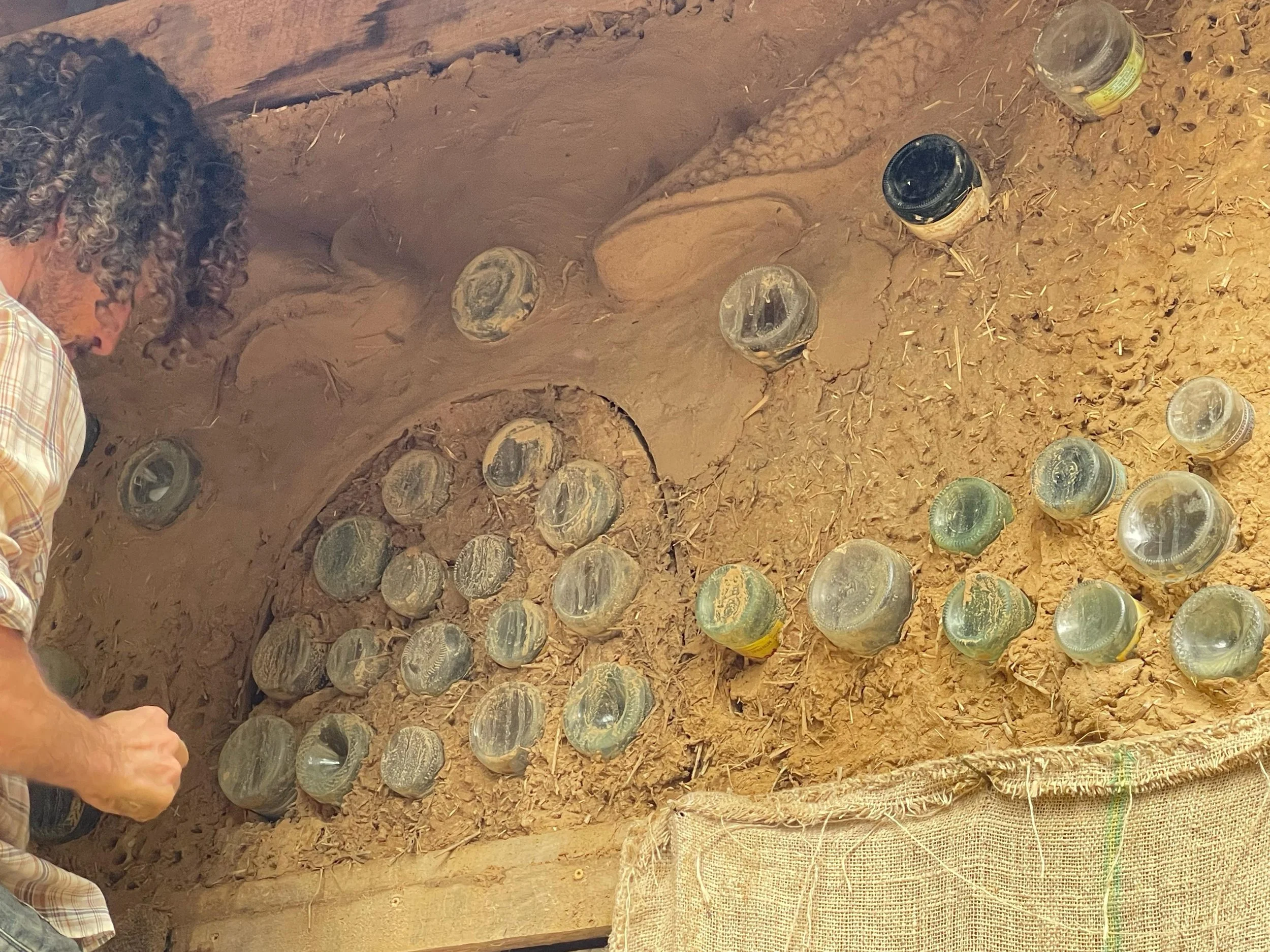
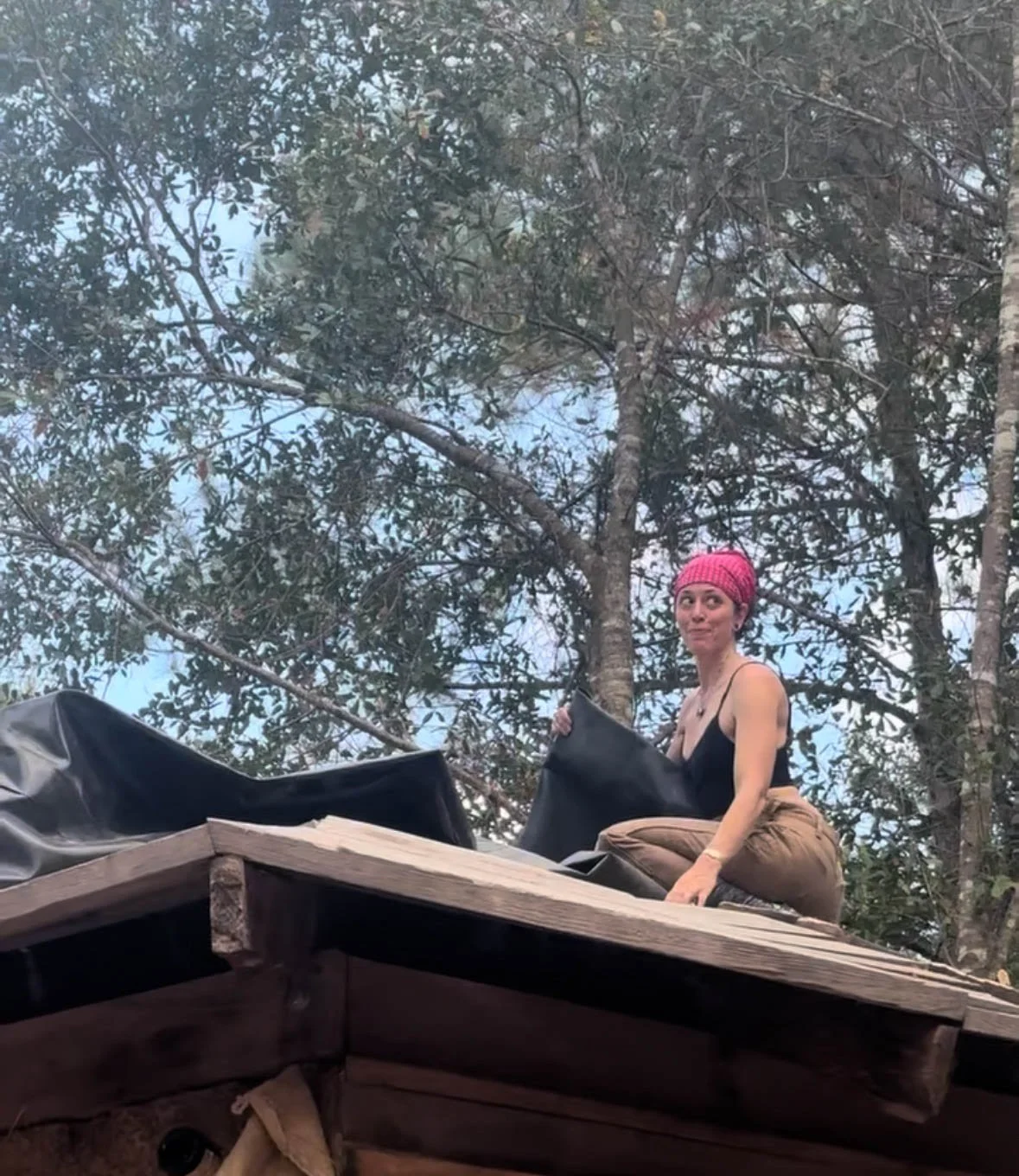
We added a new hexagonal structure to the Earth Church—a pavilion with a roof, designed as a shaded gathering space for workshops, meals, and community gatherings. The walls incorporate bottle-bricks made from upcycled glass, and the roof and cupola were constructed from site-harvested wood. We also created experimental plasters from oyster shells transformed into lime, working with clay, sand, straw, Spanish moss, and salvaged materials. Each material was chosen for its low carbon footprint and connection to place. The pavilion is designed to be resilient, repairable, and alive, demonstrating that buildings can evolve with the communities that tend them.
Workshop activities:
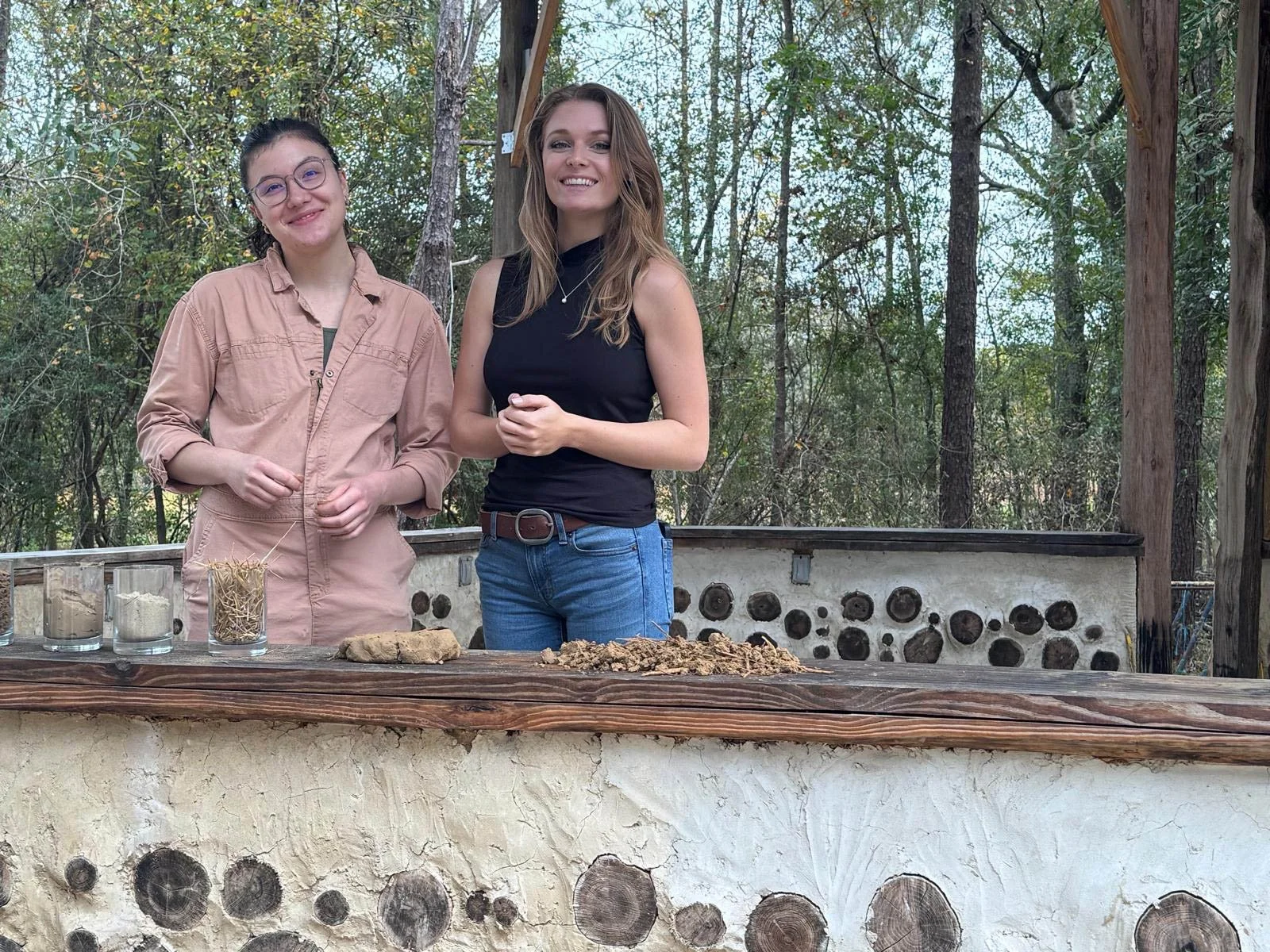
Oyster shell lime experiment and teach-in with Cassidy Creek
Plant identification walk with Charlsie Shaver of Chickadee Natives
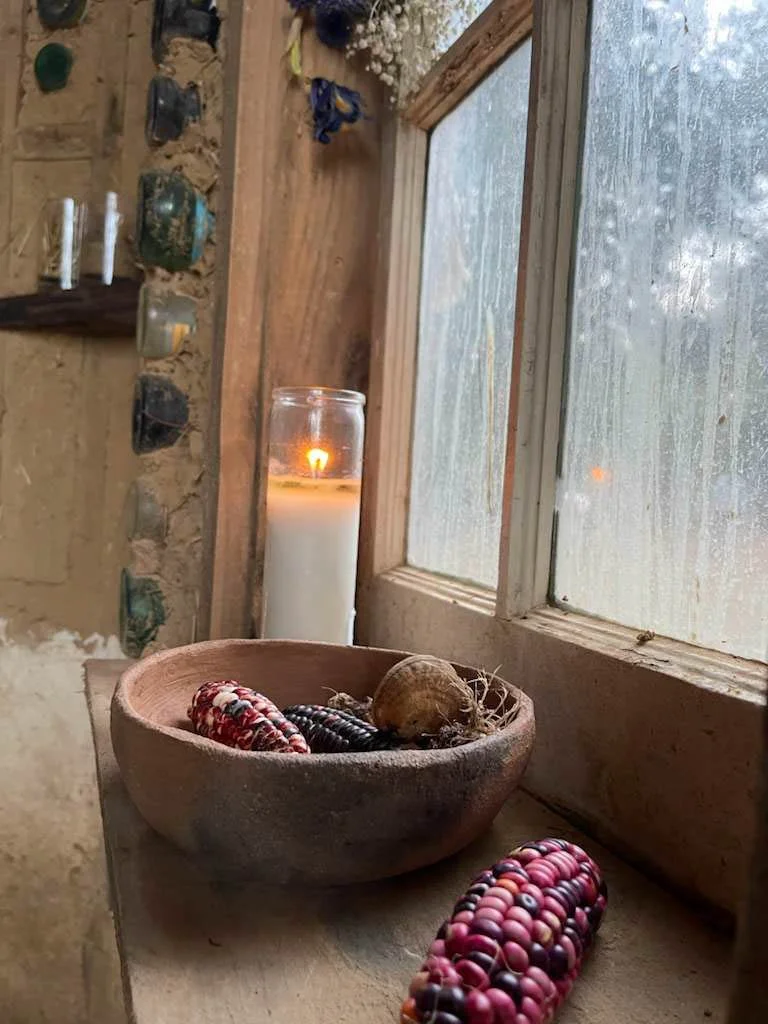
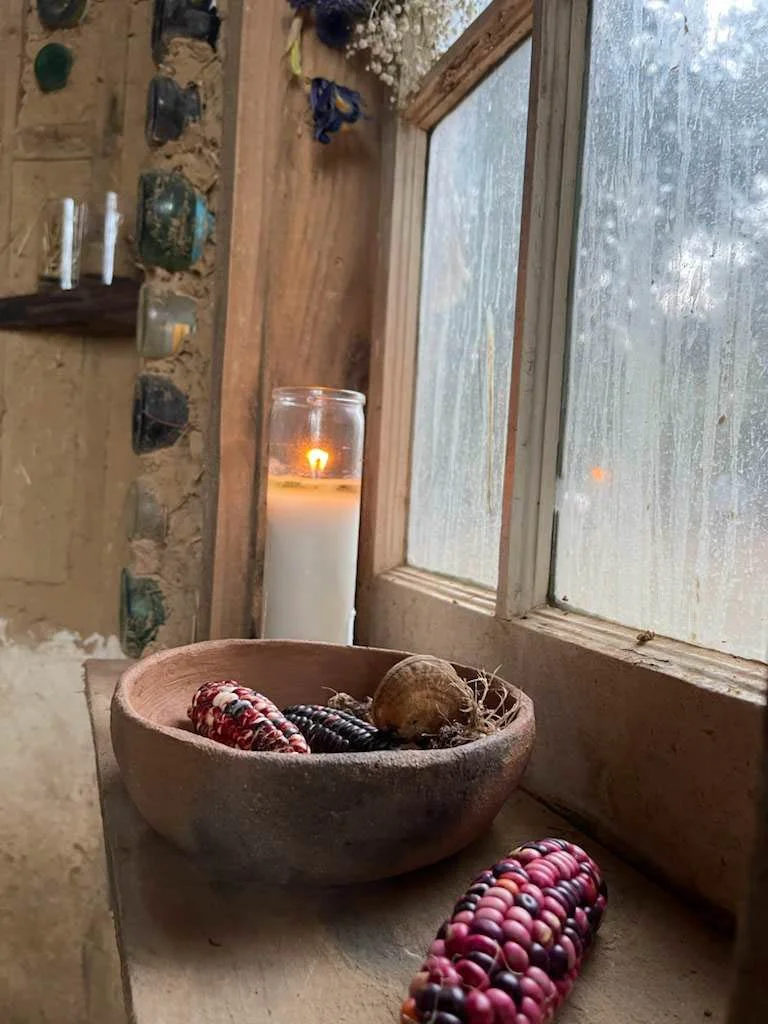
Seeds of Resistance corn distribution with Maury Johnson
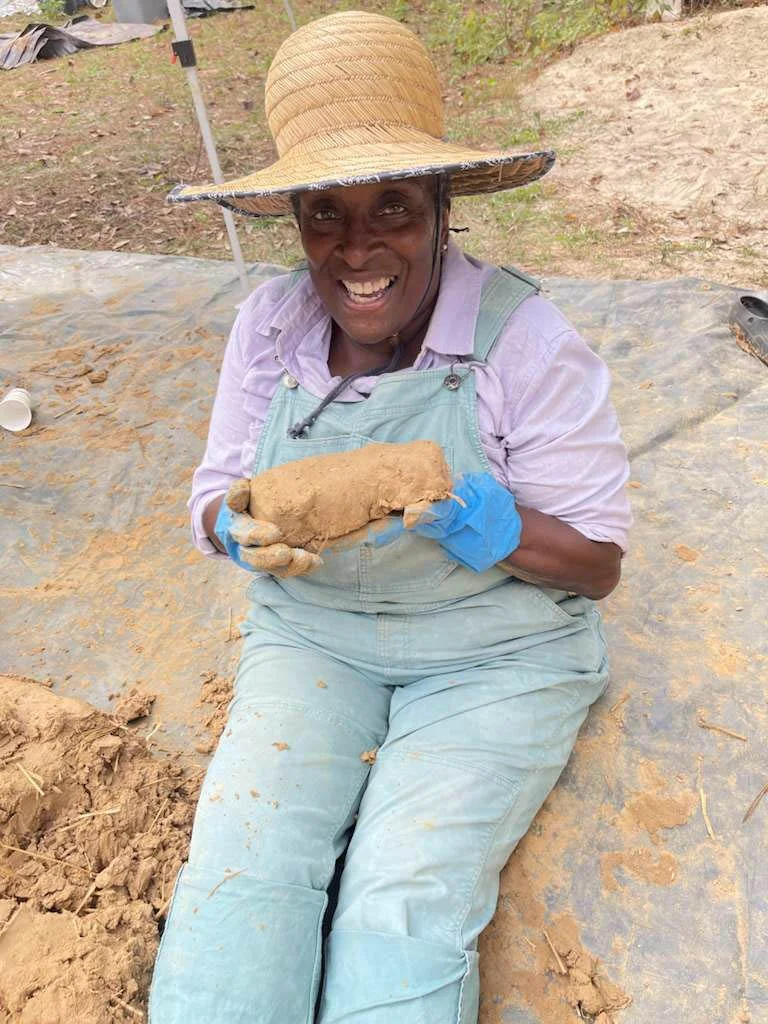
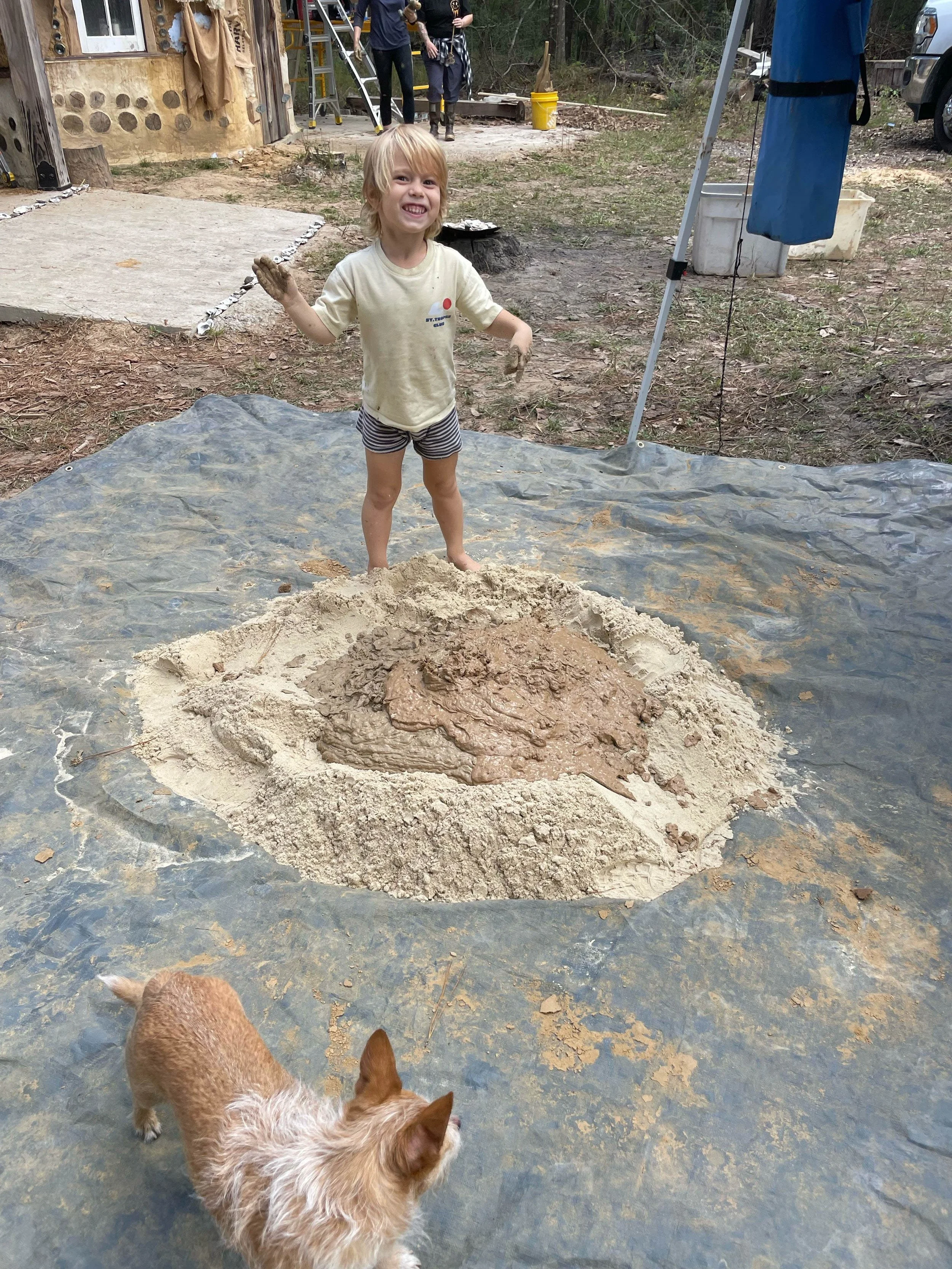
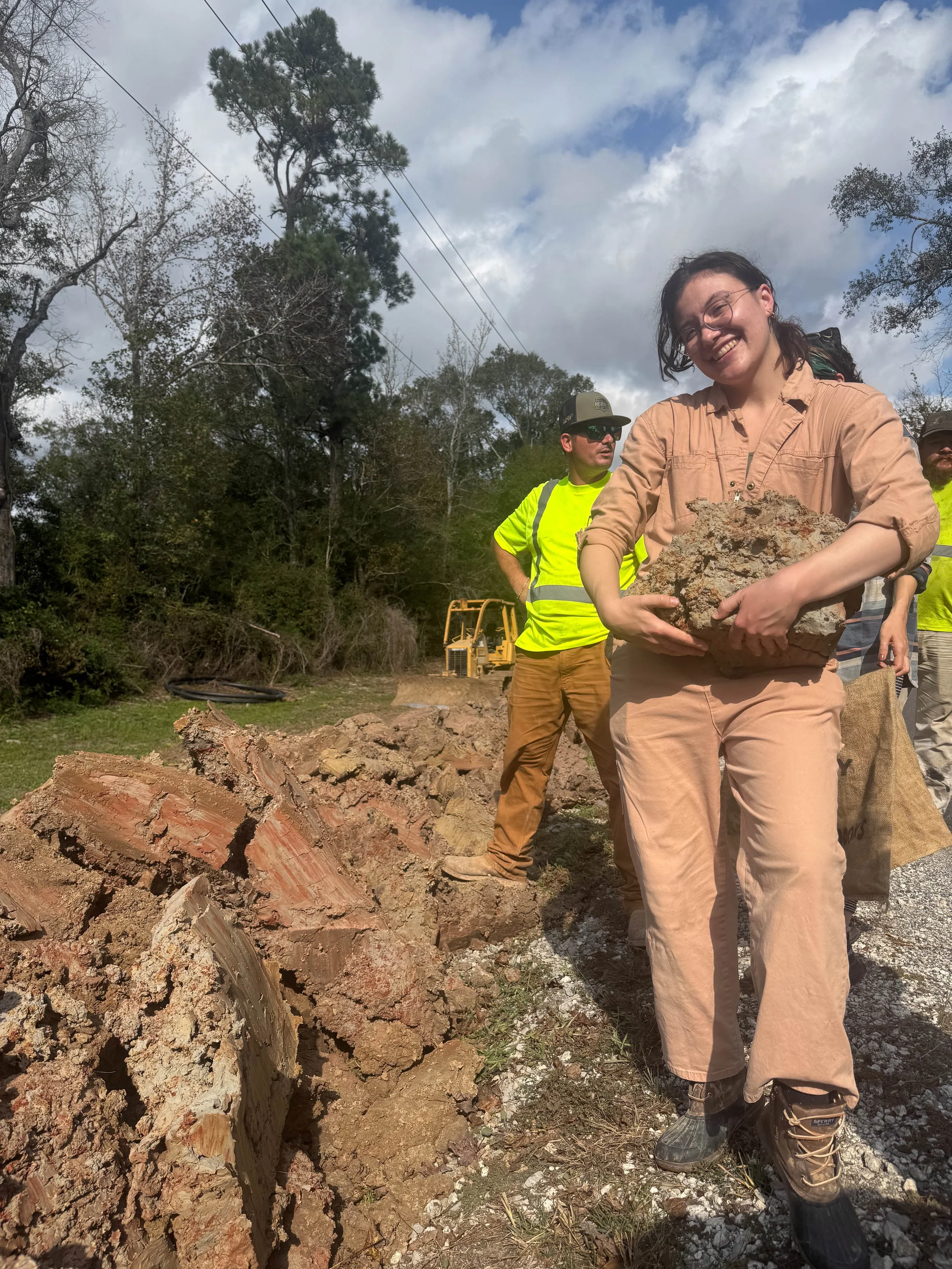
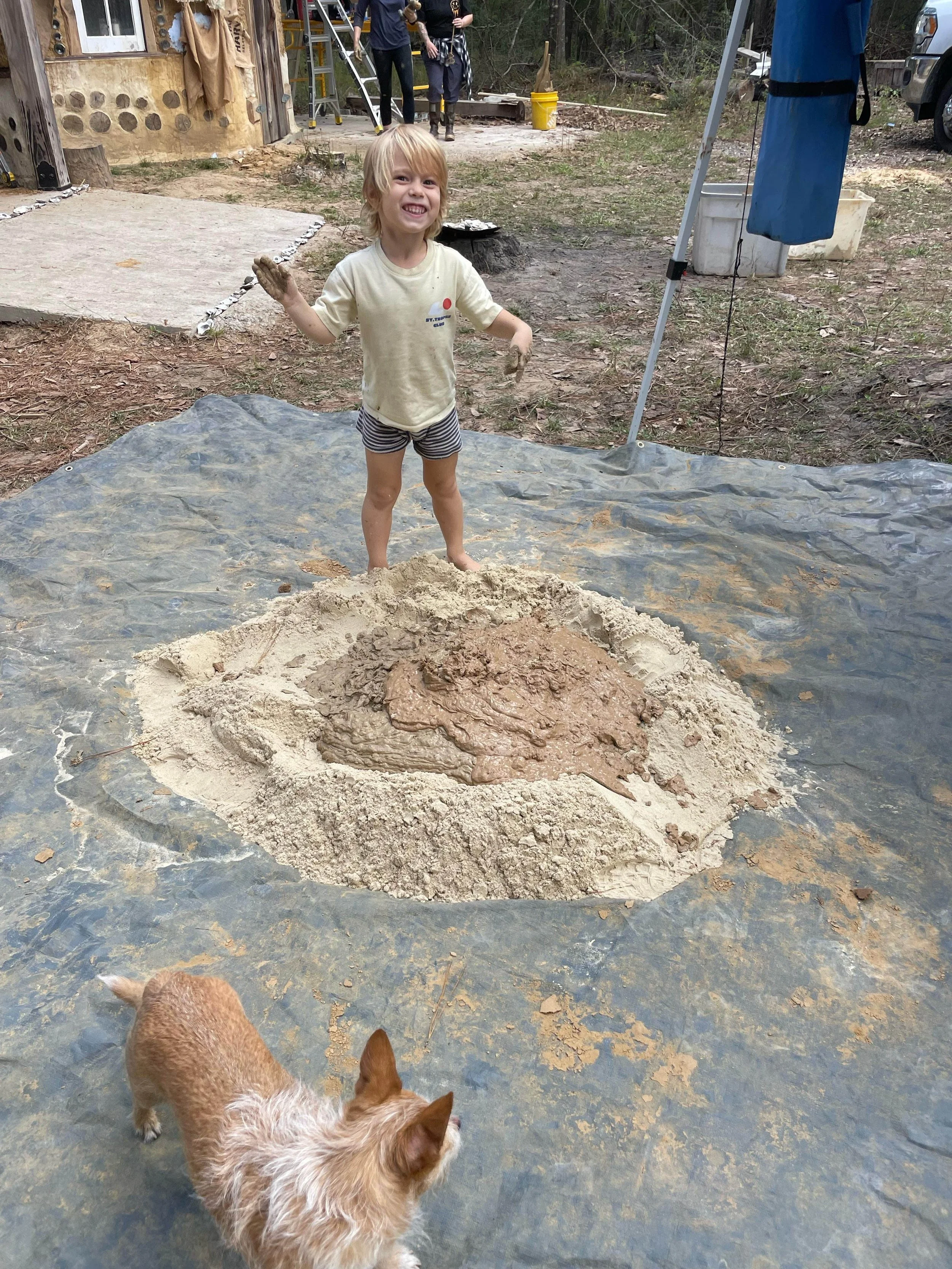
Cob mixing and construction using dried corn husks as fiber
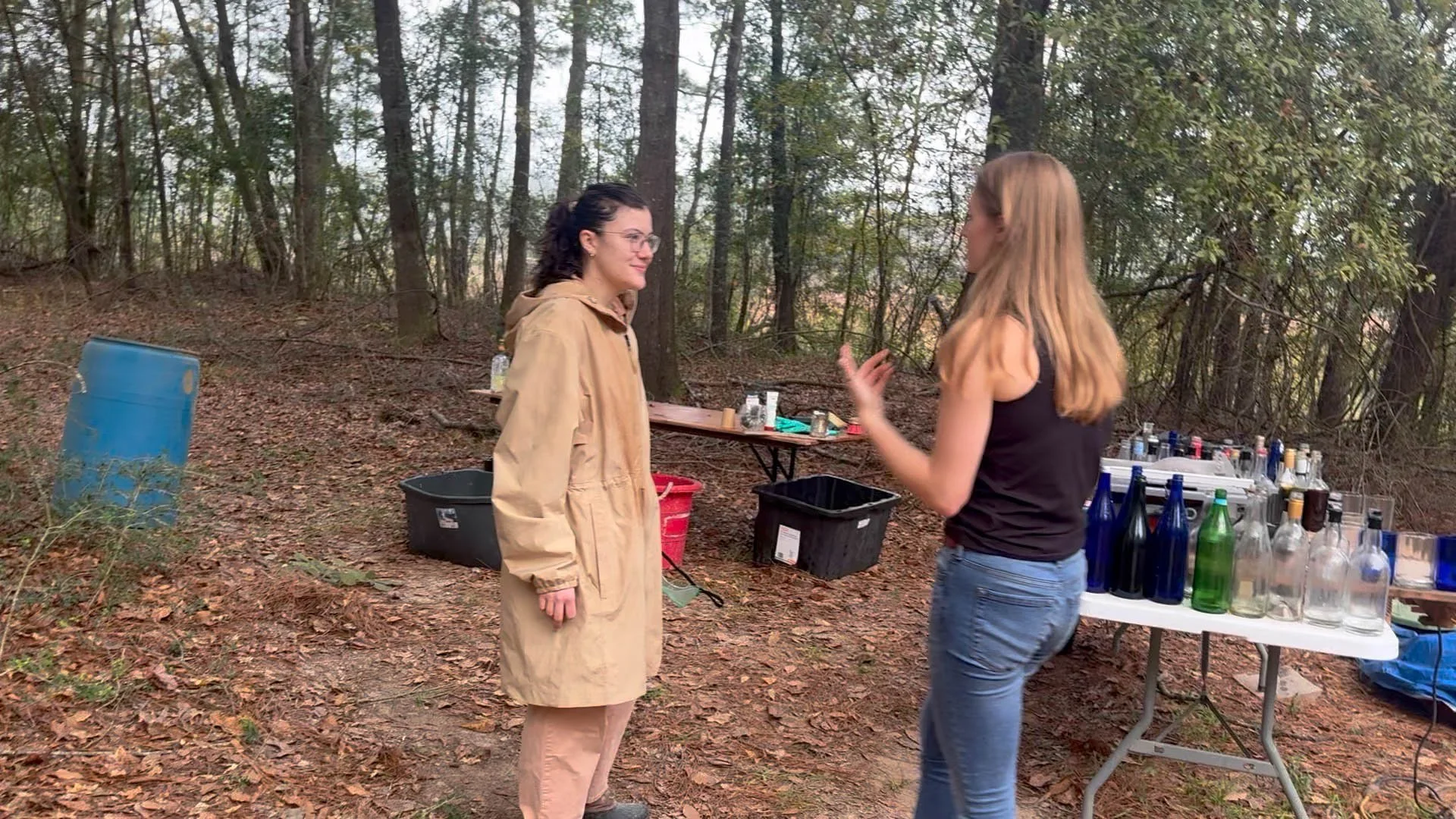
Bottle-brick making with recycled glass
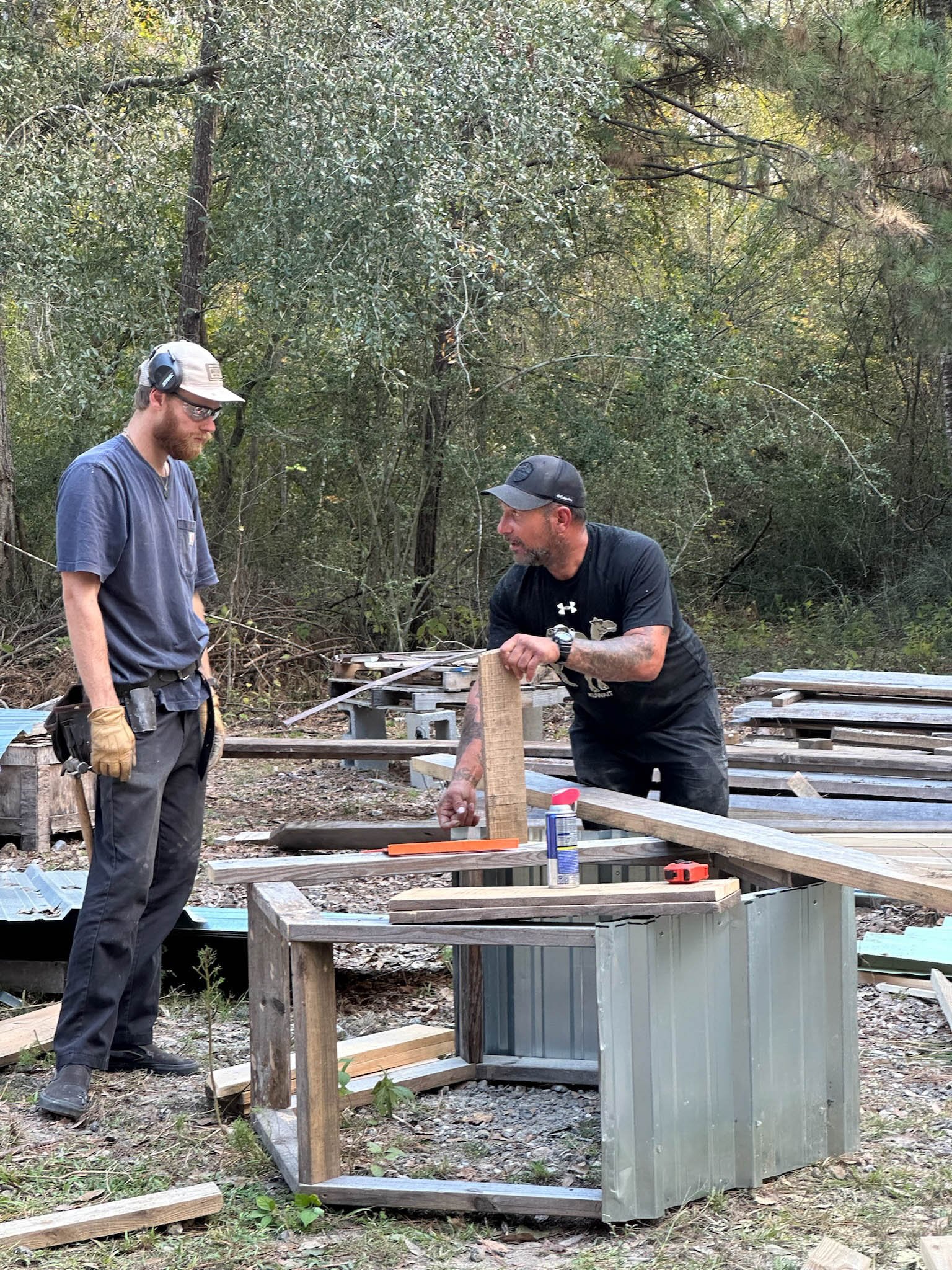
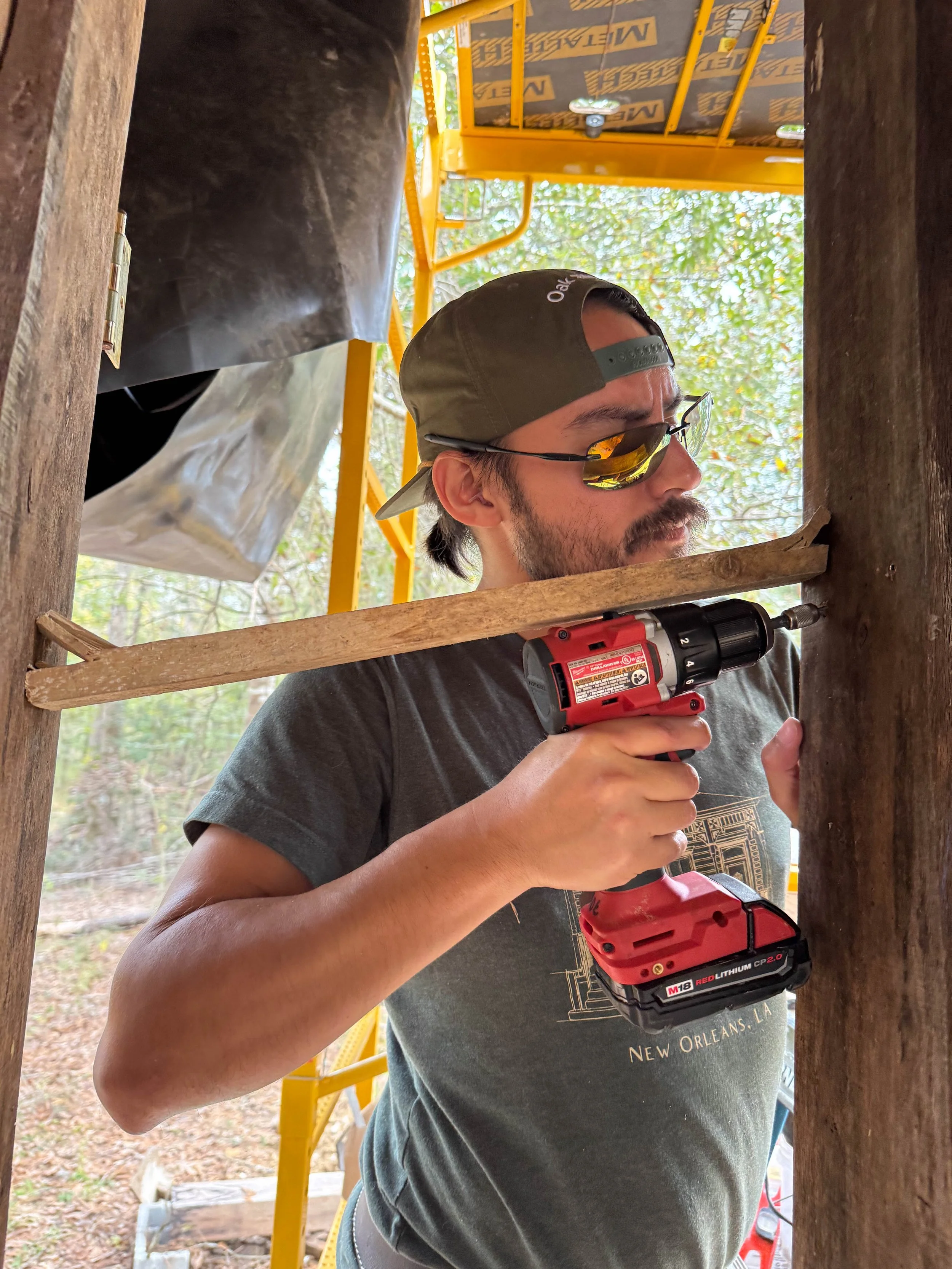
Roof build and cupola construction
Ecstatic dance at Moon Hollow Farm
Oyster dinner from Cameron Parish fisherfolk
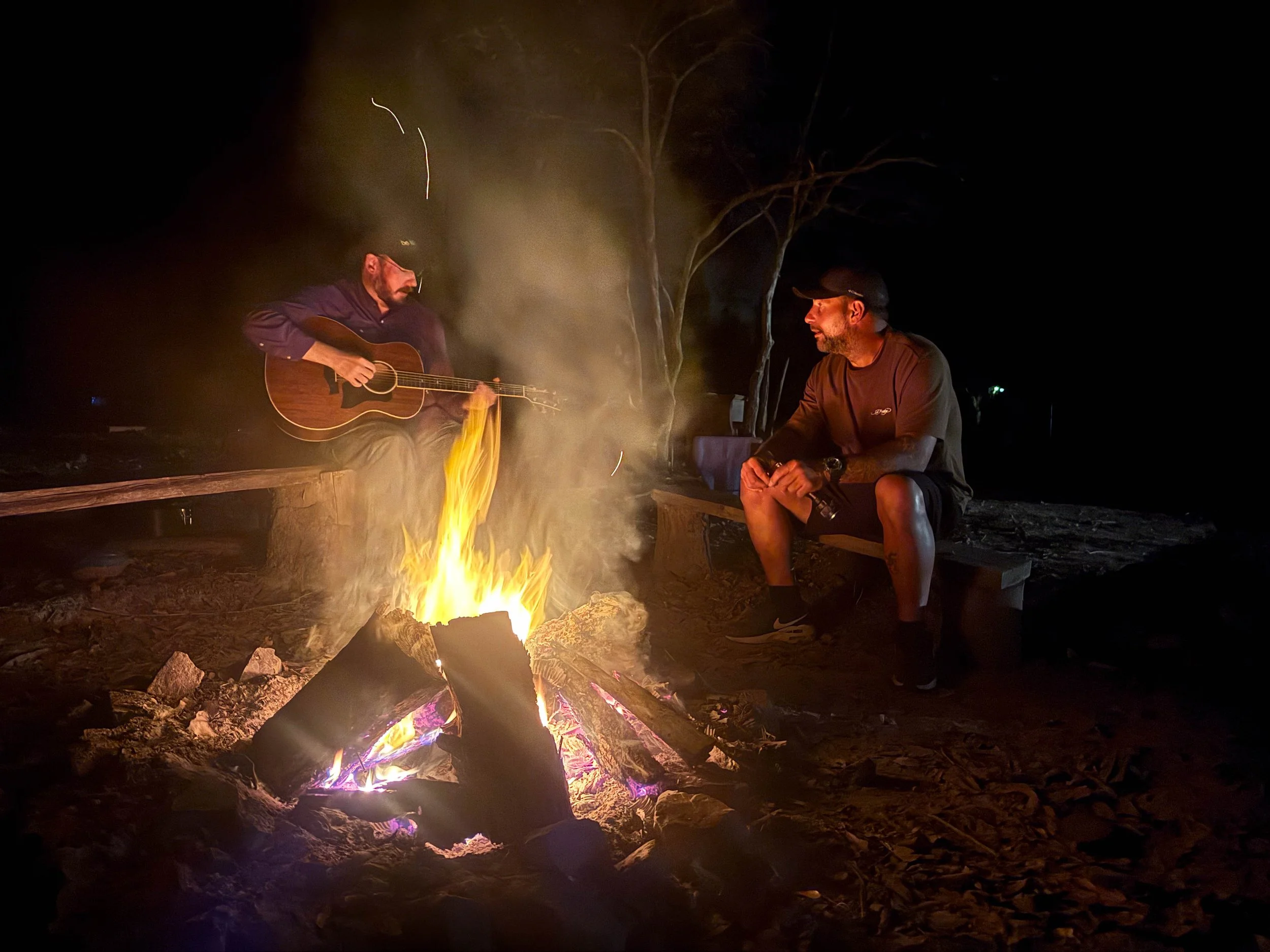
Communal meals and evening gatherings
Vision for the future:
Phase II added new form and function to the Earth Church. The hexagonal pavilion now offers a shaded space for gathering, while experiments with oyster lime and native fibers open new possibilities for bioconstruction in coastal Louisiana. The Seeds of Resistance corn, planted at the sanctuary, will continue to grow and be shared. And the relationships forged—between Texas farmers, Louisiana fisherfolk, and Appalachian organizers—remind us that rivers and pipelines do not have to divide us. Phase III will carry this work forward.