
🧪 Material Experiments
At Earth Rise Collective, we believe that building is a form of inquiry. Each workshop is an opportunity to ask questions: What if we used this instead of that? What can a material teach us? How do we build in relationship with the land, with waste streams, with living traditions?
Here are three experiments from recent years that continue to shape our practice.
-
🦪 Oyster Shell Lime Plaster
Turning food waste into a building material
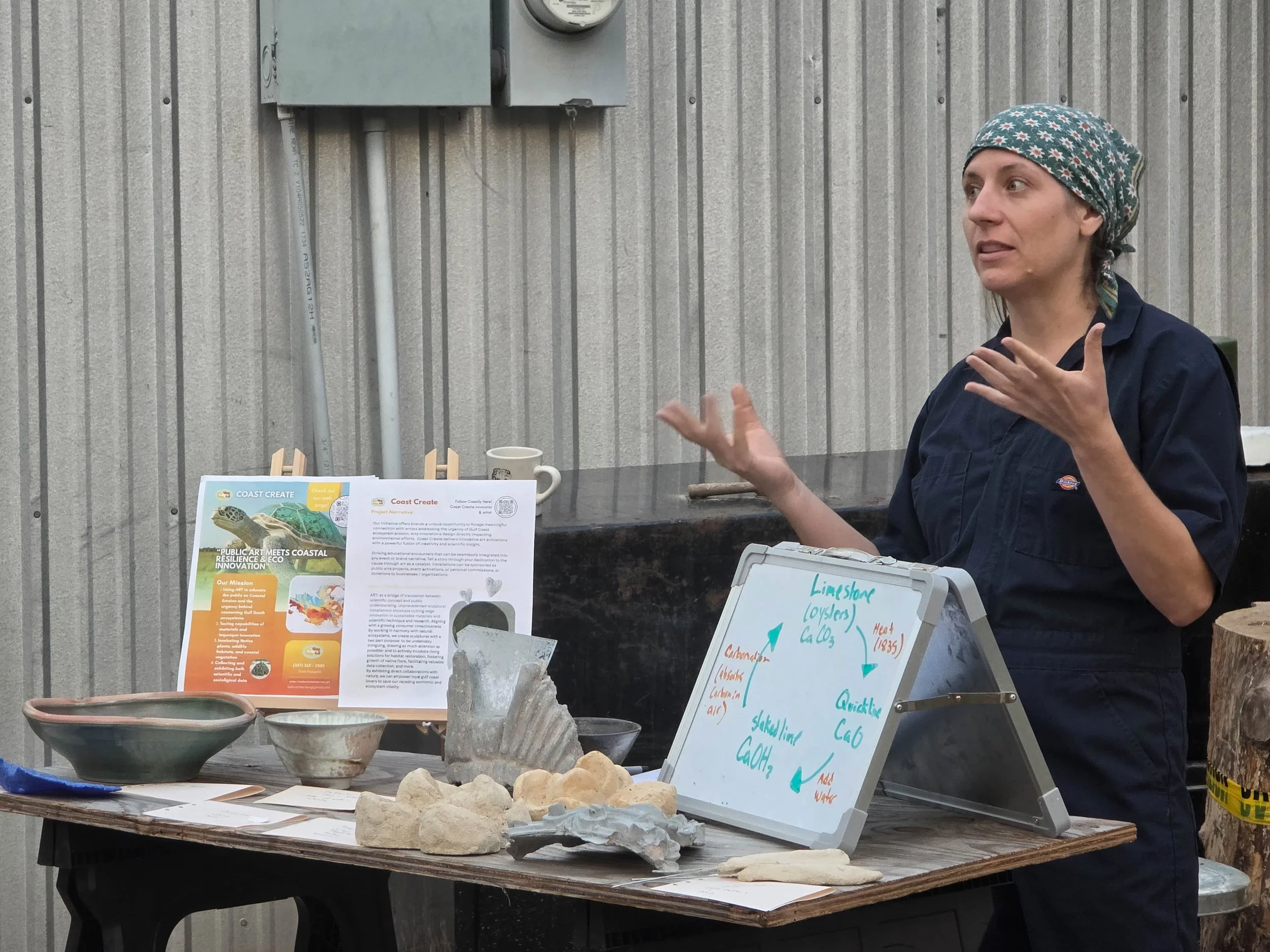
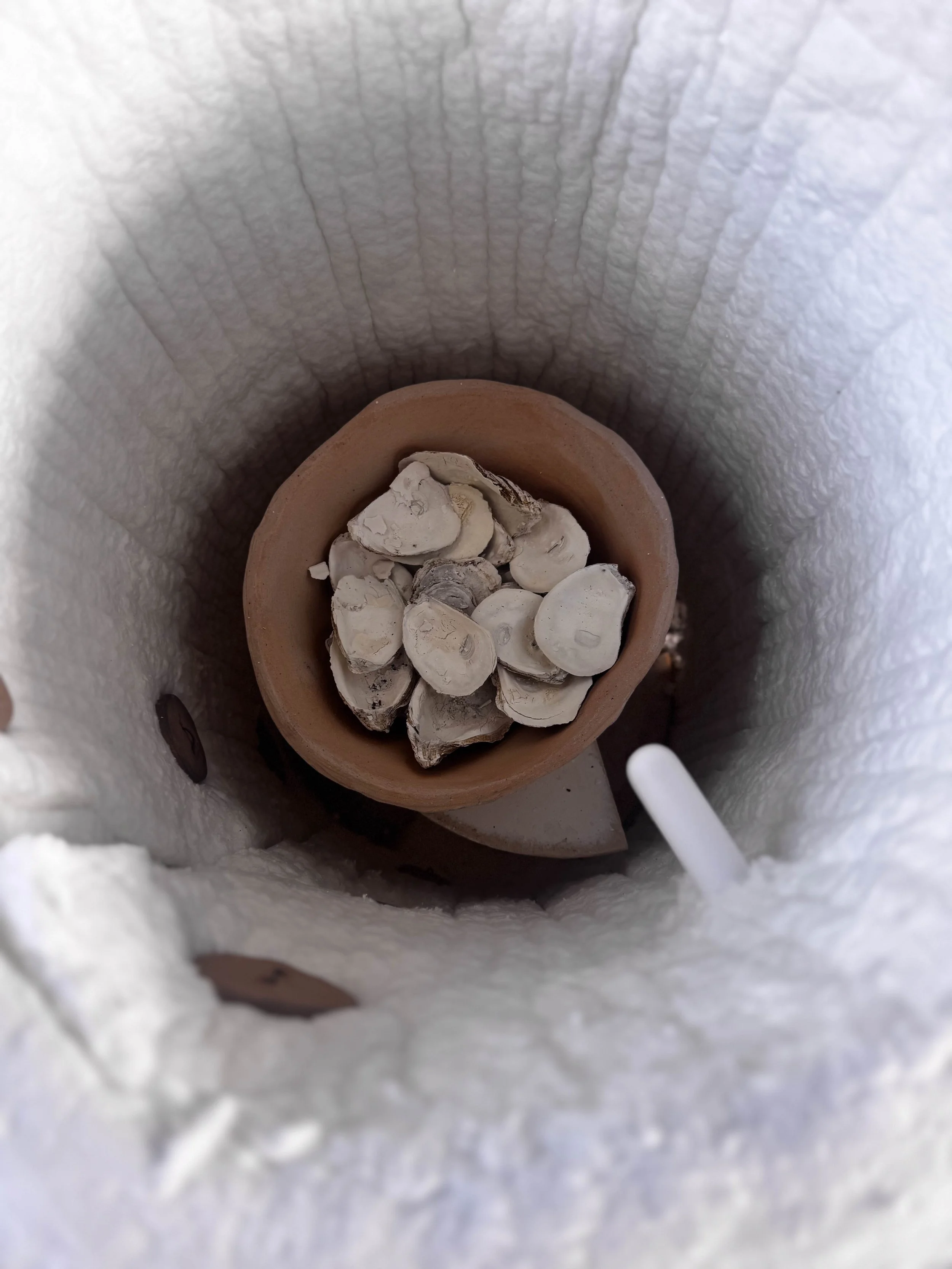
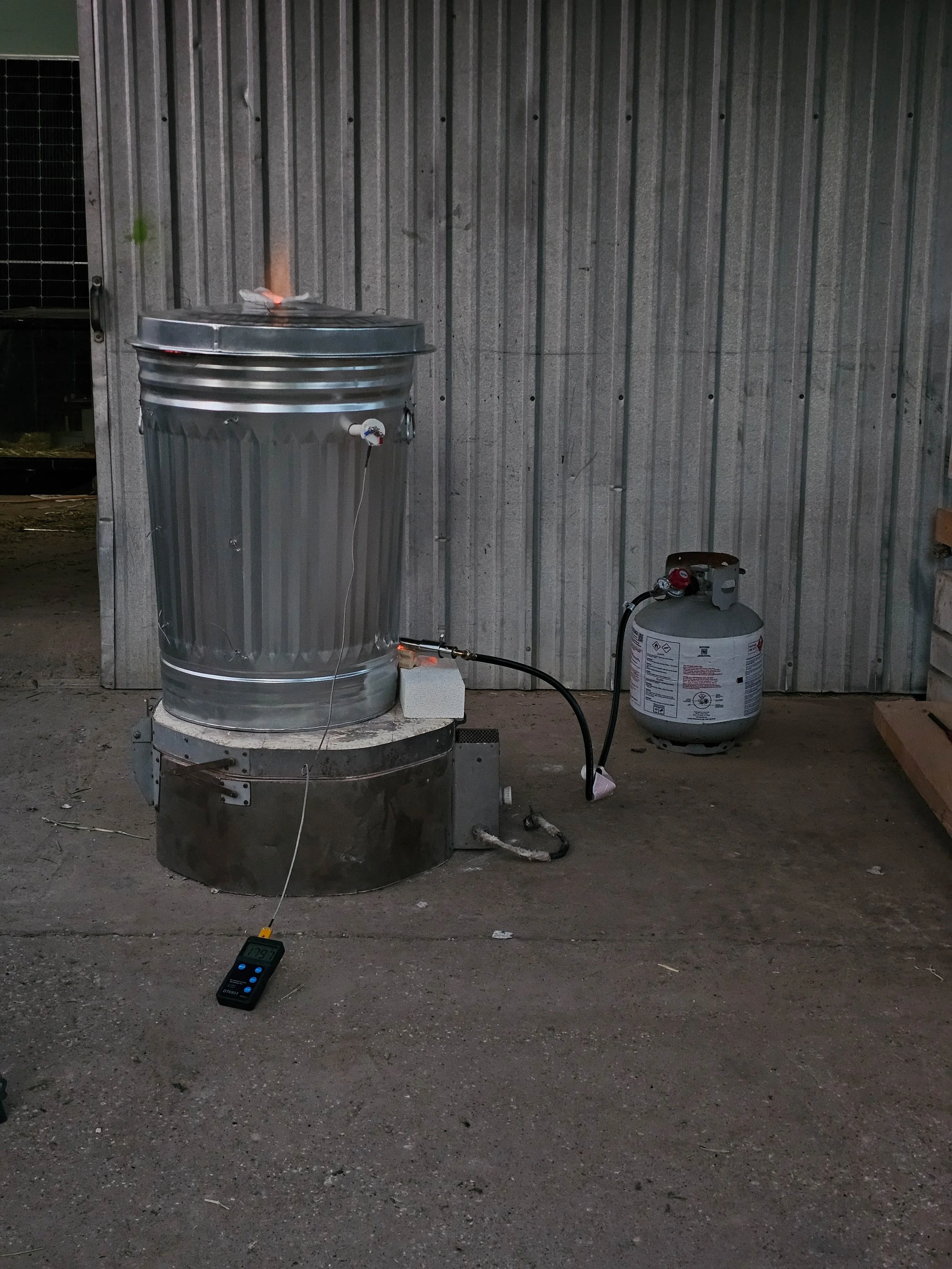
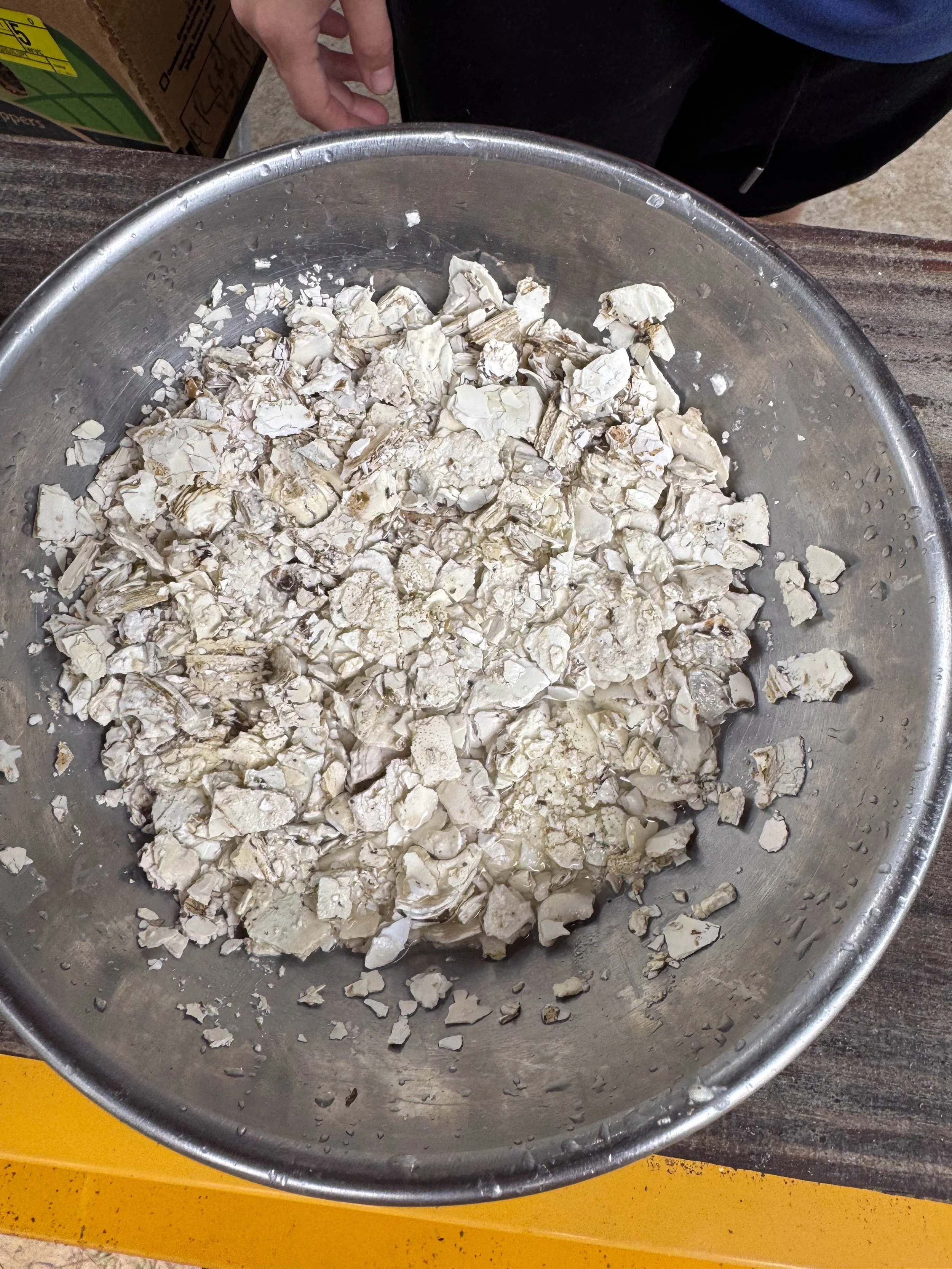
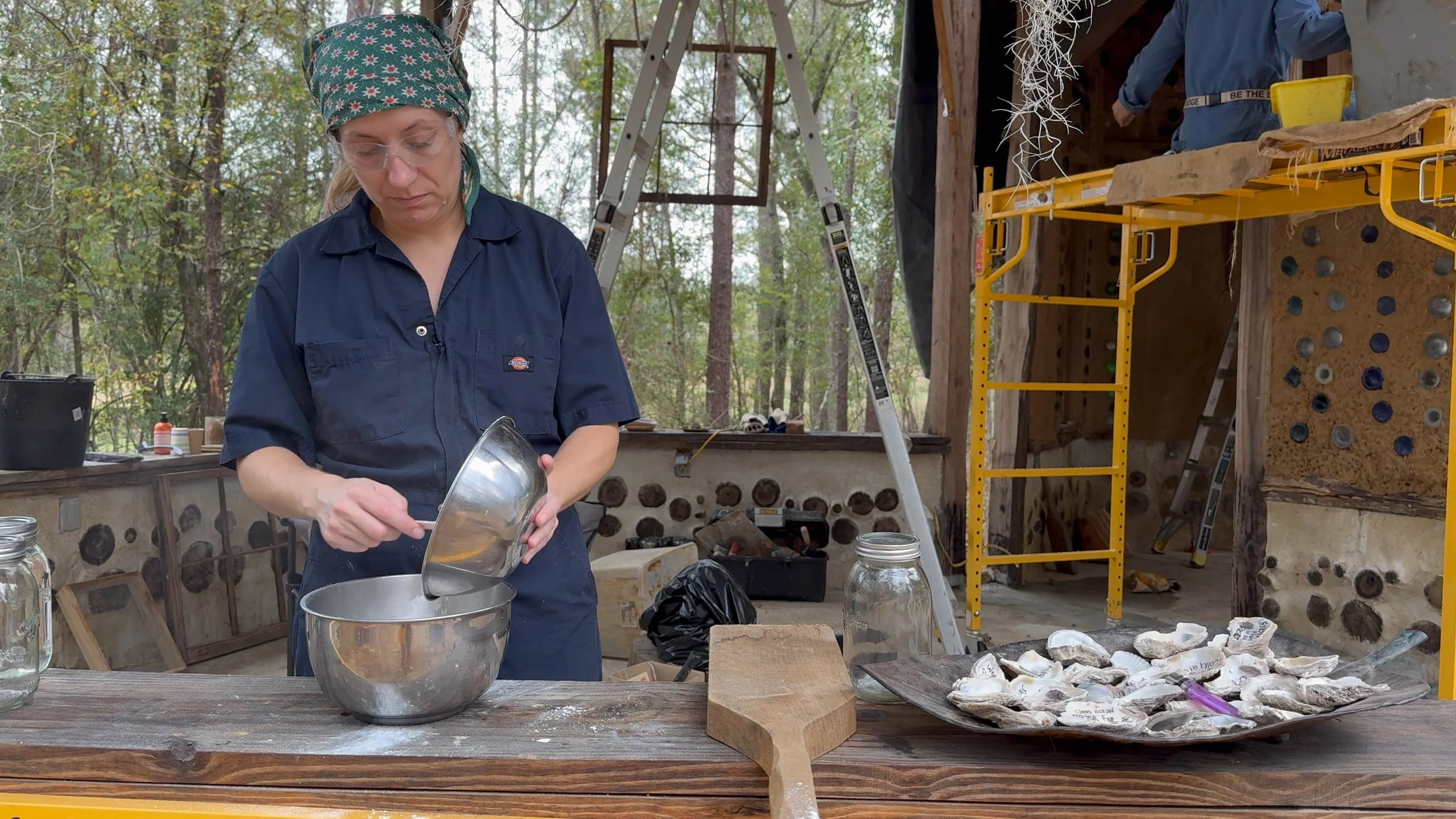
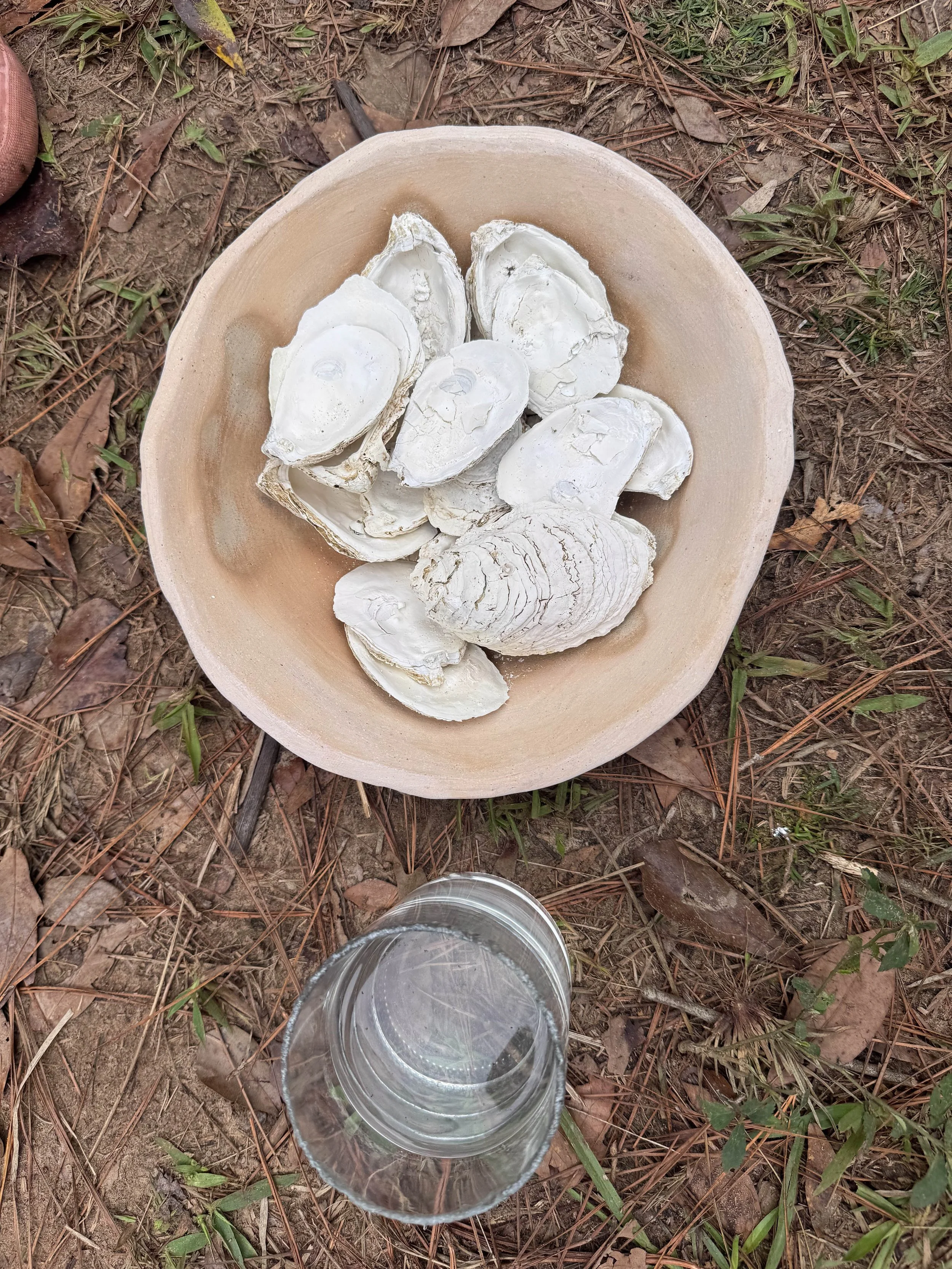
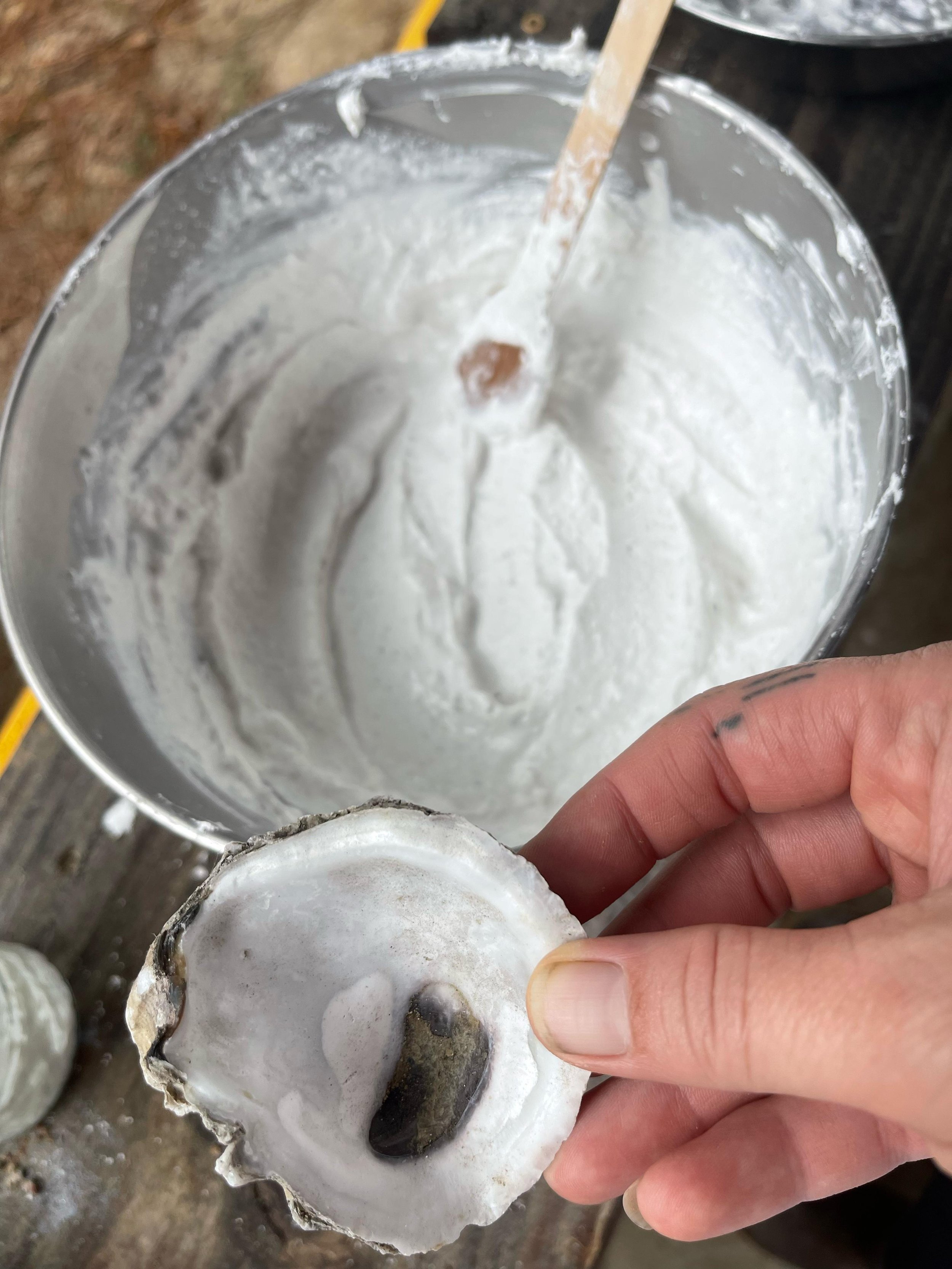
In coastal Louisiana, oysters are more than food. They are culture, economy, and ecology. But what happens to the shells after the meal? Typically, they end up in landfills. In collaboration with local advocacy groups COGO and The FACTS, we collected hundreds of oyster shells and asked a different question: Could we turn them into lime for plaster?Led by artist and educator Cassidy Creek, we washed, cooked, and ground the shells, transforming them through fire into a usable building material. The resulting lime plaster was applied to test surfaces on the Earth Church, demonstrating a closed loop system where waste from the fishing industry becomes a resource for natural building.
What we learned:
Oyster shells are made of calcium carbonate. When heated high enough, the lime cycle resets, turning the shells into calcium oxide (quicklime), which can be slaked (hydrated by adding water) to create lime putty for plaster.The process is energy intensive but achievable at a small scale with a kiln.
This experiment points toward a larger vision: regional building materials sourced from regional waste streams.
Why it matters:
Coastal communities face both industrial pollution and the loss of traditional livelihoods. By connecting the region's fishing heritage to its building future, we create new economies and new reasons to protect the water.
**Update
We got to visit local business Phoenix Waste Solutions and test our shells in their low temperature plasma furnace.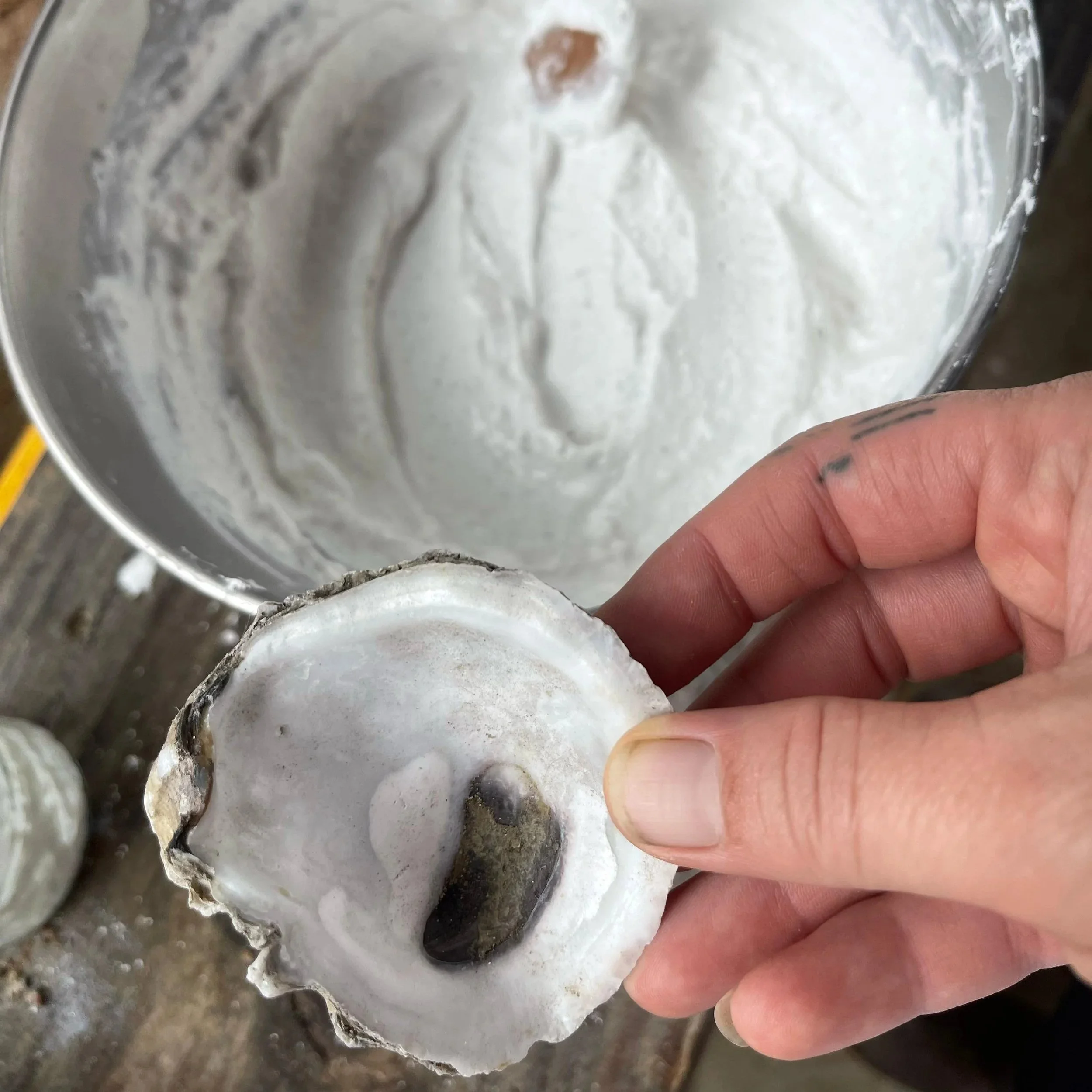
-
🌽 Corn in the Cob (Husk as Fiber)
Strengthening cob with agricultural byproduct
Cob, a mixture of clay, sand, and fiber, has been used for centuries to build durable, beautiful structures.The fiber is typically straw, the leftover stem that comes from growing wheat, oats, barley, or rice.
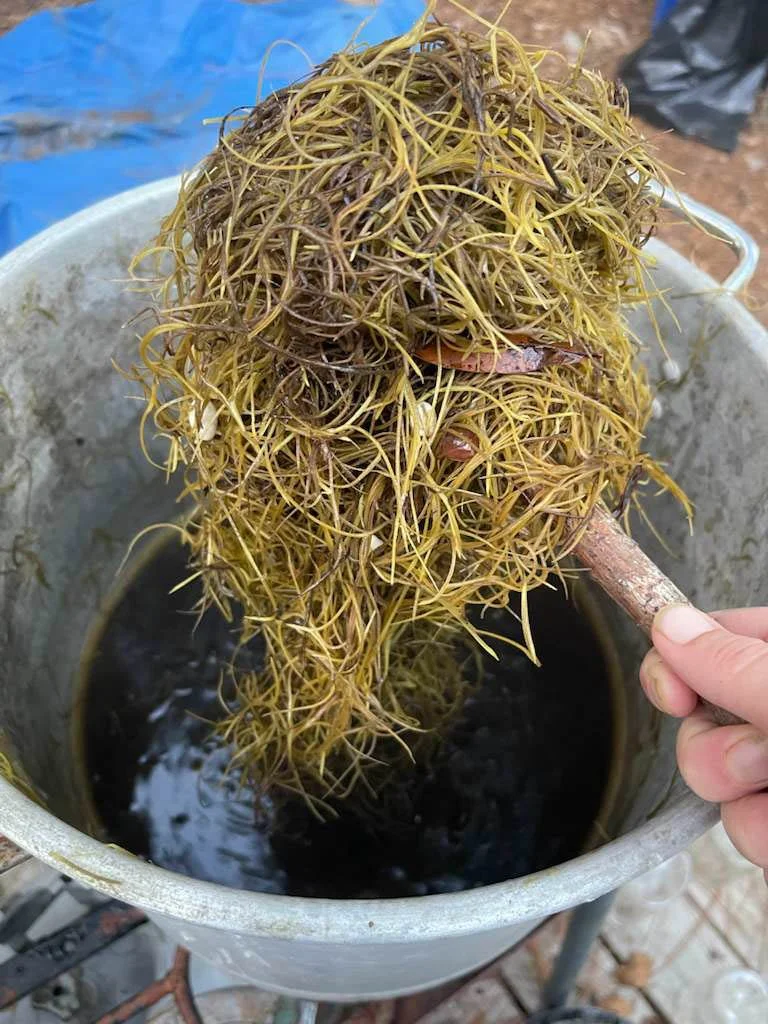
One of our guests, Maury Johnson is a pipeline Intervener, a technical designation established by the Federal Energy Commission (FERC). He is unabashedly social, and passionate about fossil fuel pipeline safety. This is how he met members of the Ponca Tribe who had planted sacred corn seeds as an act of resistance in the path of a proposed pipeline in Nebraska, successfully creating a site of cultural significance in their original homeland (where the Ponca peoples resided before being pushed westward on the Trail of Tears.)Maury has been sowing these seeds every year in his own West Virginia farm and sharing this story of the culture of agriculture. From some of his 2025 harvest, we took the dried corn husks and incorporated them into experimental cob mixes as a replacement for traditional straw fiber.
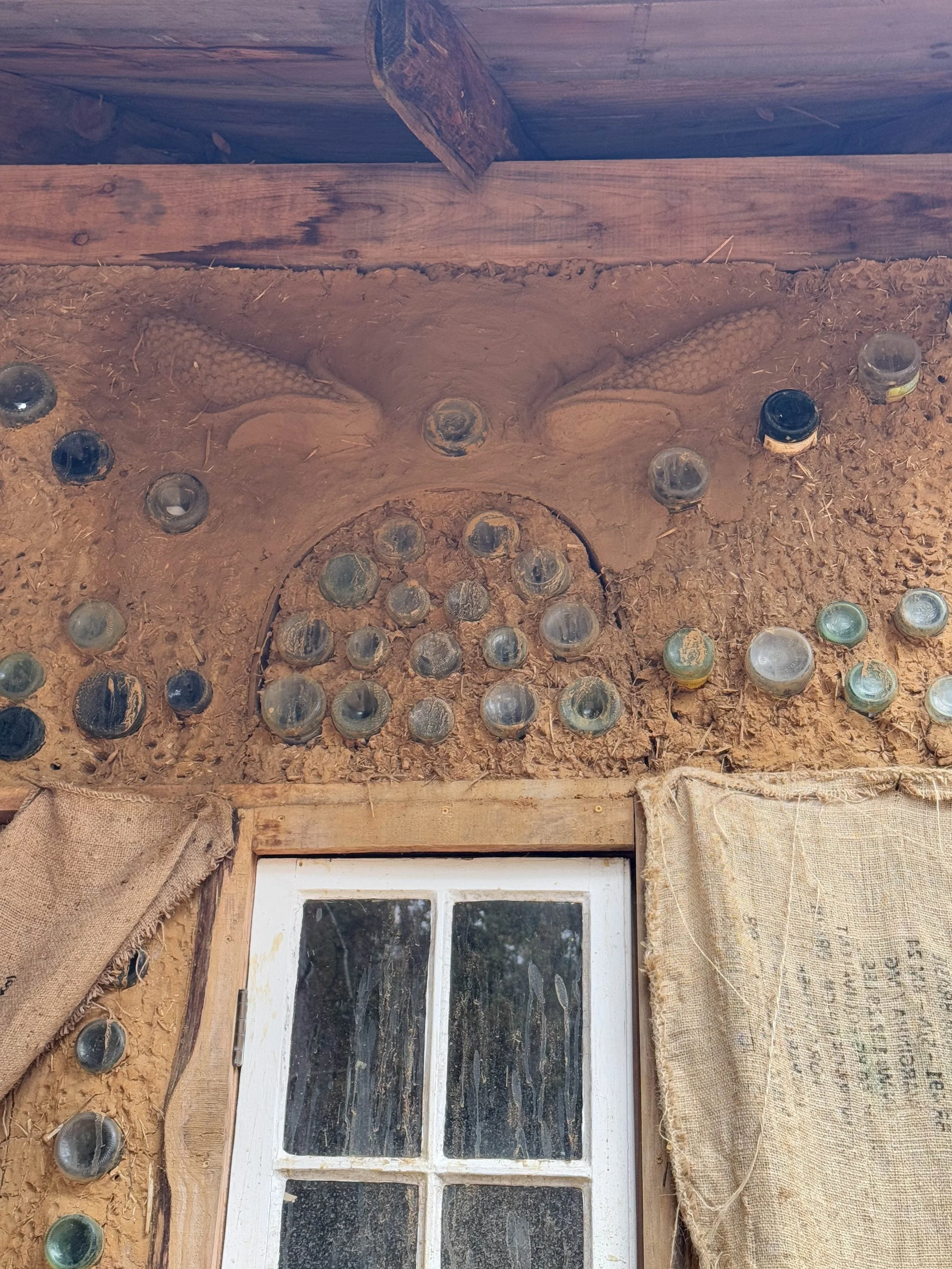
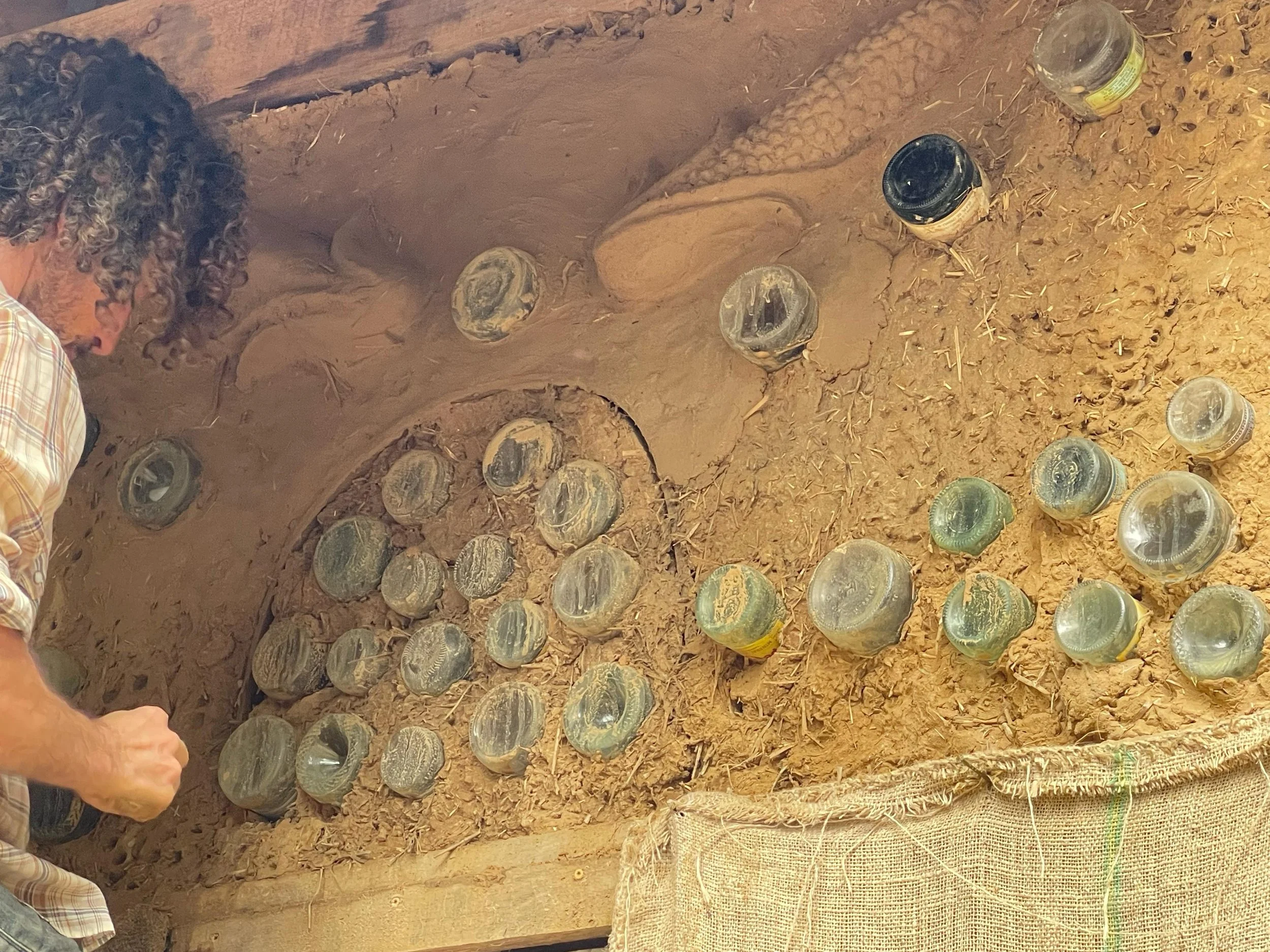
Another workshop attendee, Jason, grabbed our trusty cob handbooks from the Earth Rise Collective library and read up on making a relief sculpture with cob. He then used our corn-filled cob to sculpt some corn cobs onto the exterior of the Earth Church (protected by the roof overhang.)
What we learned:
These husks could be seen as waste to be composted. But they also carry meaning. Grown from seeds that traveled from the Great Plains to resist a pipeline, they now help build a sanctuary in Louisiana.We will check back in on the experiment next year and see how it fared!
Why it matters:
Industrial agriculture and petrochemical infrastructure are deeply intertwined in the Gulf South. By using agricultural byproducts like corn husks (referred to as “stover” in industrial farming) in construction, we model a different relationship to the land, one based on care, not extraction.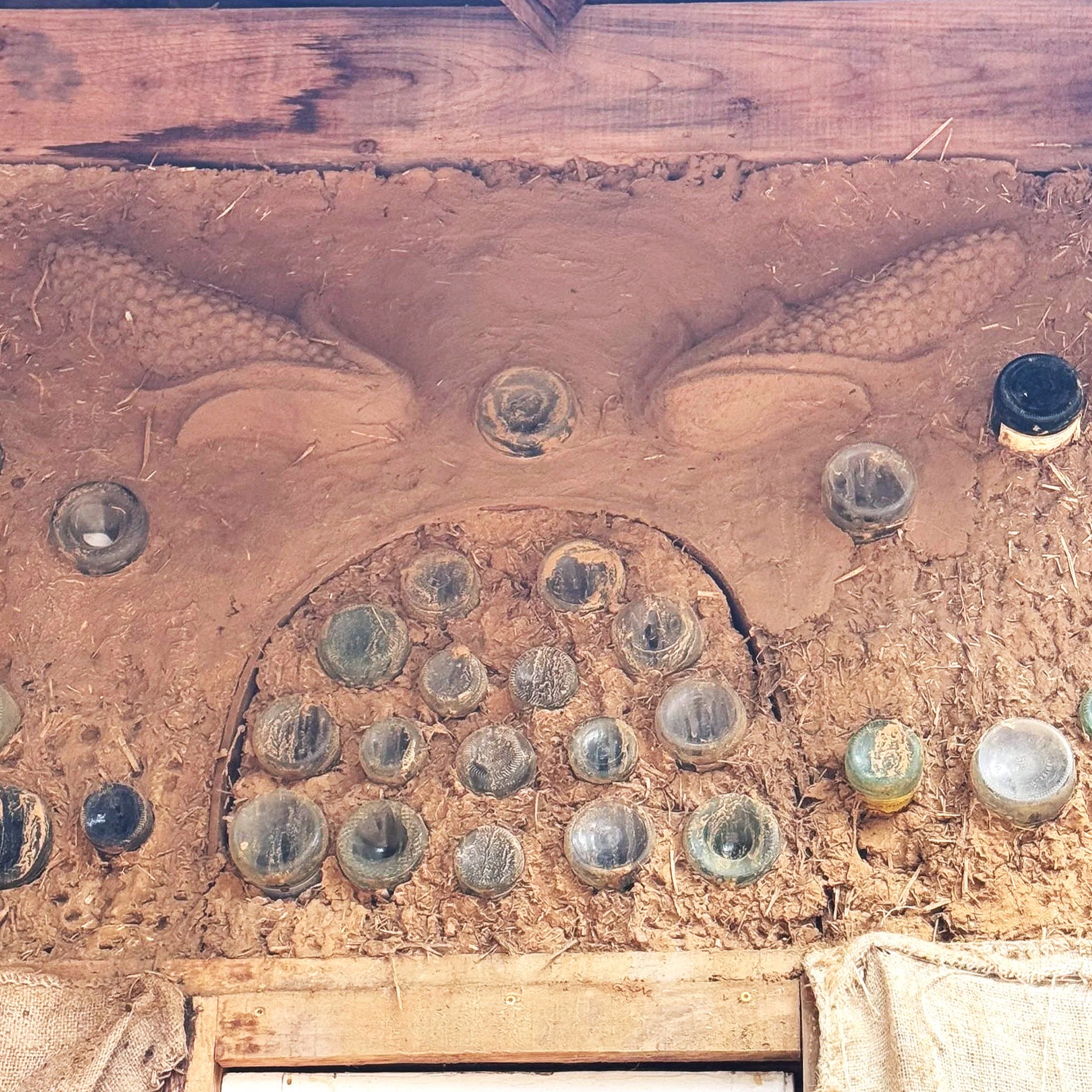
-
🔵 Cobalt Blue Sand
From bottle to brick to building
Glass Half Full is a New Orleans based company turning recycled glass into sand for coastal restoration, flood protection, and yes, building. When we saw they were offering “cobalt blue sand", crushed from blue glass bottles, ground to a fine powder we saw an opportunity.We mixed the vibrant blue sand into experimental plasters, testing its workability, colorfastness, and structural integrity. The result was a striking, pigmented plaster that requires no synthetic dyes or industrial pigments. The blue echoes the water, the sky, and the glass bottles that once held medicine, spirits, and hope.
What we learned:
All glass is made from sand, which is typically extracted from the land. Crushed glass can once again become sand and be successfully incorporated into earthen plasters, adding color and sparkle without compromising performance.The circularity is poetic: glass made from sand returns to sand, then becomes part of a protective layer on a wall.
Working with upcycled materials invites play and possibility. The blue wall at the Earth Church is a reminder that waste is just material waiting for a better question.
Why it matters:
The chemical industry has given us plastics that never degrade and pigments that poison. By turning to recycled glass, we choose materials that honor their own lifecycle and ours.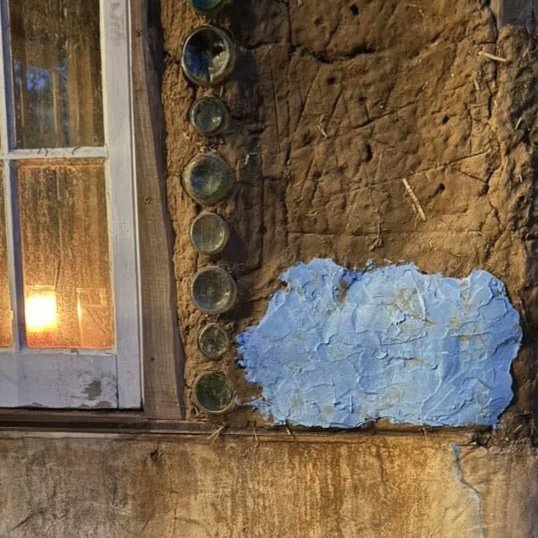

Ongoing Inquiry
These experiments are not one time events. They are the beginning of a larger practice: testing, failing, learning, and sharing. Each workshop yields new questions, and each question leads to new possibilities.
If you are interested in collaborating on a material experiment or have a waste stream you think could become a building material, please get in touch.